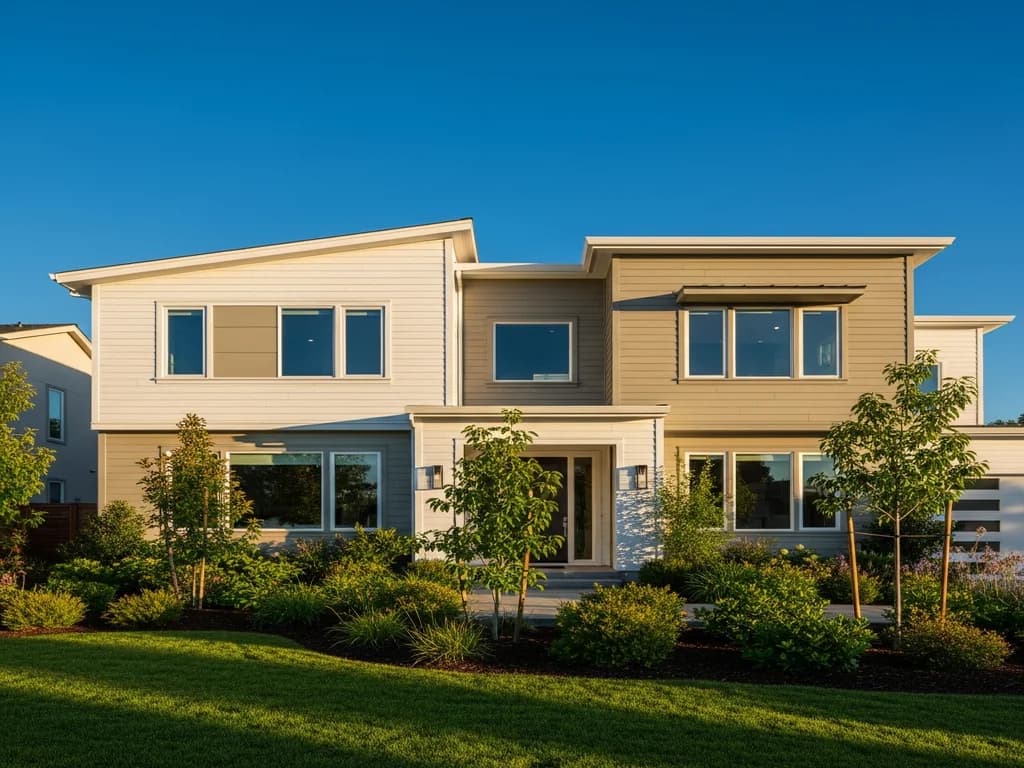
Siding in Plymouth
Plymouth is the small northern Amador town that opens the gate to the Shenandoah Valley wine country, and a re-side here spans two distinct worlds. There is a compact historic town core off Highway 49 with older frame cottages and modest commercial fronts, and a ring of rural vineyard-edge estates and working ranches spreading east into the wine hills. Each calls for a different re-clad approach on the same dry foothill ground.
What ties them together is exposure. Plymouth sits in real wildfire terrain with hot, tinder-dry summers, so whether the project is a town cottage or a winery-adjacent estate, the controlling job is swapping aging combustible cladding for a non-combustible, heat-stable wall.
Two kinds of Plymouth homes, one fire reality
The town core holds early-20th-century frame cottages and small bungalows on modest lots near Main Street, while the parcels climbing east toward the Shenandoah Valley vineyards are larger rural estates, ranch homes, and newer wine-country builds with long, exposed elevations. The re-side priorities shift between them: the older cottages need careful substrate work after decades of foothill weather, the rural estates need long unbroken wall runs detailed for ember exposure on open ground. But the underlying answer is consistent across town and country here — end-of-life wood and economy cladding comes off, and a non-combustible system goes on, because Plymouth's fire season does not care which side of Highway 49 the house sits on.
Re-siding on the vineyard edge
The estates and ranches spreading into the Shenandoah Valley wine region sit close to oak-grassland, brush, and dry vineyard margins that cure to fuel through the long rainless summer. These are often the most exposed homes in the Plymouth area — set on open rural parcels with little buffer between the wall and the wildland. A re-side here is the moment to replace combustible cladding with a Class A board and to harden the eaves, vents, and ground transition while the wall is open. We read each parcel's relationship to the surrounding vineyard and brush rather than applying a town-lot assumption to a winery-edge estate.
The small historic core off Highway 49
Plymouth's downtown is smaller and less monumental than the preserved Main Streets of Jackson or Sutter Creek, but it carries genuine older frame stock — cottages and bungalows that have worn decades of hot, dry foothill summers. On these homes we match a sensible lap profile and accurate trim so the re-clad reads right on an older Plymouth street, and we plan to strip back layered original siding to inspect framing and repair rot at the bottom courses and penetrations. The point is a careful re-side of a real older house, not a generic overclad stretched across an aging frame near the wine-country gateway.
What tear-off tends to reveal here
Plymouth's older town homes and long-standing ranch houses have cycled through many seasons of intense foothill UV and damp winters, so demolition often uncovers checked boards, failed paint, dry rot at the sill and window heads, and sometimes a later overcladding hiding original wood. We budget to correct that substrate and the drainage plane before new cladding goes on rather than discover it mid-project. On rural estate parcels the open exposure also means we sequence tear-off and dry-in to keep the home weather-tight, because a wall left open on the vineyard edge has no neighboring structures to break the wind and weather.
Why this matters in Plymouth
- Specified for Sierra Foothills conditions
- James Hardie fiber cement as the recommended system
- Correctly detailed weather-resistive barrier and flashing
- Installed by a crew with 20 years combined experience
Recommended systems for Plymouth
- James Hardie fiber cement
- non-combustible fire-hardened detailing
- factory finishes
- durable trim packages
Fiber Cement Siding for Plymouth homes
The full fiber cement siding approach — materials, weather-resistive detailing, and the manufacturer standards we install to — is covered on the main service page, then specified for Plymouth's conditions on this one.
Our Plymouth process
- Step 1
Consultation
We listen to your goals and assess your home on site — exposure, substrate, and architecture.
- Step 2
Design & Proposal
A clear written proposal with the right system specified for your climate and a transparent scope.
- Step 3
Expert Installation
Trained crews install to manufacturer best practices with careful weather-management detailing.
- Step 4
Walkthrough & Support
A final walkthrough, full cleanup, and a clear written record of the scope completed — work we stand behind.
FAQ
Siding in Plymouth — FAQ
Plymouth is the small wine-country gateway town, so the work splits between a modest historic core and rural vineyard-edge estates rather than a preserved tourist Main Street. Jackson is the larger county seat; Sutter Creek leads with heritage preservation. All three sit in real foothill fire terrain.
Yes. The winery-adjacent estates and ranches are some of the most fire-exposed homes in the Plymouth area, and a re-side is the moment to put a non-combustible, hardened wall on those long, open elevations.
Decades of hot, dry foothill summers and damp winters check boards, blister paint, and rot bottom courses and penetrations. A re-side corrects the substrate and drainage plane and replaces worn cladding with a stable, non-combustible system.
Through a written, scoped estimate after an on-site assessment, because town cottages and vineyard-edge estates differ widely in size, exposure, access, and the hidden substrate repair found at tear-off.
Keep Exploring
More for Plymouth homeowners
More in Plymouth
Other exterior services in Plymouth
Nearby Service Areas
Siding near Plymouth
Helpful Exterior Guides