
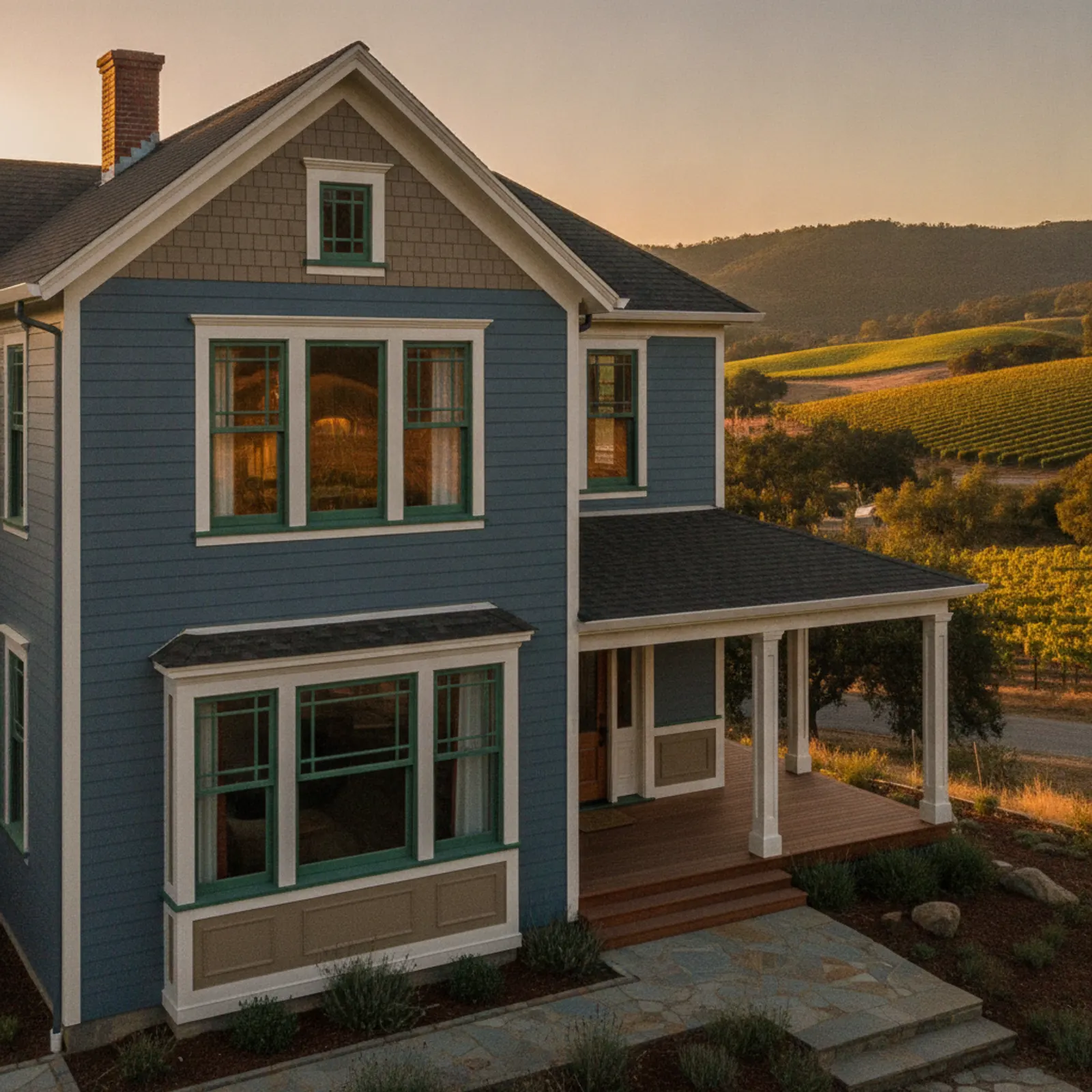
Exterior Contractor in Plymouth
Hiring a single exterior contractor in Plymouth matters because a foothill home — whether a town cottage or a vineyard-edge estate — is one integrated system, not a stack of separate trades. Siding, windows, the weather-resistive barrier, trim, and fire hardening all meet at the same vulnerable junctions, and in real wildfire terrain those interfaces are exactly where cheap single-trade bids quietly fail.
The whole exterior as one assembly
On a Plymouth home we treat the siding, windows, weather-resistive barrier, flashing, and trim as one continuous assembly rather than a sequence of disconnected jobs. The wall has to shed the foothill winter rain, resist embers through the long fire season, and manage the punishing summer sun all at once, and those goals only align if one contractor controls how the layers integrate. Where a siding crew, a window installer, and a painter each touch the wall on separate visits, the seams between their work — the surrounds, transitions, and penetrations — are where both leaks and ignition paths get left behind.
The interfaces cheap bids miss
The failures we get called to fix in foothill towns almost always live at the interfaces, not in the field of the wall. Window surrounds flashed after the cladding went on. Soffit and eave returns left open to embers. A weather-resistive barrier lapped the wrong way behind new siding. A deck or porch ledger tied in without a fire-aware transition. On a Plymouth estate or cottage those junctions carry both the water and the fire risk, and coordinating the trades under one scope is what closes them — the work a low single-trade bid quietly leaves out.
Integrating hardening across siding and openings
Plymouth's wildfire exposure means fire hardening cannot be one trade's afterthought; it has to run through the whole assembly. The decision to carry non-combustible cladding to the ground break, the choice of tempered glazing at exposed openings, the ember-rated venting, and the documentation of assemblies for insurance all interact. A whole-exterior contractor sequences them so the hardened envelope is continuous rather than strong in the siding and weak at the windows. On a vineyard-edge estate facing genuine ember exposure, that single point of accountability is what keeps the hardening coherent across every elevation.
Coordinating town lots and sprawling rural parcels
Running every trade under one schedule is also a practical necessity given how Plymouth's properties differ. A compact town cottage near Main Street has limited staging room and close neighbors, while a Shenandoah Valley estate has long elevations, outbuildings, and access considerations across an open rural parcel. In both cases we sequence tear-off, dry-in, window set, cladding, and trim to keep the home weather-tight and the work efficient, protecting landscaping and managing dust and debris. One contractor managing that flow avoids the gaps and idle days that appear when separate trades have to coordinate themselves across very different Plymouth sites.
Why this matters in Plymouth
- Specified for Sierra Foothills conditions
- James Hardie fiber cement as the recommended system
- Correctly detailed weather-resistive barrier and flashing
- Installed by a crew with 20 years combined experience
Recommended systems for Plymouth
- James Hardie fiber cement
- non-combustible fire-hardened detailing
- factory finishes
- durable trim packages
Exterior Contractor for Plymouth homes
The full exterior contractor approach — materials, weather-resistive detailing, and the manufacturer standards we install to — is covered on the main service page, then specified for Plymouth's conditions on this one.
Our Plymouth process
- Step 1
Consultation
We listen to your goals and assess your home on site — exposure, substrate, and architecture.
- Step 2
Design & Proposal
A clear written proposal with the right system specified for your climate and a transparent scope.
- Step 3
Expert Installation
Trained crews install to manufacturer best practices with careful weather-management detailing.
- Step 4
Walkthrough & Support
A final walkthrough, full cleanup, and a clear written record of the scope completed — work we stand behind.
FAQ
Exterior Contractor in Plymouth — FAQ
Because the failures on a foothill home live at the interfaces — surrounds, transitions, penetrations — where separate trades hand off. One contractor controlling the whole assembly is what closes those gaps in both water and fire performance.
The interface work: correctly flashed window surrounds, ember-closed soffit and eave returns, a properly lapped weather-resistive barrier, and fire-aware deck and porch transitions. Those are exactly the junctions that fail in Plymouth's fire terrain.
Yes, and in Plymouth it is the better approach. Doing the openings during the re-side closes ember paths at the surrounds and integrates the windows into a hardened, weather-tight assembly rather than leaving a weak point in an upgraded wall.
Both benefit. A town cottage has tight staging and close neighbors; a vineyard-edge estate has long elevations, outbuildings, and open exposure. In each case one contractor sequencing the trades keeps the home weather-tight and the hardening continuous.
Keep Exploring
More for Plymouth homeowners
More in Plymouth
Other exterior services in Plymouth
Nearby Service Areas
Exterior Contractor near Plymouth
Helpful Exterior Guides