James Hardie Siding in Plymouth
James Hardie suits Plymouth by combining three things the town needs: Class A non-combustibility for the real Shenandoah-gateway wildfire exposure, HZ10 engineering tuned for hot, dry-heat foothill swings, and baked ColorPlus finishes that resist the brutal summer UV on exposed vineyard-edge and town walls. Installed to Hardie's clearance and fastening spec, it gives Plymouth homes a documentable, fire-aware shell.
HZ10 and ColorPlus for foothill wine country
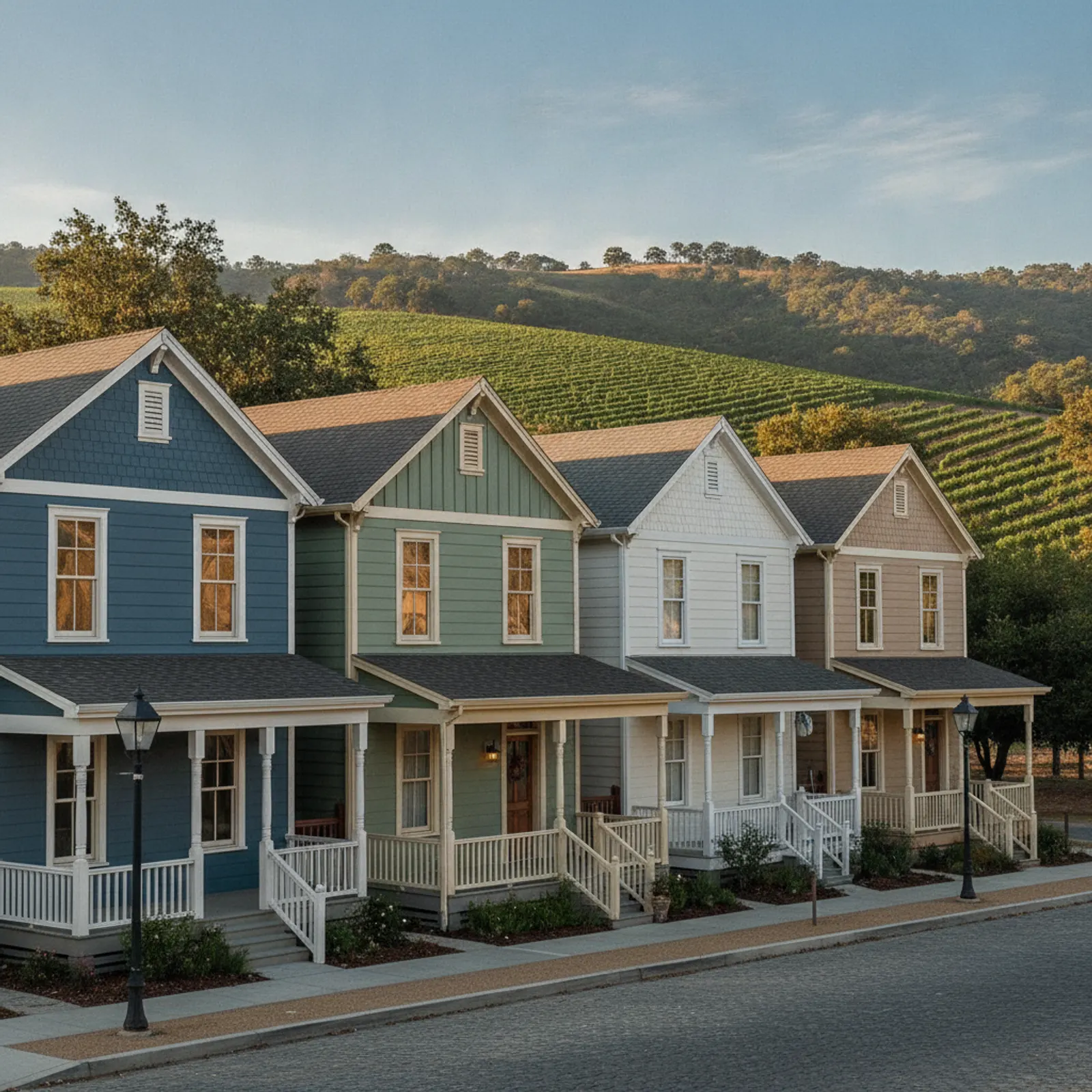
Hardie publishes a climate-specific HZ10 product engineered for hot, dry regions, which is exactly Plymouth's profile — long rainless summers, intense UV, and wide day-to-night temperature swings at the wine-country gateway. ColorPlus brings factory-baked finishes that hold color through that punishing sun far longer than field paint, in earth tones and warm neutrals that sit well against the surrounding vineyard and oak landscape. On a rural estate with long, fully exposed south and west elevations, that fade resistance is not cosmetic — it is the difference between a wall that looks right for decades and one repainted every few summers.
Installed to spec as a fire-safety matter
On Plymouth's fire-exposed parcels, meeting Hardie's published gap, fastening, and clearance standards is more than a warranty issue — it is what keeps embers from getting behind a Class A wall. We coordinate the install with hardened eaves, soffits, and venting so no single detail undermines the cladding. The assemblies get documented, which matters for defensible-space conversations and when an insurer asks what was actually done on a home set near vineyards and dry foothill brush.
Ember resistance on open vineyard-edge parcels
The wildfire threat at Plymouth's wine-country edge is less a wall of flame and more wind-driven embers riding ahead of a fire and lodging against cladding for hours during a Shenandoah-area event. Hardie fiber cement earns its place because it will not ignite when those embers settle into siding gaps, behind trim, or along the foundation course. We treat the lap as one layer of a system: tight butt joints, correct ground and roof clearances so leaf litter and grass cannot pile against the bottom run, and metal-flashed transitions at porches and decks where embers concentrate. On an exposed rural estate that detailing is what makes the difference between a hardened wall and a vulnerable one.
Profiles for town cottages and ranch estates
Plymouth's housing runs from older frame cottages in the small town core to sprawling ranch and wine-country estate homes on rural parcels, and we choose Hardie profiles to suit each. On the older town stock we select a sensible lap and accurate trim so the re-clad reads right on an established Plymouth street. On the larger estates, lap, panel-and-batten, or a mixed-profile treatment can carry the long elevations and break up scale while keeping the fire-hardened spec consistent. The same Hardie product line covers both, so a Plymouth homeowner gets one non-combustible standard whether the house is a Main Street cottage or a vineyard-view estate.
Cutting and dust control on rural and town sites
A Hardie re-clad demands deliberate cutting practice for the silica dust the board generates, and we adapt that to the Plymouth site. On open rural estates we position the cut station to keep dust out of the prevailing wind and away from the home, and on tighter town lots we use dust-suppressing or vacuum-shrouded tools to keep debris off shared walkways and a neighbor's property. We protect mature plantings and landscaping through the job and clean the site down daily. The result is a clean, contained install whether the crew is working a compact cottage near Main Street or a long-elevation estate out toward the Shenandoah Valley vineyards.
Why this matters in Plymouth
- Specified for Sierra Foothills conditions
- James Hardie fiber cement as the recommended system
- Correctly detailed weather-resistive barrier and flashing
- Installed by a crew with 20 years combined experience
Recommended systems for Plymouth
- James Hardie fiber cement
- non-combustible fire-hardened detailing
- factory finishes
- durable trim packages
James Hardie Siding for Plymouth homes
The full james hardie siding approach — materials, weather-resistive detailing, and the manufacturer standards we install to — is covered on the main service page, then specified for Plymouth's conditions on this one.
Our Plymouth process
- Step 1
Consultation
We listen to your goals and assess your home on site — exposure, substrate, and architecture.
- Step 2
Design & Proposal
A clear written proposal with the right system specified for your climate and a transparent scope.
- Step 3
Expert Installation
Trained crews install to manufacturer best practices with careful weather-management detailing.
- Step 4
Walkthrough & Support
A final walkthrough, full cleanup, and a clear written record of the scope completed — work we stand behind.
FAQ
James Hardie Siding in Plymouth — FAQ
Yes — Class A non-combustible for the wine-country wildfire exposure, with HZ10 engineering for hot, dry-heat summers and ColorPlus finishes that resist intense foothill UV on exposed walls.
The HZ10 line, which Hardie engineers specifically for hot, dry regions like the Amador foothills, paired with ColorPlus factory finishes built to hold color through the punishing summer sun.
Meeting Hardie's clearance and fastening spec keeps the warranty valid, and the same detailing at eaves, vents, and the ground-to-wall transition is what keeps embers from getting behind a Class A wall. We document the assemblies for insurance conversations.
Earth tones and warm neutrals in ColorPlus sit well against the surrounding vineyard and oak landscape and hold up to the intense foothill UV on exposed estate and town walls.
Keep Exploring
More for Plymouth homeowners
More in Plymouth
Other exterior services in Plymouth
Nearby Service Areas
James Hardie Siding near Plymouth
Helpful Exterior Guides