
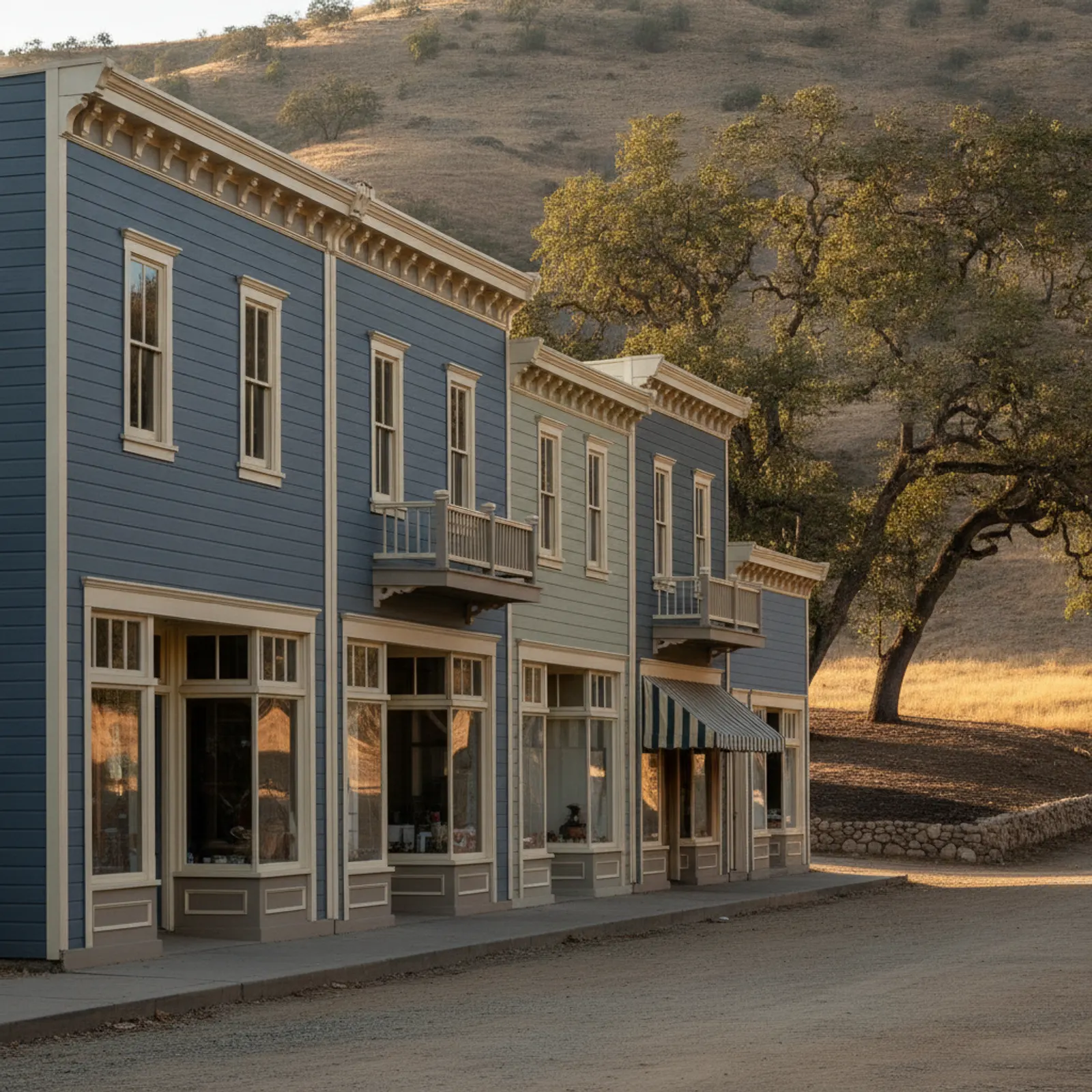
James Hardie Siding in Sutter Creek
James Hardie fits Sutter Creek by pairing Class A non-combustibility for the foothill fire exposure with HZ10 engineering and baked ColorPlus finishes built for hot, dry summers — installed to Hardie's clearance and fastening spec, with period-faithful profiles chosen to respect the town's Gold Rush character.
Hardie profiles and ColorPlus for a heritage street
On Sutter Creek's historic stock we select Hardie profiles that read period-correct — narrow-reveal lap, panel-and-batten, or appropriate shingle accents — with replicated trim so the result respects the Victorian and Gold Rush context. ColorPlus brings factory-baked finishes in heritage earths, warm whites, and muted Mother Lode tones that read correctly on older homes and resist fade under the intense foothill UV. HZ10 is the climate-specific engineering for the dry-heat swings this elevation sees, which keeps the repaint cycle long on a historic-district home.
Installed to spec as a fire-safety matter
On Sutter Creek's foothill parcels, meeting Hardie's published gap, fastening, and clearance standards is not just a warranty issue — it is what keeps embers from getting behind a Class A wall. We coordinate the install with hardened eaves, soffits, and venting so no single detail undermines the cladding. The assemblies get documented, which matters for defensible-space conversations and when an insurer asks what was actually done on a home in genuine fire terrain.
Ember resistance on closely spaced historic homes
The wildfire threat in a small town like Sutter Creek is less a wall of flame and more wind-driven embers lodging against cladding for hours during a Gold Country event, with neighboring wood-frame homes only feet away raising the exposure. Hardie fiber cement earns its place because it will not ignite when those embers settle into siding gaps, behind trim, or along the foundation course. We treat the lap as one layer of a system: tight butt joints, correct ground and roof clearances so leaf litter cannot pile against the bottom run, and metal-flashed transitions at porches and stairs where embers concentrate. The result is a documentable, non-combustible shell on a heritage frame.
Working within a small historic core
Re-siding a home on Sutter Creek's older streets comes with constraints you do not face on open acreage. Lots are narrow, structures sit close to the property line, and staging a full Hardie tear-off means planning around tight setbacks, limited driveway depth, and neighbors a few feet away. We sequence material delivery and cut stations so a heavy fiber-cement job does not block a historic street longer than it has to, and we plan for Amador County review expectations on work in character-sensitive areas. The goal is a clean, contained job that respects both the home's place in the streetscape and the realities of swapping combustible cladding for Hardie in a built-up foothill town.
Cutting and dust control on a heritage street
A Hardie re-clad on a tight Sutter Creek lot demands deliberate cutting practice, both for the silica dust the board generates and for the neighbors living a few feet from the work. We cut with dust-suppressing or vacuum-shrouded tools and position the cut station to keep debris off shared walkways and adjacent gardens. On a historic-district street where homes and plantings sit close together, that containment is part of being a responsible contractor, not an afterthought. We also stage planks to limit how long material sits on a narrow public street, protect mature trees and fence lines through the job, and clean the site down daily. The care that suits a preserved Gold Rush block is the same care that protects the homeowner's own porch, paths, and landscaping during the install.
Why this matters in Sutter Creek
- Specified for Sierra Foothills conditions
- James Hardie fiber cement as the recommended system
- Correctly detailed weather-resistive barrier and flashing
- Installed by a crew with 20 years combined experience
Recommended systems for Sutter Creek
- James Hardie fiber cement
- narrow period-appropriate lap profiles
- non-combustible fire-hardened detailing
- factory finishes
James Hardie Siding for Sutter Creek homes
The full james hardie siding approach — materials, weather-resistive detailing, and the manufacturer standards we install to — is covered on the main service page, then specified for Sutter Creek's conditions on this one.
Our Sutter Creek process
- Step 1
Consultation
We listen to your goals and assess your home on site — exposure, substrate, and architecture.
- Step 2
Design & Proposal
A clear written proposal with the right system specified for your climate and a transparent scope.
- Step 3
Expert Installation
Trained crews install to manufacturer best practices with careful weather-management detailing.
- Step 4
Walkthrough & Support
A final walkthrough, full cleanup, and a clear written record of the scope completed — work we stand behind.
FAQ
James Hardie Siding in Sutter Creek — FAQ
Yes — Class A non-combustible for the foothill fire exposure, with HZ10 heat stability and ColorPlus for hot, dry summers, and period-faithful profiles for the historic core.
Yes — period-correct profiles and replicated trim respect the Victorian and Main Street stock while adding the fire performance bare wood cannot match.
It is. Meeting Hardie's clearance and fastening spec keeps the warranty valid, and the same detailing at eaves, vents, and the ground-to-wall transition is what keeps embers from getting behind a Class A wall. We document the assemblies for insurance conversations.
Heritage earths, warm whites, and muted Mother Lode tones in ColorPlus read correctly on the older stock and hold up to intense foothill UV.
Keep Exploring
More for Sutter Creek homeowners
More in Sutter Creek
Other exterior services in Sutter Creek
Nearby Service Areas
James Hardie Siding near Sutter Creek
Helpful Exterior Guides