
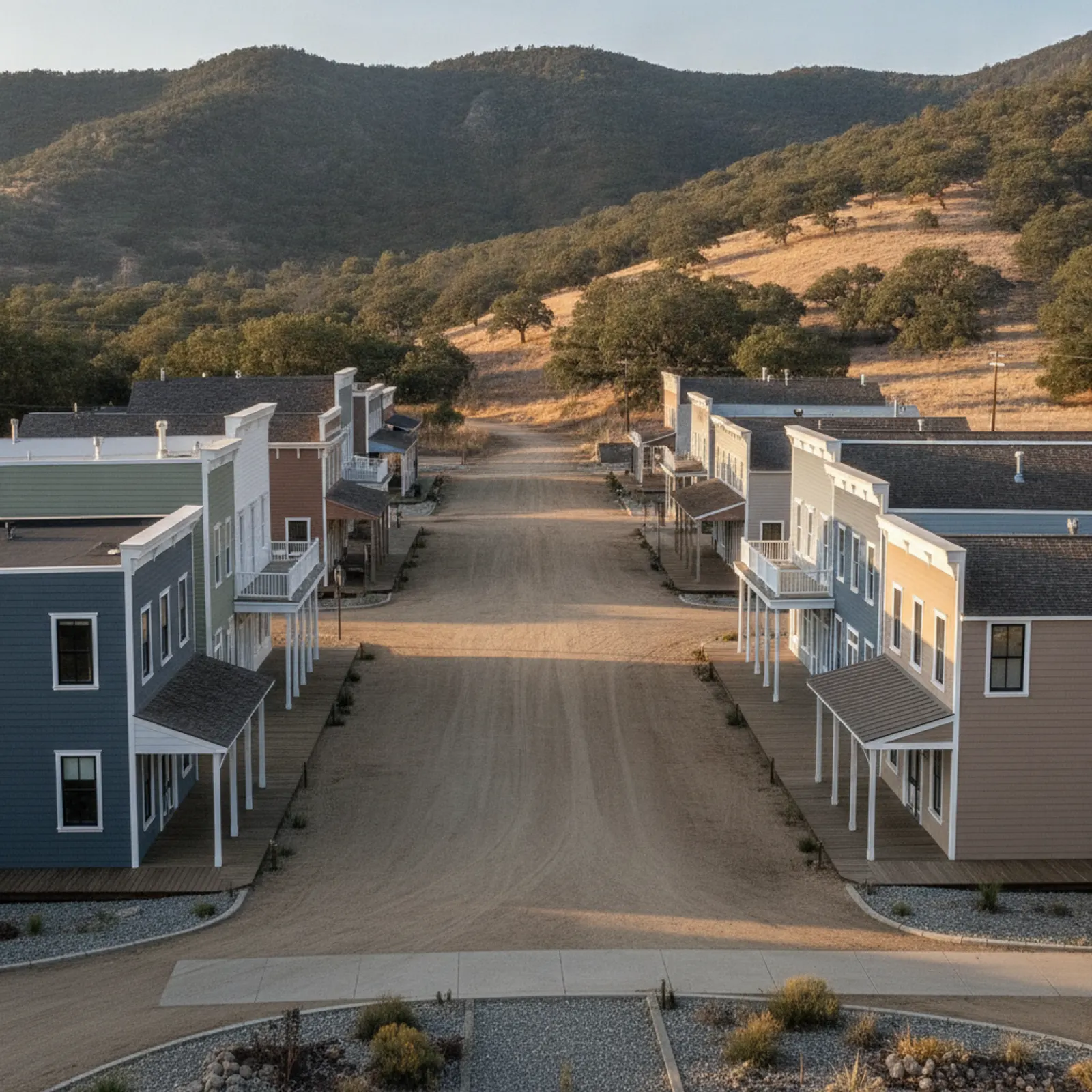
Fiber Cement Siding in Sutter Creek
Fiber cement is the natural fit for Sutter Creek because it solves the town's two competing demands at once: it can be milled into period-faithful Gold Rush profiles for the historic stock, and it is Class A non-combustible for the real foothill wildfire exposure and hot, dry summers. That combination is hard to match with wood in a preservation-minded fire town.
Restoration-grade profiles in a non-combustible board
On Sutter Creek's Victorian cottages and older Main Street-adjacent homes, we specify fiber cement in genuinely period-appropriate profiles — narrow-reveal lap, drop siding, or board-and-batten — with accurate reveals and replicated casings. The finished wall reads as a sympathetic restoration of the original house, not a modern re-clad. The difference from wood is that the same heritage look arrives in a material that will not feed a fire across a street of closely spaced historic homes.
Why the material case matters in this climate
Sutter Creek's hot, dry foothill summers and genuine fire exposure are exactly the conditions where fiber cement earns its keep. It does not ignite when wind-driven embers settle into siding gaps, it holds factory finish through intense foothill UV far longer than field paint, and it does not check or cup the way sun-baked wood does at this elevation. For a small town built largely of aging wood-frame houses, swapping combustible cladding for a Class A board is the single most consequential material decision on the exterior.
Building a wall that breathes and resists embers
A hardened fiber-cement assembly in Sutter Creek is only as good as its detailing. We back the planks with a proper weather-resistive barrier and drainage plane so the wall sheds and dries, then close the paths embers actually exploit: tight, gap-free butt joints, flashed transitions where siding meets the roofline, and ember-rated treatment at soffit and eave returns. On the older cottages we combine that modern, sealed substrate behind a heritage-appropriate face profile. A single unprotected joint or open vent can undo an otherwise non-combustible wall, so the joint-and-penetration discipline is the real work.
Installing on small, layered, century-old houses
Re-siding in Sutter Creek's older core is as much a logistics problem as a material one. Many homes sit on narrow lots with mature trees, shared driveways, and limited setback, so a fiber-cement job means tight scaffold footprints and hand-carrying full-size planks rather than relying on lift access. These houses also tend to carry layered exteriors — original wood lap buried under a later overcladding — which must come off and be inspected before new board goes on. Where a property falls inside the town's historic-character context, we document the existing profile and reveal before demolition. The result is a slower, more careful install than a tract job, which is exactly what these houses need.
Why dry-fastened board outlasts the old wood it replaces
The drop siding and clapboard on many Sutter Creek homes has cycled through a century of hot, dry summers and damp foothill winters, leaving checked boards, failed paint, and rot at the bottom courses and penetrations. Fiber cement breaks that cycle: it does not feed insects, it holds dimension through the heat swings this elevation sees, and its factory finish resists the chalking and fading that field paint suffers in foothill sun. We fasten it to the manufacturer's gap and clearance spec over a corrected drainage plane so the wall stays stable and sheds water. For an owner who has repainted an aging Gold Rush cottage every several years, the move to a Class A board that holds finish and shape for far longer changes the maintenance arithmetic on a historic home.
Why this matters in Sutter Creek
- Specified for Sierra Foothills conditions
- James Hardie fiber cement as the recommended system
- Correctly detailed weather-resistive barrier and flashing
- Installed by a crew with 20 years combined experience
Recommended systems for Sutter Creek
- James Hardie fiber cement
- narrow period-appropriate lap profiles
- non-combustible fire-hardened detailing
- factory finishes
Fiber Cement Siding for Sutter Creek homes
The full fiber cement siding approach — materials, weather-resistive detailing, and the manufacturer standards we install to — is covered on the main service page, then specified for Sutter Creek's conditions on this one.
Our Sutter Creek process
- Step 1
Consultation
We listen to your goals and assess your home on site — exposure, substrate, and architecture.
- Step 2
Design & Proposal
A clear written proposal with the right system specified for your climate and a transparent scope.
- Step 3
Expert Installation
Trained crews install to manufacturer best practices with careful weather-management detailing.
- Step 4
Walkthrough & Support
A final walkthrough, full cleanup, and a clear written record of the scope completed — work we stand behind.
FAQ
Fiber Cement Siding in Sutter Creek — FAQ
Yes — period-appropriate Gold Rush profiles with accurate reveals and replicated trim suit the town's preserved Victorian and early-1900s stock, in a non-combustible board.
It delivers the same heritage look without the fire risk that bare wood carries in this foothill town, and it holds factory finish through hot, dry foothill summers far better than field paint.
Far less than field paint. Factory finishes are engineered for intense foothill UV, and the substrate keeps performing long after any cosmetic refresh.
Not for a fire-conscious town like this — engineered wood is still combustible, and there is no durability gain that offsets the wildfire risk fiber cement avoids.
Keep Exploring
More for Sutter Creek homeowners
More in Sutter Creek
Other exterior services in Sutter Creek
Nearby Service Areas
Fiber Cement Siding near Sutter Creek
Helpful Exterior Guides