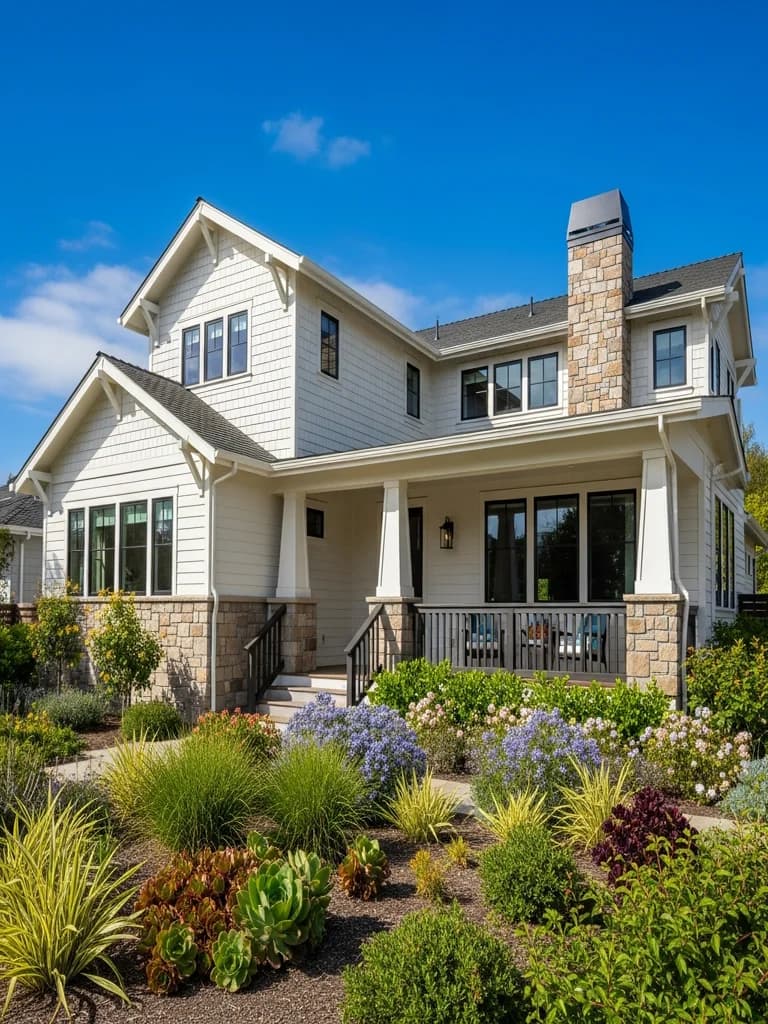
Siding in Ross
Ross is a small, intensely private town set on the wooded floor of the Ross Valley, where grand early-1900s estates and architect-built customs sit on unusually large lots beneath a heavy oak and redwood canopy. A re-side here is rarely a builder-grade swap — it is restoration-grade work on homes whose proportions, trim, and shingle or lap detail are the whole point.
The controlling pressures are the valley's trapped moisture — fog, creek-shaded damp, and slow-drying north elevations under deep tree cover — and a measured hillside fire exposure on the slopes at the town's edge. We scope each Ross job to match the original architecture exactly while building a wall that finally drains and breathes the way the period construction never did.
Restoration-grade matching on period estates
Most Ross homes carry deliberate architectural language — deep eaves, true-divided trim, distinctive shingle coursing or lap reveals that date the house to its era. A faithful re-side replicates that vocabulary rather than wrapping the home in a flat modern panel. We document the existing reveal, corner treatment, and trim depth before tear-off, then rebuild to those dimensions so the home reads as restored, not re-clad. On an estate where the facade is the asset, getting the profile and proportion right is the difference between a re-side that disappears into the architecture and one that cheapens it.
The wooded-valley moisture load
Ross sits low in the valley under a dense canopy that blocks the drying sun, so fog settles overnight and shaded, north-facing, and creek-adjacent walls stay damp well into the day through the cooler months. That standing moisture is what rots the sheathing behind the old wood cladding we pull off these older homes. We rebuild the wall as a drainage system: a continuous water-resistive barrier, a vented gap so the back of the board can dry between fog cycles, and a base kept clear of damp soil and leaf litter that the mature landscaping piles against the foundation.
A measured read on the hillside fire edge
Ross is mostly a sheltered valley-floor town rather than a deep-canyon fire trap, but the parcels that climb the wooded slopes at the town's margins carry a moderate, real ember exposure that an honest scope acknowledges without overstating. On those upper lots we treat non-combustible cladding and a hardened wall base as sensible, not alarmist; on the central valley-floor estates the same material is mostly a durability and peace-of-mind choice. We walk the specific parcel and tell you which version of the conversation actually applies to your home rather than applying one default across the town.
Large lots and mature landscaping
Ross's signature is space — broad parcels, long setbacks, and decades-old trees and gardens that owners protect closely. That changes the work: staging and scaffold have to be planned around established plantings and root zones, and tear-off debris kept off beds and lawns that took years to mature. We sequence the job one elevation at a time, dry-in before the next North Bay storm, and protect the landscape as deliberately as the house, because on a Ross estate the grounds are part of what makes the property what it is.
Why this matters in Ross
- Specified for North Bay conditions
- premium Class A non-combustible fiber cement as the recommended system
- Correctly detailed weather-resistive barrier and flashing
- Installed by a crew with 20 years combined experience
Recommended systems for Ross
- premium Class A non-combustible fiber cement
- James Hardie
- custom trim and architectural profiles
- fire-hardened detailing
Fiber Cement Siding for Ross homes
The full fiber cement siding approach — materials, weather-resistive detailing, and the manufacturer standards we install to — is covered on the main service page, then specified for Ross's conditions on this one.
Our Ross process
- Step 1
Consultation
We listen to your goals and assess your home on site — exposure, substrate, and architecture.
- Step 2
Design & Proposal
A clear written proposal with the right system specified for your climate and a transparent scope.
- Step 3
Expert Installation
Trained crews install to manufacturer best practices with careful weather-management detailing.
- Step 4
Walkthrough & Support
A final walkthrough, full cleanup, and a clear written record of the scope completed — work we stand behind.
FAQ
Siding in Ross — FAQ
Ross leads with restoration-grade matching on grand period estates plus wooded-valley damp and a measured hillside fire edge, where Fairfax is a true steep-canyon WUI town and Kentfield's story centers on its mid-century stock around the College of Marin. The fire conversation here is moderate, not the genuine high-exposure terrain of the upper canyons.
Yes — that is the core of the work here. We document the existing reveal, trim depth, and shingle or lap detail before tear-off and rebuild to those dimensions so the re-side reads as a faithful restoration of the period facade.
The valley's fog and dense tree canopy keep shaded walls damp for long stretches, and trapped moisture decays the sheathing behind old wood cladding. A drained, vented assembly with proper base clearance fixes the root cause rather than the symptom.
It depends on where the home sits — moderate and worth addressing on the wooded slopes at the town's edge, and largely a durability matter on the sheltered valley floor. We give you an honest read of your specific parcel rather than a blanket claim.
We plan staging, scaffold, and debris control around established plantings and root zones, and protect beds and lawns through the job, because on a Ross estate the grounds are part of the property's value.
Keep Exploring
More for Ross homeowners
More in Ross
Other exterior services in Ross
Nearby Service Areas
Siding near Ross
Helpful Exterior Guides