
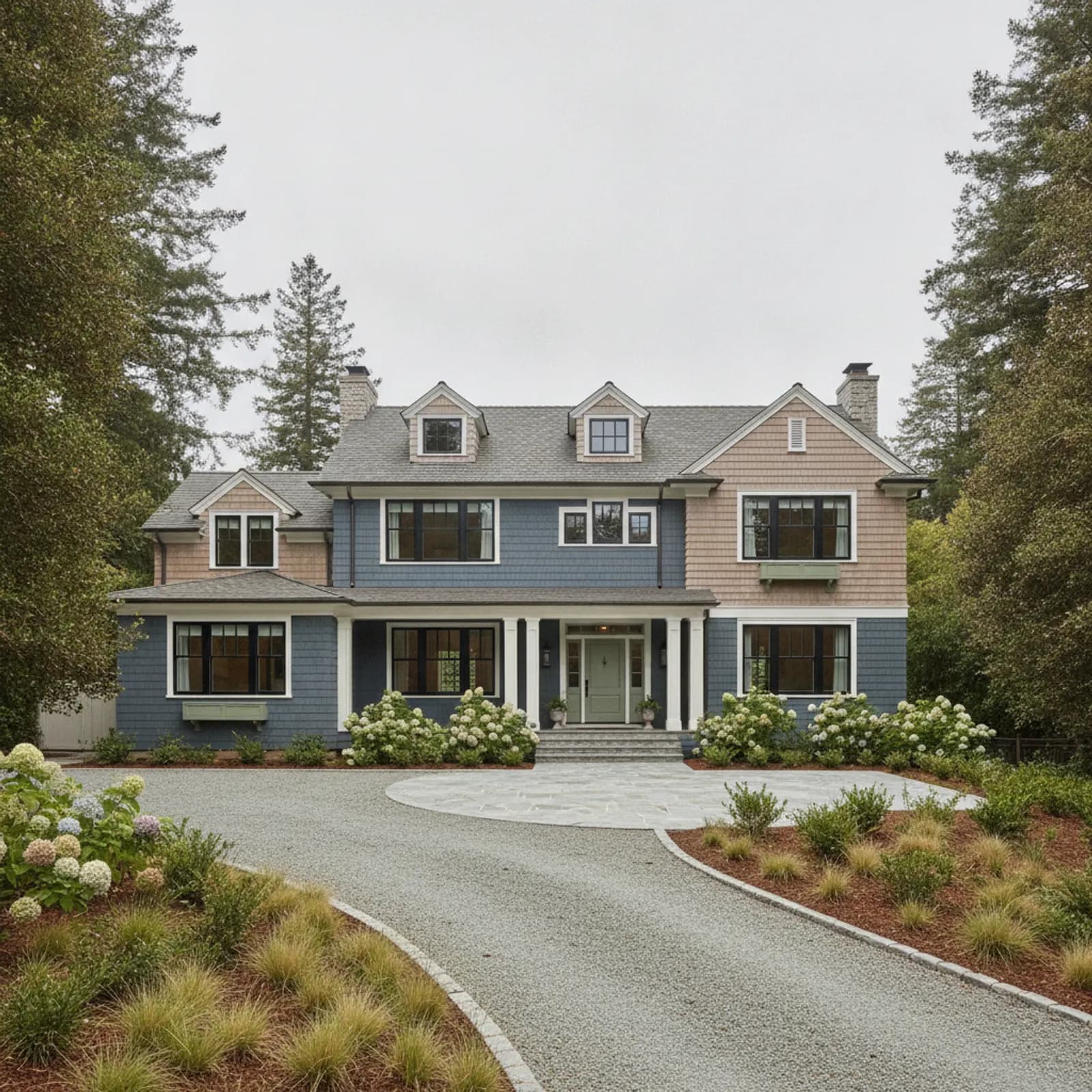
Window Replacement in Ross
Ross is a small, deeply wooded estate town where the houses that define it are grand, hand-built dwellings from the early decades of the twentieth century, set far back on big lots under mature oaks and redwoods. On a home like that, the windows are not a commodity to be swapped on price — they are part of how the architecture reads from the street, and an owner here expects a replacement that honors the proportions a builder drew a century ago.
What pushes those original windows past their service life in Ross is not a beating sun but the opposite: a damp, shaded valley floor where canopy keeps the facade from ever fully drying, so sashes swell, joinery loosens, and old glazing weeps. The work is restoration-grade by nature — match the character first, then solve the moisture that the setting forces on every opening.
Why Ross windows tend to go
Walk the estate streets and the same picture repeats: tall, slender original sashes that have soaked up decades of valley damp under the trees, with swollen rails, paint that no longer holds, and putty that has dried and dropped out. Because so little direct sun reaches these facades, the wood stays wet long after a rain and rarely bakes dry, so rot starts at the meeting rail and sill and works inward. Aged double-glazed units installed in later remodels tend to cloud and gray between the panes once their seals give out. The trigger here is the wooded, low-light setting working on old joinery, not weathering from exposure.
Replacing without flattening the architecture
On a significant Ross home the wrong replacement is obvious from the sidewalk — a stock unit dropped into an opening it was never proportioned for, with a sash thinner than the original and muntins that read as a stuck-on grid. We work the other way around: measure the existing openings, carry forward the original sightlines and sash depth, and reproduce true divided-light patterns where the home was built with them. The aim is that someone who has known the house for years should not be able to tell at a glance that the windows are new, only that they finally work and stay tight.
Solving the damp, not the heat
Most window pitches assume a hot lot and sell glass that throws off summer sun. Ross asks the reverse. Tucked on the shaded valley floor, these homes lose comfort to cool, moisture-laden air far more than they gain unwanted heat, and interior glass that runs cold is what drives the winter sweating and dripping owners complain about. A well-made insulated unit that keeps the inner pane closer to room temperature does the real work here — a drier, clearer window through a long wet season — while a tight, well-sealed installation matters more than chasing any single performance number meant for a sun-blasted parcel.
The opening decides whether it lasts
The windows we cut out of Ross homes almost never failed because the unit was cheap; they failed because water got behind the frame and then had nowhere to go in a wall that the canopy never lets dry out. So we treat each opening as drainage work, not caulk work — building it so any water that gets in is led back out and shed, with the surrounding wall protected, rather than trapping moisture against framing that will quietly rot beneath the next owner. In a setting this persistently wet, that detailing is the whole difference between a thirty-year window and a ten-year repeat.
Matching the look an owner actually wants
Plenty of Ross owners restoring a period home want the windows to disappear into the architecture; others, especially on the more contemporary remodels at the valley's edge, want a cleaner, darker-framed look. We can do either, but we proportion the unit to the house first and choose the finish second, so a darker frame still sits in an opening sized and detailed for that home rather than imposing a uniform modern profile across a facade that was never meant to carry it. The restoration stays coherent either way.
Why this matters in Ross
- Specified for North Bay conditions
- premium Class A non-combustible fiber cement as the recommended system
- Correctly detailed weather-resistive barrier and flashing
- Installed by a crew with 20 years combined experience
Recommended systems for Ross
- premium Class A non-combustible fiber cement
- James Hardie
- custom trim and architectural profiles
- fire-hardened detailing
Window Replacement for Ross homes
The full window replacement approach — materials, weather-resistive detailing, and the manufacturer standards we install to — is covered on the main service page, then specified for Ross's conditions on this one.
Our Ross process
- Step 1
Consultation
We listen to your goals and assess your home on site — exposure, substrate, and architecture.
- Step 2
Design & Proposal
A clear written proposal with the right system specified for your climate and a transparent scope.
- Step 3
Expert Installation
Trained crews install to manufacturer best practices with careful weather-management detailing.
- Step 4
Walkthrough & Support
A final walkthrough, full cleanup, and a clear written record of the scope completed — work we stand behind.
FAQ
Window Replacement in Ross — FAQ
That is exactly why. The wooded valley floor keeps these facades shaded and damp, so old wood sashes and sills never dry out fully, and rot starts at the joinery and works in. The lack of sun is the problem, not the cure.
Not if they are done for a home like yours. We measure and carry forward the original openings, sash depth, and divided-light pattern, so a new window reads as part of the architecture rather than a stock unit dropped into an old wall.
Generally no. These shaded valley homes lose comfort to cool, damp air far more than they gain heat, so the priority is a warmer interior pane that stops winter condensation, not aggressive sun rejection meant for an exposed inland lot.
Almost always the install, not the unit — water got behind the frame and sat in a wall the canopy keeps from drying. We build each opening to drain and shed water back out and protect the surrounding wall, so it is not trapped against the framing.
Yes. Big period homes here have tall, non-standard windows, and we size each replacement to its actual opening and reproduce the original proportions rather than forcing the house to accept off-the-shelf sizes.
Keep Exploring
More for Ross homeowners
More in Ross
Other exterior services in Ross
Nearby Service Areas
Window Replacement near Ross
Helpful Exterior Guides