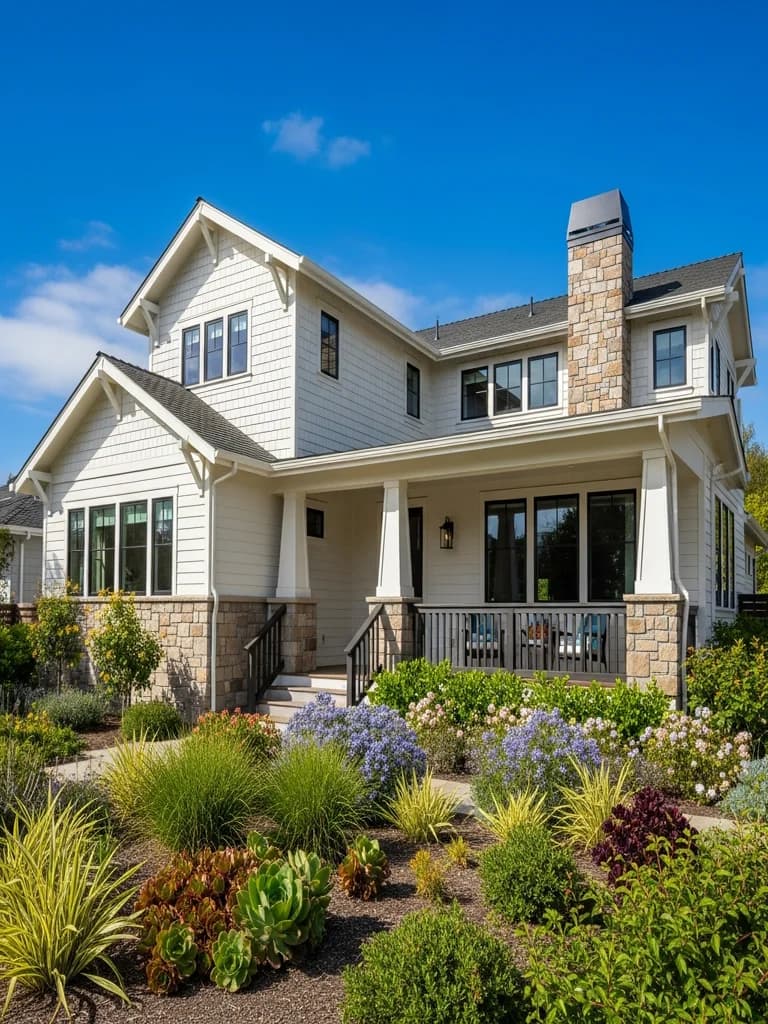
Siding in Deer Park
Deer Park climbs the wooded foothills at the base of Howell Mountain, northeast of St. Helena, and its re-side story is a wildfire story. This is 2020 Glass Fire territory — secluded homes set among oaks and conifers on the upvalley slopes, where the exterior is a genuine line of defense against an ember run, not a finish detail. A Deer Park re-side begins with how the wall will perform when fire moves through the hills again.
What complicates it is that these are premium, individual homes in a treed hillside setting. The owners want an exterior that hardens the house without surrendering the architecture or the wooded character that drew them here — fire performance and design both have to be satisfied at once.
Glass Fire context and the hardening priority
The 2020 Glass Fire burned through the hills above St. Helena and into the Deer Park and Howell Mountain area, and that history is present in every re-side conversation here. For surviving homes and rebuilds alike, the practical goal is an ignition-resistant exterior. We treat re-cladding as the chance to retire any remaining wood or combustible siding and bring the wall to a non-combustible standard — documenting materials so the work supports insurance and the hardened-home expectations now standard on these slopes.
Wooded hillside lots concentrate the exposure
Deer Park homes sit among standing fuel on grade — oaks, conifers, and brush right to the defensible-space line, often on cut-and-fill lots where one elevation faces a downhill drop. That focuses the spec on the parts that actually ignite: soffits and open eaves, vent screens where embers collect, and the bottom course, which we keep clear of mulch, woodpiles, and the leaf litter that gathers against a foundation in the trees. On a sloped, treed parcel the downhill and upwind faces get detailed first.
Hardening without losing the upvalley aesthetic
These are not homes where a stucco rebuild is automatically welcome. Fiber cement lets a Deer Park home meet ignition-resistant expectations while keeping a refined wood-siding or board-and-batten look in keeping with upvalley Napa architecture. We match profile, reveal, and trim to the home's design so the hardening reads as a quality re-side, not a compromise — the non-combustible wall and the intended aesthetic resolved together rather than traded off.
Moisture still matters on shaded foothill walls
The foothill setting and tree canopy keep north and downhill Deer Park elevations cool and slow to dry, and the upvalley winters bring real rain. So the re-side is a moisture job alongside the fire job. We build the non-combustible cladding over a continuous, correctly lapped weather-resistive barrier with flashing detailed to drain, so a wall that resists embers also resists the rot that shaded hillside walls are prone to. We pay particular attention to the lower, downhill courses where water and ground debris both collect, and to window and door transitions on the cooler elevations where leaks tend to start. We won't solve fire and create a moisture trap in its place.
Why this matters in Deer Park
- Specified for Wine Country / North Bay conditions
- Class A non-combustible fiber cement as the recommended system
- Correctly detailed weather-resistive barrier and flashing
- Installed by a crew with 20 years combined experience
Recommended systems for Deer Park
- Class A non-combustible fiber cement
- fire-hardened detailing
- premium custom trim
Fiber Cement Siding for Deer Park homes
The full fiber cement siding approach — materials, weather-resistive detailing, and the manufacturer standards we install to — is covered on the main service page, then specified for Deer Park's conditions on this one.
Our Deer Park process
- Step 1
Consultation
We listen to your goals and assess your home on site — exposure, substrate, and architecture.
- Step 2
Design & Proposal
A clear written proposal with the right system specified for your climate and a transparent scope.
- Step 3
Expert Installation
Trained crews install to manufacturer best practices with careful weather-management detailing.
- Step 4
Walkthrough & Support
A final walkthrough, full cleanup, and a clear written record of the scope completed — work we stand behind.
FAQ
Siding in Deer Park — FAQ
For these wooded Howell Mountain foothill homes, yes — the area's Glass Fire history and standing fuel make non-combustible cladding with hardened eave and base detailing strongly advisable. We assess per address.
Yes. We install non-combustible, ignition-resistant assemblies appropriate to current rebuilding and hardening standards and document the materials used.
Yes. Fiber cement can carry a refined wood-siding or board-and-batten look while meeting ignition-resistant expectations, so the hardening doesn't force a change in architecture.
They can. The canopy and downhill orientation keep some walls slow to dry, so we detail the drainage plane and flashing carefully alongside the fire hardening.
Keep Exploring
More for Deer Park homeowners
Nearby Service Areas
Siding near Deer Park
Helpful Exterior Guides