Fire-Resistant Siding in Penn Valley
This is a primary service in Penn Valley. The gated Lake Wildwood community and surrounding oak-grassland acreage sit in genuine high Sierra-foothill fire terrain with a constrained single-gate access for the lake community — fire-resistant siding here is a central exterior decision, scoped to context.
High oak-grassland exposure, gated and rural
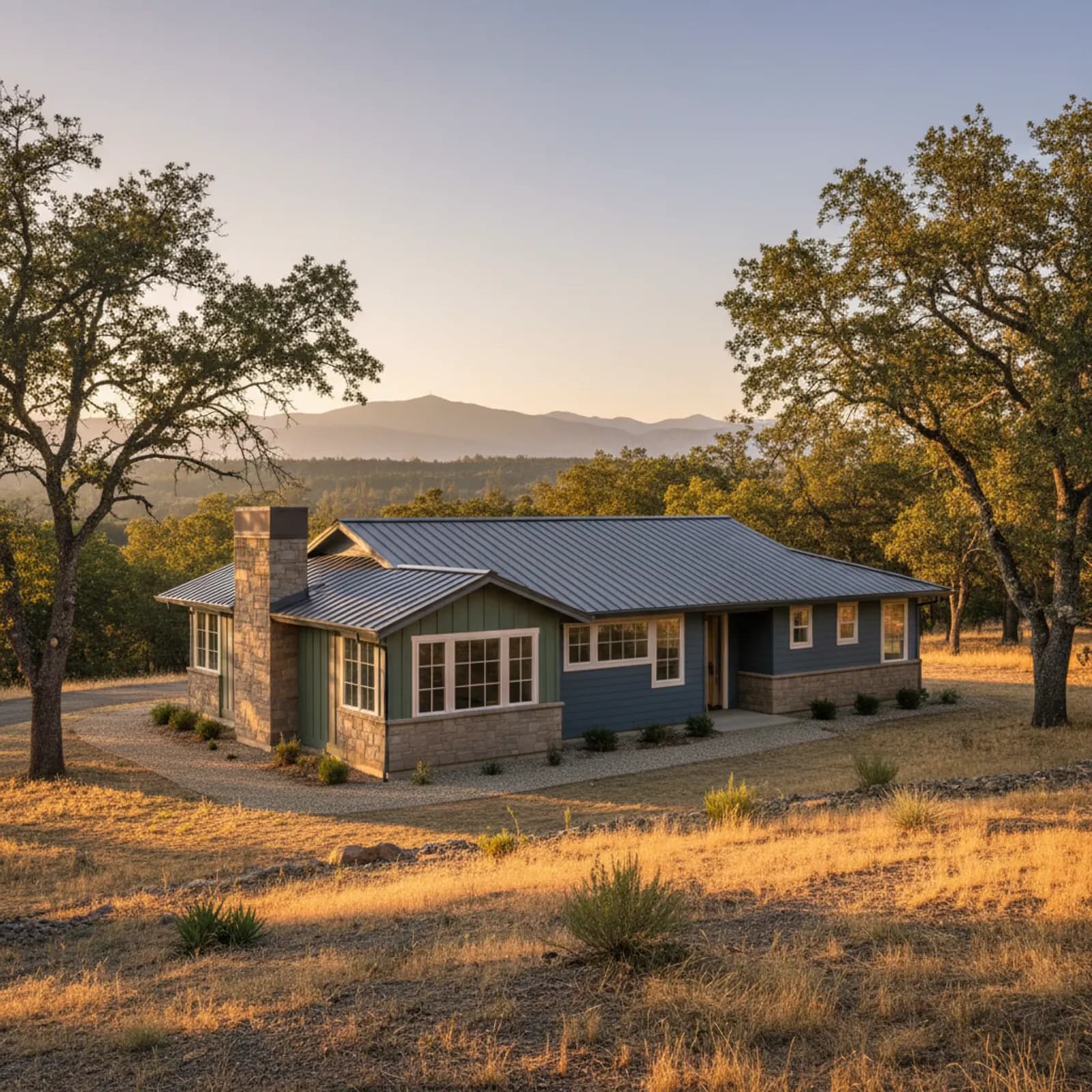
Penn Valley's Lake Wildwood and rural acreage parcels sit in real high fire terrain. We specify Class A non-combustible cladding and harden eaves, soffits, vents, decks, and ground transitions — HOA-appropriate inside Lake Wildwood, per-parcel on acreage.
Documented hardening, honest about egress
We document materials and assemblies for insurance and defensible-space conversations, and we acknowledge the gated single-access layout honestly — focusing on the most resilient hardened exterior possible.
Lake Wildwood vs. open ranch acreage
Penn Valley hardening is two scopes: HOA-detailed inside gated Lake Wildwood, and whole-parcel on the open oak-grassland ranch and equestrian acreage where barns and outbuildings share the fire picture. We assess each property for which it is.
Hardening the zero-to-five-foot zone on oak-and-pine ranchettes
On Penn Valley's acreage parcels, the wall cladding is only one piece of the picture. The first five feet around a foothill ranchette - where drifting embers settle against the foundation in a wind-driven event - dictates how fire-resistant siding actually performs. We carry the non-combustible cladding all the way to grade and pay close attention to the ground transition, because ember intrusion at the base of a wall undermines even a Class A wall assembly. That means specifying a clean, ignition-resistant termination instead of leaving exposed wood trim or bark mulch piled against the siding. On the oak-and-pine ranchettes scattered west of Grass Valley, this often pairs with rethinking attached wood decks and stair stringers that meet the wall plane. The siding work and the immediate noncombustible perimeter are scoped together so a hardened exterior is not quietly defeated by a vulnerable five-foot band most homeowners overlook until an inspector or insurer flags it.
Insurance scrutiny and re-cladding sequencing in foothill fire country
Penn Valley sits in territory where carriers have grown sharply more selective, and a fire-resistant siding job here is increasingly tied to whether a homeowner's policy renews at all. When owners re-clad an older ranchette or a Lake Wildwood residence, the sequence matters: removing combustible wood or vinyl siding usually exposes sheathing, flashing, and vent penetrations that an underwriter wants addressed in the same pass. We treat that exposed-wall window as the moment to upgrade vents to ember-resistant assemblies and confirm the wall meets non-combustible expectations end to end, rather than re-siding over hidden gaps. Because this is dry foothill country with elevated summer heat and abundant grass-and-brush fuels rather than coastal salt or heavy snow, the spec is driven almost entirely by wildfire exposure, not moisture intrusion or freeze cycles. We keep written records of the materials and assemblies installed so a Penn Valley homeowner has something concrete to hand an insurer, while staying honest that documentation supports a policy conversation rather than guaranteeing any particular underwriting outcome.
Why this matters in Penn Valley
- Specified for Sierra Foothills conditions
- Class A non-combustible fiber cement as the recommended system
- Correctly detailed weather-resistive barrier and flashing
- Installed by a crew with 20 years combined experience
Recommended systems for Penn Valley
- Class A non-combustible fiber cement
- fire-aware detailing
- robust flashing
Fire-Resistant Siding for Penn Valley homes
The full fire-resistant siding approach — materials, weather-resistive detailing, and the manufacturer standards we install to — is covered on the main service page, then specified for Penn Valley's conditions on this one.
Our Penn Valley process
- Step 1
Consultation
We listen to your goals and assess your home on site — exposure, substrate, and architecture.
- Step 2
Design & Proposal
A clear written proposal with the right system specified for your climate and a transparent scope.
- Step 3
Expert Installation
Trained crews install to manufacturer best practices with careful weather-management detailing.
- Step 4
Walkthrough & Support
A final walkthrough, full cleanup, and a clear written record of the scope completed — work we stand behind.
FAQ
Fire-Resistant Siding in Penn Valley — FAQ
High — oak-grassland Sierra-foothill terrain. Non-combustible, hardened exteriors are the baseline both inside Lake Wildwood and on surrounding acreage.
It's a real factor — constrained single-gate egress; we acknowledge it honestly and focus on maximally resilient hardened exteriors.
It can support insurability in oak-grassland fire terrain; we document materials and assemblies, though insurers set their own criteria.
No — eave, soffit, vent, deck, and ground-transition detailing complete the protection; we treat the exterior as one hardened system.
Keep Exploring
More for Penn Valley homeowners
More in Penn Valley
Other exterior services in Penn Valley
Nearby Service Areas
Fire-Resistant Siding near Penn Valley
Helpful Exterior Guides