Exterior renovation in Penn Valley
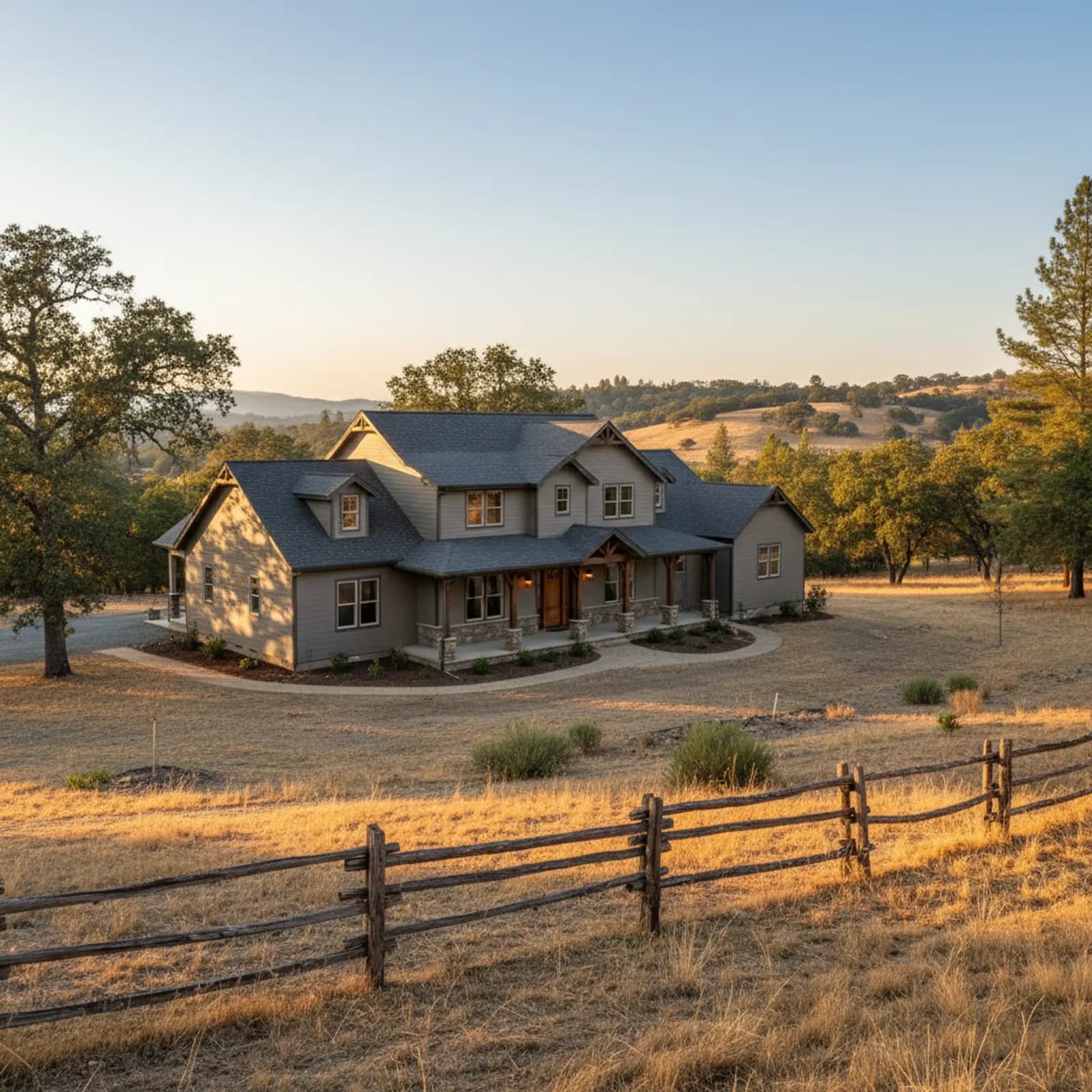
Penn Valley is a rural Nevada County community west of Grass Valley — oak-and-pine ranchettes, acreage homes, and the gated lake community of Lake Wildwood, set in classic Sierra foothill fire country. For Penn Valley homeowners an exterior project is fundamentally about hardening a rural property against genuine wildfire exposure while also handling the heat, UV, and wet winters of the foothills. We treat the re-side as the centerpiece of a whole-site hardening plan, not a cosmetic refresh.
Why the whole site matters here
A Penn Valley property is rarely just a house. The parcels are large, the homes are spread out, and most sit alongside detached garages, shops, and other outbuildings standing in tall grass and oak. In an ember storm those structures and the fuel around them decide how the whole property fares, so we don't scope the front wall in isolation. We walk the lot, look at how vegetation and outbuildings sit relative to the home, and harden the exterior as part of that larger picture rather than treating the cladding as the only line of defense.
Considering an exterior project in Penn Valley?
Penn Valley housing and architecture
Penn Valley's stock is largely rural-residential and acreage homes on oak-grassland and wooded lots, plus the Lake Wildwood community's custom and tract homes around the lake. Many of these homes still wear combustible wood or T1-11 siding, often on properties with detached garages, shops, and other outbuildings surrounded by heavy vegetation. Those older combustible elevations, scattered across large parcels, are the highest-value hardening targets here — and they vary enough that each needs its own walk-through rather than a single template.
Penn Valley's foothill climate
Penn Valley summers are hot, dry, and high-UV with abundant grass and oak fuel; winters are cool and wet. The controlling stressor is the dry season and rural fuel load, which produce a severe fire season that dominates exterior strategy. UV and heat also age cladding and finishes faster than a coastal site, and the wet winters demand sound drainage detailing. The spec has to answer all three, but fire exposure sets the priorities — material choice and detailing follow from it.
Hardening a Penn Valley rural property
Penn Valley's rural and Lake Wildwood parcels carry high wildfire exposure. We specify Class A non-combustible fiber cement and harden eaves, soffits, vents, and ground-to-wall transitions — the entry points where embers most often start a structure fire. Just as important, we consider the whole site: outbuildings, fencing, and vegetation all factor into how a property behaves in an ember storm. We document the assemblies we install so the work can support defensible-space and insurability efforts, while being clear that insurers set their own criteria.
Recommended materials for Penn Valley
Non-combustible fiber cement over a sound drainage plane is the recommendation for Penn Valley given the rural fire exposure. We advise against combustible cladding here on principle — it's the wrong material in this terrain — and fiber cement also handles the foothill heat, high UV, and wet winters, so it's the sound choice on every count. The drainage plane and hardened detailing behind the panel matter as much as the panel itself, since a sealed, well-flashed assembly is what carries through both fire season and the wet months.
What an exterior project costs in Penn Valley
Penn Valley projects carry fire-hardening scope, rural and sometimes gated Lake Wildwood access, larger structures and outbuildings, and substrate discovery on older rural homes. Long driveways and dispersed buildings affect staging and material handling, and combustible-to-non-combustible conversion adds detail labor at eaves and vents. We won't put figures to any of it blind — we assess the site and substrate on site and provide a written, itemized estimate, with the hardening scope clearly broken out as the core of the value.
Lake Wildwood community access
A large share of Penn Valley homes sit inside the gated Lake Wildwood community, which adds a coordination layer to any project. Gate access, lake-area logistics, and any community guidelines have to be planned into the schedule and staging. We carry the same hardened non-combustible specification into Lake Wildwood that we'd use on open acreage, and coordinate the access so the work proceeds smoothly within the community's setup.
Acreage homes and outbuildings
On Penn Valley's open ranchettes and acreage lots, the main house is only part of the picture. Shops, detached garages, and other outbuildings sit within the same vegetated envelope, and how they behave in an ember event affects the whole property. When we scope a re-side here we look at the full site so the hardening decisions account for the structures and fuel around the home, not just the walls in front of us.
Fire season and wet winter together
Penn Valley asks an exterior to do two jobs: resist ignition through a long dry fire season and shed water through cool, wet winters. Those aren't competing goals — a non-combustible cladding over a properly flashed drainage plane handles both — but the detailing has to be deliberate at every transition. We build the assembly to carry through summer's fuel and UV and winter's rain, so the home isn't trading one season's protection for the other's.
Penn Valley is unincorporated: Nevada County permits, NID + wells, HZ10 + Very-High FHSZ
Penn Valley is not a city. It is an unincorporated community in Nevada County. Building permits go through Nevada County's Community Development Agency in Nevada City. Electric and gas are PG&E, and Penn Valley is in high-PSPS territory. Water is a mix — Nevada Irrigation District (NID) serves some parcels, and many rural properties use private wells. Fire response is Peardale-Chicago Park Fire, Ophir Hill Fire Protection District, or Higgins Fire Protection District depending on address, alongside CAL FIRE. Penn Valley is in James Hardie's HZ10 climate zone; installing HZ5 is a documented warranty misapplication. Essentially all of Penn Valley sits in Moderate to Very High FHSZ under California's 2025 LRA Fire Hazard Severity Zone map, and the 2025 California Wildland-Urban Interface Code governs the exterior wall on nearly every re-side. The code frame changed on January 1, 2026, when Chapter 7A moved into the standalone WUI Code.
Our process in Penn Valley
- Step 1
Consultation
We listen to your goals and assess your home on site — exposure, substrate, and architecture.
- Step 2
Design & Proposal
A clear written proposal with the right system specified for your climate and a transparent scope.
- Step 3
Expert Installation
Trained crews install to manufacturer best practices with careful weather-management detailing.
- Step 4
Walkthrough & Support
A final walkthrough, full cleanup, and a clear written record of the scope completed — work we stand behind.
Penn Valley's rural foothill setting carries real fire exposure alongside hot, dry summers and wet winters, and a hardened, well-drained exterior is how we protect against all of it. We scope every Penn Valley project on site, weigh the whole property, and put a clear written estimate in your hands before any work begins.
FAQ
Penn Valley — Common Questions
In most cases yes — Penn Valley's rural oak-and-pine setting carries high wildfire exposure. Re-cladding combustible siding in non-combustible material is one of the highest-value hardening steps available.
Yes — including the gated Lake Wildwood neighborhoods, with the same hardened non-combustible specification and coordinated access.
Class A non-combustible fiber cement with hardened eave, soffit, vent, and ground-transition detailing over a sound drainage plane.
We advise against it given the rural fire exposure; fiber cement also handles the foothill heat and wet winters, so it is sound on every count.
Yes — on rural Penn Valley properties we consider how the whole site behaves in an ember event, not just the main house.
Yes — cool, wet winters, so we include sound drainage-plane and flashing detailing alongside the fire strategy.
It can support insurability in this rural foothill terrain. We document the materials and assemblies used; insurers set their own criteria.
A correctly installed, well-drained fiber cement system commonly performs 30+ years while materially reducing ignition risk.
Explore
Exterior Services
Helpful Exterior Guides