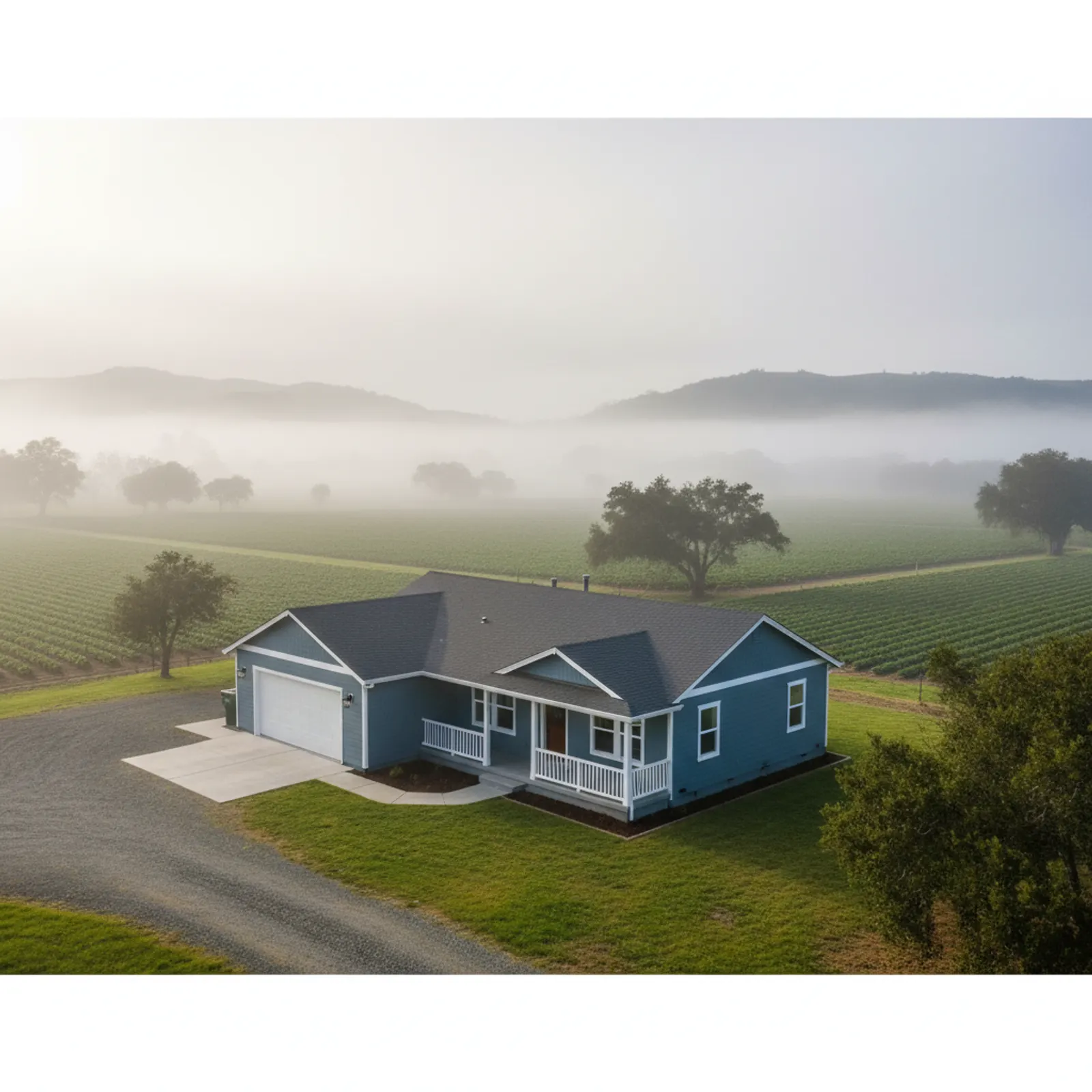
Exterior renovation in Watsonville
Watsonville anchors the Pajaro Valley at the south end of Santa Cruz County — an agricultural city of older town homes, working-family neighborhoods, and newer subdivisions, set in a damp coastal-influenced valley between the bay and the hills. Its exterior priority is moisture: persistent marine humidity and fog, with some salt influence drifting in from the nearby coast.
Why Watsonville siding wears the way it does
What quietly destroys siding in the Pajaro Valley is not a storm; it is constant marine humidity off Monterey Bay that never lets a wall fully dry, with a corrosive salt drift riding along with the fog. Older Watsonville homes hide soft, blackened wood under aged board siding because that fog-driven damp gets behind the cladding and stays there, rotting sheathing from the inside out. The fix is detailing for drying rather than just sealing tight: a rainscreen gap or furring behind the cladding so trapped moisture has a path out, flashing detailed for sideways fog-driven wet, and corrosion-aware fasteners and trim metal on the more coastal-exposed parcels. A re-side here lasts because the assembly can breathe, not because we caulked it shut.
Considering an exterior project in Watsonville?
Watsonville housing and architecture
Watsonville's stock blends older downtown and historic-district homes, postwar and later tract neighborhoods, and newer subdivisions, plus rural and ag-edge parcels. Many older homes wear wood siding that the damp valley has aged hard — exactly the assemblies we replace with drying-capable systems.
Watsonville's Pajaro Valley climate
Watsonville is cool, foggy, and humid much of the year, reached by marine influence off Monterey Bay with a measurable salt drift. Surfaces stay damp; drying capacity and corrosion-aware detailing on the more coastal-exposed parcels are the controlling exterior factors.
Recommended materials for Watsonville
Fiber cement over a rigorously detailed, drying-capable drainage plane, with corrosion-aware fastening on the more coastal-exposed parcels, is the core recommendation — it resists the Pajaro Valley moisture and salt drift far better than the original wood on many Watsonville homes.
What an exterior project costs in Watsonville
Watsonville pricing turns on home size and stories, trim complexity, substrate and rot condition once cladding is removed (often significant on older damp-exposed homes), window integration, and the moisture-management scope. We provide a written, scoped estimate after an on-site assessment.
Working a Watsonville exterior, neighborhood by neighborhood
Watsonville is a compact city with very different work conditions depending on the address. Downtown and the historic district off Main Street and East Beach mean narrow lots, tight setbacks, and homes built close to the sidewalk, so staging scaffolding and protecting neighboring property takes planning before a single board comes off. The flatter tract neighborhoods around Green Valley Road and the newer subdivisions east toward Freedom give us driveway access and room to lay out materials, which shortens schedules. Ag-edge parcels in the Pajaro Valley bring their own reality: long private drives, dust, and equipment moving past the work zone during harvest. Because Watsonville sits in Santa Cruz County jurisdiction, we pull permits through the city for incorporated addresses and plan inspection timing around that. We also account for the daily fog burn-off cycle here, since siding, housewrap, and sealants want a dry, warmer window. Knowing which part of town a home sits in lets us quote access honestly and avoid the surprises that stretch a job.
How Pajaro Valley moisture drives the details we build in
The thing that quietly destroys siding in Watsonville is not a single storm; it is constant marine humidity that never lets a wall fully dry. Fog off Monterey Bay keeps the valley damp for long stretches, and the salt that drifts in adds a corrosive edge. That changes the small decisions that decide whether a re-side lasts. We favor assemblies that can dry, which means a rainscreen gap or furring behind the cladding so trapped moisture has a path out instead of rotting sheathing from the inside. Flashing at windows, decks, and wall-to-roof transitions gets detailed for sideways fog-driven moisture, not just falling rain. Fasteners and trim metal are specified to resist coastal corrosion, and we steer away from materials that wick and hold water at cut edges. Older Watsonville homes often hide soft, blackened wood under aged board siding, so we budget time to open up suspect areas and address the substrate before new cladding goes on. Detailing for drying, rather than just sealing tight, is what keeps a Pajaro Valley wall sound.
Our process in Watsonville
- Step 1
Consultation
We listen to your goals and assess your home on site — exposure, substrate, and architecture.
- Step 2
Design & Proposal
A clear written proposal with the right system specified for your climate and a transparent scope.
- Step 3
Expert Installation
Trained crews install to manufacturer best practices with careful weather-management detailing.
- Step 4
Walkthrough & Support
A final walkthrough, full cleanup, and a clear written record of the scope completed — work we stand behind.
Watsonville rewards an exterior built to shed water and still dry in a damp, salt-influenced valley.
FAQ
Watsonville — Common Questions
Fiber cement over a rigorously detailed drainage plane — it manages the Pajaro Valley moisture and salt drift far better than wood, with corrosion-aware fastening on coastal-exposed parcels.
Usually trapped moisture from poor drainage and flashing detailing in a damp, foggy valley — not the cladding alone. Drying-capable detailing fixes the cause.
There is a measurable salt drift off Monterey Bay; on the more coastal-exposed parcels we add corrosion-aware fastening on top of the moisture baseline.
Low for the valley city; wooded hill margins toward the Santa Cruz Mountains carry more consideration. We specify per address.
Yes — period-appropriate profiles and trim in moisture-managed fiber cement preserve character while solving the damp problem.
Against persistent valley moisture it underperforms a properly drained fiber cement assembly, which also resists decay far better.
When feasible, yes — correct flashing integration is especially important in a high-moisture climate.
A correctly detailed, well-drained fiber cement system commonly performs 30+ years in Watsonville's damp valley climate.
Explore
Exterior Services
Helpful Exterior Guides