9 min read · Siding Replacement
Cedar shake and shingle siding is one of the most genuinely attractive claddings there is — the natural grain, the way it weathers to a soft silver-gray, and the Craftsman-bungalow and Tahoe-cabin character it carries are the reason people love it and the reason we're not here to talk anyone out of wood on principle. But California asks two hard questions of a cedar-clad wall: how much upkeep it needs in our dry heat, and how it performs in wildfire country. Natural cedar is beautiful and it is high-maintenance and combustible, and that combination is why a lot of foothill and mountain homeowners end up weighing a switch. This hub lays out cedar shake's real appeal alongside its California-specific realities, and points to the deeper guides on the comparison, the alternatives, and the cost.
What cedar shake is — and why people genuinely love it
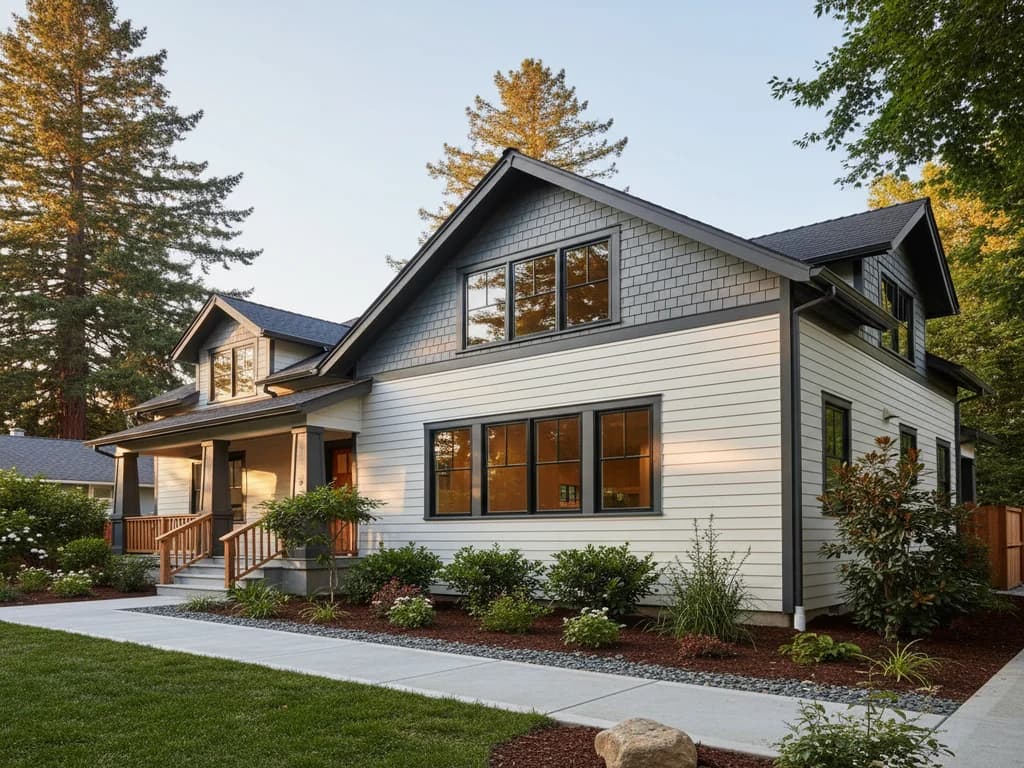
Cedar shake and shingle siding is split or sawn Western Red Cedar (sometimes Alaskan Yellow Cedar) installed as individual courses of tapered wood. Its appeal is real and worth stating plainly: no manufactured product perfectly reproduces natural wood grain, the texture reads as warm and handcrafted, and cedar weathers gracefully to the soft gray that defines so much foothill and lakeside architecture. It's the classic look on Craftsman bungalows, shingle-style homes, and mountain cabins across Northern California, and for good reason. We're not here to bash cedar. The question isn't whether wood shake is beautiful — it is — but whether natural cedar is the right long-term fit for your home's fire exposure and how much maintenance you want to sign up for.
Where California changes the math — upkeep and fire
Two California realities reshape the cedar decision. **Maintenance:** cedar is a natural material, so it needs periodic care — the Cedar Shake & Shingle Bureau describes the finishing, staining, and re-coating regimen that keeps wood shakes performing, and in our dry valley and foothill heat that upkeep is real, ongoing work; neglected cedar is prone to cupping, splitting, rot, and insect damage. **Wildfire:** untreated cedar is combustible and offers little fire protection on its own. To be precise and fair, this doesn't mean all wood is banned — pressure-impregnated fire-retardant-treated (FRT) cedar can meet ignition-resistant requirements in some assemblies — but standard, untreated cedar shake is not an ignition-resistant covering, and in the Wildland-Urban Interface that matters a great deal. For homes outside fire zones whose owners embrace the upkeep, cedar can still be a wonderful choice.
Keep it or replace it — the honest decision
**Keeping cedar** is defensible when you love the natural-wood look enough to maintain it, your home is in a low fire-hazard area, and your shakes are sound rather than cupped, split, or rotting. **Replacing it** earns its place when: you're in a wildfire-exposed (WUI-code) zone and want a noncombustible wall; you're tired of the staining-and-re-coating cycle; or your cedar has weathered past the point of refinishing. The most common destination is a shake-look fiber cement — HardieShingle, which James Hardie makes specifically to mimic the look of classic cedar shake while being non-combustible and low-maintenance. It keeps the architectural character that made cedar worth choosing and drops the upkeep and combustibility. Compare the two directly in our HardieShingle vs. cedar shake guide.
What replaces cedar shake in California
For most California homeowners moving off natural cedar — especially in heat- and fire-prone regions — the destination is a shake-profile fiber cement such as HardieShingle, which comes in straight-edge and staggered-edge panels engineered to read as cedar shake. James Hardie publishes that its fiber cement is noncombustible with a Class A fire rating (per ASTM E84) and is built to withstand extreme heat and UV. It trades cedar's living-wood warmth for a factory finish that resists California sun without the staining cycle, dimensional stability in valley heat, and the fire performance that matters in the WUI. It is not real wood, and we won't pretend the grain is identical — but for keeping the shake look without the upkeep and combustibility, it's the material most people land on. If budget is the driver, some homeowners also weigh vinyl shake; we compare that honestly in our vinyl shake vs. Hardie shake guide. Planning ranges are in the cost to replace cedar shake guide.
How a shake wall is built — courses, exposure, and keyways
It helps to understand what you're looking at before deciding its fate. A shake wall is thousands of individual tapered pieces hung in overlapping horizontal courses, each course covering most of the one below it. The strip left showing is called the exposure, and the installer's discipline in keeping that exposure consistent is what gives a shake wall its even, rhythmic coursing. Between neighboring shakes are narrow gaps — keyways — that let the wood move; a careful installer offsets them so no keyway lands over one in the course below, because stacked keyways become a straight path for water. Corners are either woven, with alternating overlaps that read as handcraft, or closed against a vertical trim board. Why this matters now: when you assess an old shake wall, trouble clusters exactly where this geometry is weakest — courses where the exposure crept wider than intended, keyways that ended up aligned, and woven corners that have opened with age. A wall laid out well fifty years ago often reads better today than a sloppier wall half its age.
What's under the shakes — and why it changes the scope
Cedar shake predates the modern layered wall, and what the tear-off exposes is often the biggest scope variable in the whole project. Many older shake homes were built over spaced sheathing — horizontal boards with deliberate gaps between them, sometimes called skip sheathing — because the open gaps let the backs of the shakes breathe and dry. Others have solid board sheathing, and plenty of foothill homes have shakes nailed straight over an even older layer of siding. None of those substrates is ready for fiber cement: panelized shake-look products need a flat, continuous structural surface with a modern weather-resistive barrier over it, so a spaced-sheathing wall gets new structural panels before anything else happens. That isn't a defect and nobody did anything wrong — it's simply how walls were built then versus now. The practical takeaway: until the shakes come off, nobody knows for certain which wall type you have, which is why an honest contract states a clear allowance for resheathing rather than pretending the question is settled. A look inside an unfinished attic gable or garage wall can sometimes answer it early.
Tahoe cabins, foothill customs, valley accents — the regional read
The cedar-shake decision doesn't play the same across Northern California, because both the exposure and the reason for the shake differ by region. Around Truckee and the Tahoe basin, shake is often the whole architectural identity of a cabin, and the setting adds its own stresses — snow banked against the lowest courses, intense high-altitude sun on south faces — alongside serious wildfire exposure, so those owners tend to weigh the full move to a noncombustible shake-look wall. In the foothills, shake typically wraps custom homes on wooded parcels where WUI designations and defensible-space thinking dominate the conversation; there the fire logic usually decides it. On the valley floor, shake is more often an accent — gable ends and dormers on ranch homes and bungalows — where the driver isn't fire but the tired, curling look of sun-beaten wood high on a wall nobody wants to keep refinishing. Accent-scale replacement is a smaller, more contained project. Same material question, three very different conversations.
Putting the upgrade on paper — permits, photos, and your records
If your home sits in a designated fire-hazard zone, the re-side is worth documenting beyond the invoice. Wall coverings are part of how a WUI parcel presents on paper, and a documented change from a combustible wood cladding to a noncombustible one is the kind of fact you want in your file, stated accurately and backed up — though we won't promise what any insurer will or won't do, because nobody honest can. Keep the permit record, the manufacturer's product data sheet identifying the cladding, and dated photos taken during construction — the weather barrier and flashing stages as well as the finished surface. If your county or carrier uses a home-hardening checklist, note which line items the project addressed. The same paperwork serves you at resale, when a buyer's inspector asks what the walls are and when they went on. It costs nothing to assemble while the crew is on site and is tedious to reconstruct years later.
Key takeaways
- Cedar shake has genuine, hard-to-replicate appeal — natural grain and Craftsman/Tahoe-cabin character — and this isn't about cedar being 'bad.'
- Natural cedar is high-maintenance in California heat: periodic staining and re-coating, and it's prone to cupping, splitting, rot, and insects if neglected.
- Untreated cedar is combustible and not ignition-resistant; fire-retardant-treated (FRT) cedar can qualify in some assemblies, but standard cedar shake does not.
- Keep sound cedar in low-fire areas if you'll maintain the look; replace it for fire zones, upkeep fatigue, or weathering past refinishing.
- The common replacement is shake-look fiber cement (HardieShingle) — non-combustible, low-maintenance, and made to mimic cedar shake.
FAQ
Quick Answers
Not categorically — cedar shake is a genuinely beautiful, characterful cladding, and in a low fire-hazard area with an owner willing to maintain it, it can be a fine choice. But two California realities count against natural cedar: it's high-maintenance in our dry heat (periodic staining and re-coating, and it's prone to cupping, rot, and insects if neglected), and untreated cedar is combustible, which is disqualifying as a standalone covering in wildfire (WUI-code) zones. It's a fit question tied to your specific address and how much upkeep you want, not a blanket verdict.
Yes — that's exactly what shake-profile fiber cement is for. HardieShingle is made by James Hardie specifically to mimic the look of classic cedar shake, in straight-edge and staggered-edge panels, while being non-combustible and low-maintenance. The grain isn't identical to living wood, and we won't pretend otherwise, but it keeps the architectural character — the shingled texture and shadow lines — that made cedar worth choosing, without the staining cycle or the combustibility.
Standard untreated cedar shake is not a compliant standalone covering in designated Wildland-Urban Interface areas, because the 2025 California Wildland-Urban Interface Code (Title 24, Part 7) requires exterior wall coverings to be noncombustible or ignition-resistant. There's a nuance: pressure-impregnated fire-retardant-treated (FRT) cedar can meet ignition-resistant requirements in some assemblies, so 'all wood is banned' overstates it. But untreated natural cedar doesn't qualify, which is why many fire-zone homeowners move to noncombustible fiber cement.
No — and be wary of anyone who offers it. Shake is an irregular, stepped surface, so anything fastened over it bridges air gaps and telegraphs the unevenness, and the old combustible wood would remain inside the wall assembly, which defeats the fire logic of the upgrade on a WUI parcel. A proper re-side strips the shakes, inspects the structure, installs a continuous weather barrier with integrated flashing, and only then hangs the new cladding on a flat, sound substrate.
That's your call, but keep records either way. In fire-prone parts of California, construction details on WUI parcels get real attention, and a move from combustible wood to a noncombustible cladding is a material fact about your home. We can't promise any particular insurer response, and we won't pretend to. What we recommend is simple: retain the permit, the product documentation, and dated construction photos so the upgrade is provable whenever the question comes up — at renewal, when shopping coverage, or at resale.
Sources
Authoritative references
- UC ANR Fire Network — Siding (combustible vs. noncombustible/ignition-resistant siding for the WUI)
- 2025 California WUI Code §504.5.2 — exterior wall coverings must be noncombustible or ignition-resistant (via UpCodes)
- James Hardie — HardieShingle siding (fiber-cement shake-look, straight-edge & staggered-edge panels)
- James Hardie — performance & durability (noncombustible/Class A per ASTM E84; built for extreme heat & UV)
- Cedar Shake & Shingle Bureau — finishing & maintenance of cedar shakes and shingles
External links to government, code, and manufacturer sources. Sierra Siding is not affiliated with these organizations; references are provided for verification.