10 min read · Siding Replacement
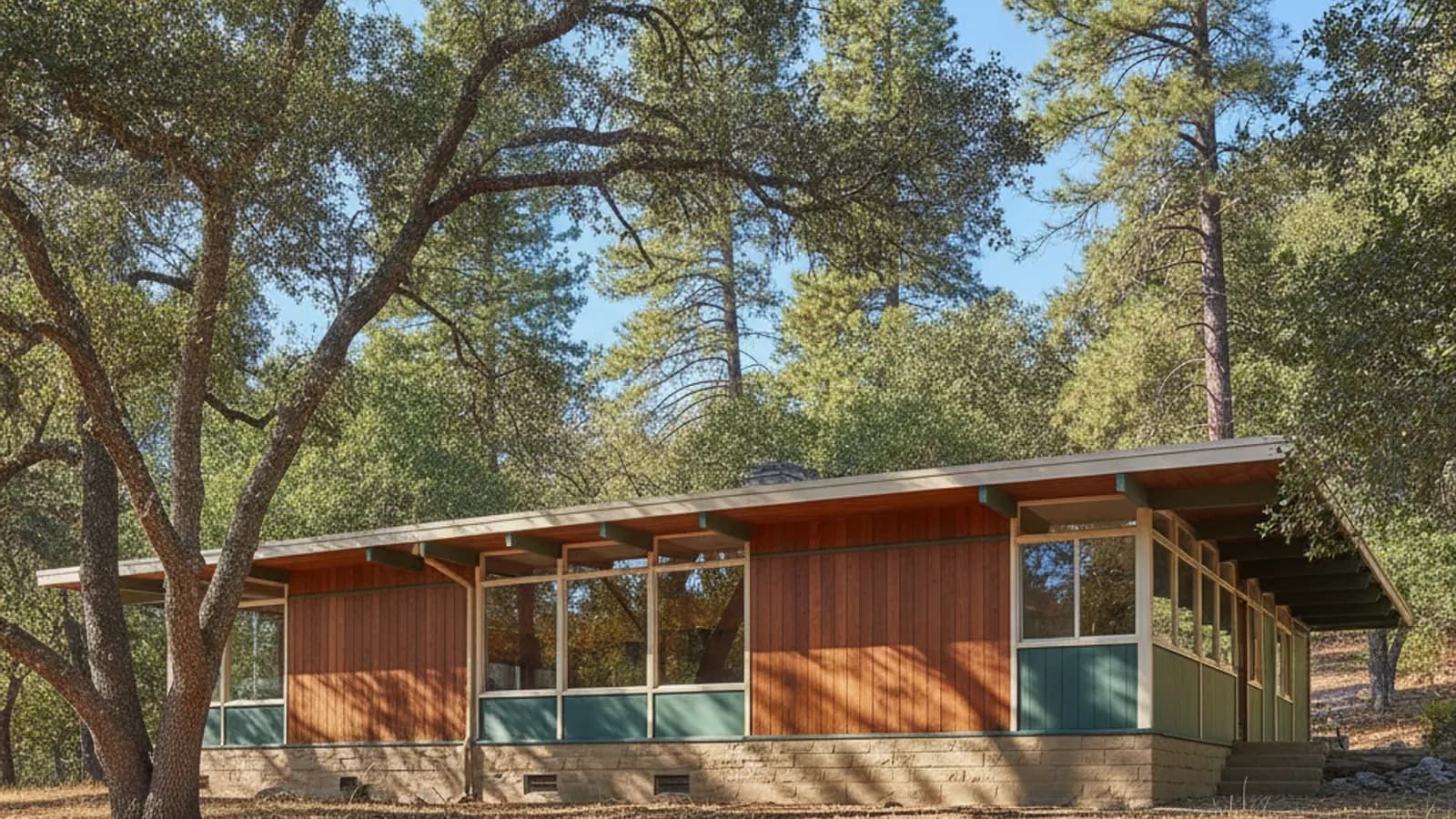
Real wood siding — western red cedar, redwood, and painted pine or fir — gives a California home a warmth and character no manufactured product fully replicates, and on countless Northern California homes, especially mid-century and Bay Area houses, it's the original cladding. Wood is also widely misunderstood at both extremes: it's neither the maintenance-free, rot-proof miracle some believe, nor the disposable material others assume. The truth is specific. Well-detailed, well-finished wood can last a very long time; neglected wood weathers and, where moisture lingers, decays; and all wood is combustible, which is a real consideration in California's wildfire zones. This hub lays out how wood siding actually ages here, what upkeep it genuinely needs, and the honest decision between maintaining it and re-siding. We're not here to talk you out of wood you love — only to give you the real trade-offs.
How wood siding actually ages in California
Two forces drive wood-siding aging: ultraviolet light and moisture. Per the USDA Forest Products Laboratory, unfinished wood exposed to weather changes color, roughens, develops surface checking, and slowly erodes through UV photodegradation — though erosion is genuinely slow (on the order of a quarter-inch of wood per century). Moisture is the real threat: serious decay only occurs when wood's moisture content stays above the fiber-saturation point (around 30%), and wood kept reliably below about 20% won't decay. That's why detailing — keeping wood off the ground, flashing it well, and renewing its finish — matters more than the species. The FPL puts it plainly: under proper conditions wood gives 'centuries of service'; under conditions that let fungi develop, it needs protection.
Cedar and redwood: naturally durable heartwood, with caveats
California's two classic siding woods earn their reputation honestly — but precisely. Western red cedar heartwood is rated 'Resistant' to decay by the FPL Wood Handbook (a real rating, though a notch below 'Very resistant'), and cedar is exceptionally dimensionally stable. Old-growth redwood heartwood is rated 'Resistant' by the same FPL Wood Handbook, owing to natural extractives. The crucial caveat in both cases: the durability is in the *heartwood* — the sapwood of essentially all species has low decay resistance. And much modern replacement redwood is second-growth, which the FPL rates only 'moderately resistant,' so new redwood doesn't necessarily equal the heritage material on an older home. We cover each in depth: replacing cedar siding and redwood siding care & replacement.
The maintenance wood honestly needs
Wood's running cost is finishing. Exterior finishes have a finite life and need renewal when they've worn thin — and the interval depends entirely on the product and exposure. The FPL's published service-life figures: a water-repellent preservative lasts roughly 1–2 years; semitransparent stains about 2–4 years on smooth wood (longer on rough-sawn); and paint roughly 4–5 years for one coat over primer, up to about 10 years for a well-built two-coat system, with south- and west-facing walls needing attention sooner than shaded sides. None of that makes wood 'high-maintenance' by itself — but it is a recurring obligation, and how you feel about that obligation is often what decides between refinishing and re-siding. The full picture is in our wood siding maintenance guide.
The wildfire question — and the honest options
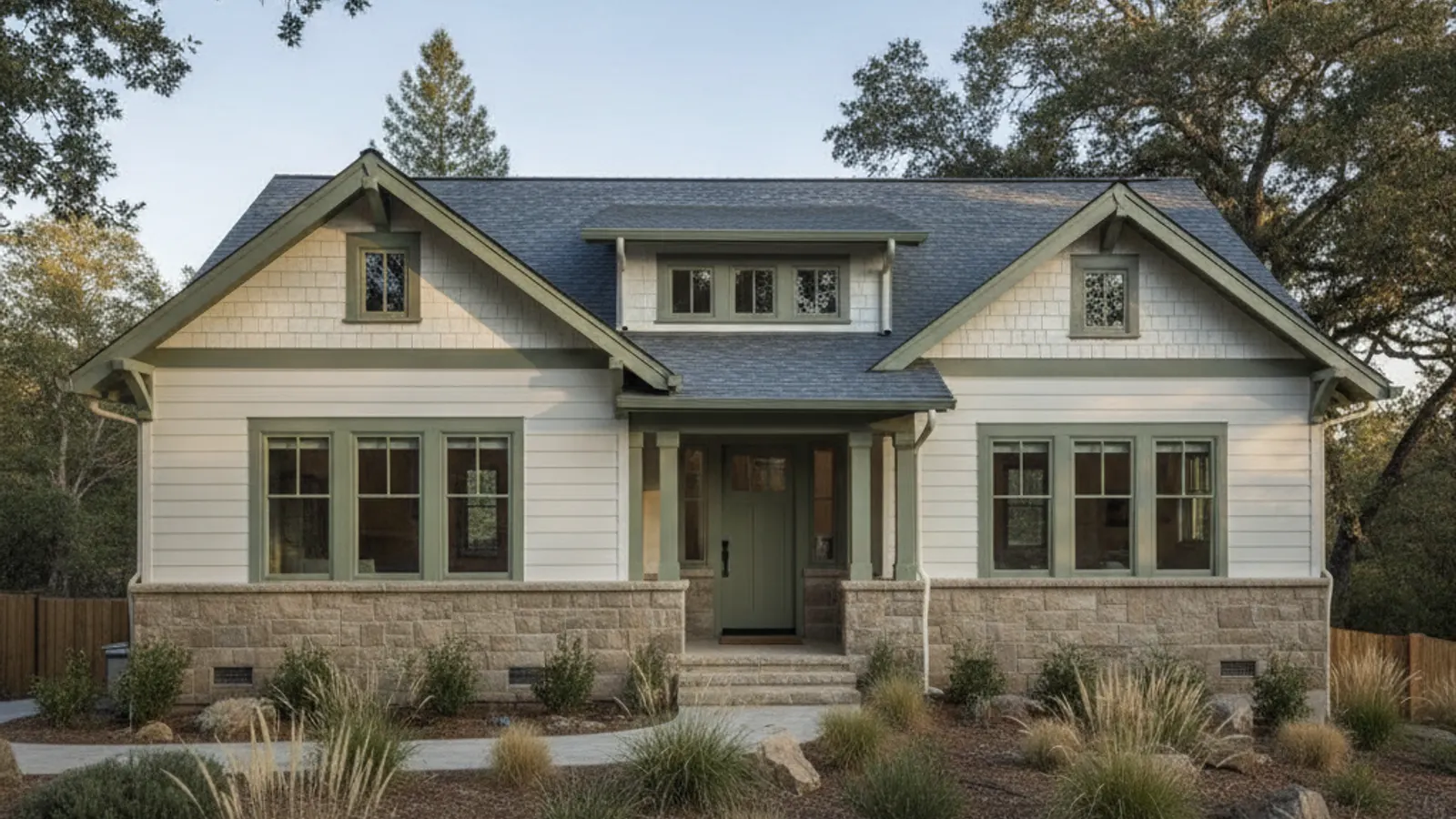
Wood siding is combustible, and in California that isn't a footnote. The UC ANR Fire Network notes that siding is at risk when the material is combustible, that it can be ignited by radiant heat from a burning neighbor, and that homes within 30 feet of neighboring structures should use noncombustible or ignition-resistant siding — explicitly naming fiber cement, metal, and traditional three-coat stucco as compliant. On a wildfire-exposed parcel, that pushes the calculus toward non-combustible cladding and 2025 California WUI Code compliance — see our fire-resistant siding work. When the decision is to re-side, most California homeowners move to non-combustible fiber cement (such as James Hardie), which keeps a wood-like look with far lower maintenance and a Class A fire rating. If you love your wood and your fire exposure is low, maintaining it is a perfectly legitimate choice.
Key takeaways
- Wood siding ages under UV (graying, checking, slow erosion) and fails mainly where moisture lingers (decay needs ~30%+ moisture content).
- Cedar and old-growth redwood heartwood are naturally decay-resistant — but sapwood isn't, and second-growth redwood is only moderately resistant.
- Finishing is wood's recurring cost: water-repellents ~1–2 yrs, stains ~2–4 yrs, paint ~4–10 yrs depending on product and exposure (FPL).
- All wood is combustible; UC ANR recommends noncombustible/ignition-resistant siding within 30 ft of neighbors and in WUI zones.
- Re-side to non-combustible fiber cement for a wood look with low maintenance — but maintaining sound wood you love is a valid choice.
FAQ
Quick Answers
No — it's a legitimate, beautiful cladding, and well-detailed, well-finished wood can last a very long time. The honest caveats are that it requires periodic refinishing, it decays where moisture persists, and it's combustible, which matters in wildfire zones. Whether to keep wood or re-side comes down to your maintenance appetite and your fire exposure, not a verdict that wood is 'bad.'
There's no single number — it depends on the wood, the detailing, and the upkeep. The USDA Forest Products Laboratory notes wood gives 'centuries of service' under proper conditions and won't decay if kept reliably dry, but neglected wood that stays wet can fail in years. Decay-resistant heartwood (cedar, old-growth redwood), good flashing, ground clearance, and a maintained finish are what extend its life.
If the wood is structurally sound and you don't mind the refinishing cycle, maintaining it is often the better-value choice — especially for heritage cedar or redwood you want to keep. Re-siding makes more sense when there's widespread decay, when the maintenance burden has worn out its welcome, or when wildfire exposure argues for non-combustible cladding. We'll give you an honest read rather than defaulting to replacement.
Almost always the paint, and that ordering is what makes wood siding manageable. A coating that is maintained on schedule protects the wood more or less indefinitely; a coating allowed to fail lets water into the substrate and the wood begins to go. The practical consequence is that the maintenance interval is not cosmetic housekeeping — it is the thing standing between a wall that lasts decades and one that needs replacing.
Yes, and treating all four elevations the same is a common mistake. Sun-facing walls fail by ultraviolet breakdown of the coating — chalking and fading. Shaded and north-facing walls fail by staying damp, which shows as organic growth, coating adhesion problems and rot at joints and end-grain. They need different attention and, sometimes, different products. A house that gets repainted uniformly on a fixed cycle is usually over-maintaining one side and under-maintaining the other.
It is combustible cladding, and in a genuinely exposed location that matters — but it is worth keeping in proportion. Structures are lost overwhelmingly through embers entering vents, collecting under open eaves, igniting debris at the base of walls and igniting attached decking, not through cladding burn-through. On an exposed parcel, hardening those paths generally does more than replacing wood walls, and where budget is limited that is the honest order to spend in.
Sources
Authoritative references
- USDA Forest Products Laboratory — Wood Handbook (FPL-GTR-282): Wood as an Engineering Material
- USDA Forest Products Laboratory — Wood Handbook Ch. 15: Finishing of Wood (finish service life, weathering)
- UC ANR Fire Network — Siding: combustible cladding & wildfire (noncombustible/ignition-resistant materials)
- James Hardie — fiber cement performance & durability (noncombustible, moisture- & pest-resistant)
- 2025 California Wildland-Urban Interface Code (Title 24, Part 7) — exterior walls & wall coverings, §504.5
External links to government, code, and manufacturer sources. Sierra Siding is not affiliated with these organizations; references are provided for verification.