
9 min read · Siding Replacement
Redwood is Northern California's native siding — the cladding on countless Bay Area, foothill, and mid-century homes, prized for its color, stability, and natural durability. If you own a redwood-sided home, you likely want to do right by it, and that starts with understanding what makes redwood durable and what its limits actually are. The honest picture: old-growth redwood heartwood is genuinely one of the most decay-resistant domestic woods, but that resistance lives in the heartwood, varies within the tree, and is markedly lower in the second-growth redwood sold today. This guide covers redwood's real properties, how it ages here, and the honest decision between restoring the redwood you have and re-siding — because for redwood especially, keeping it is often the right answer.
Why redwood earned its reputation — precisely
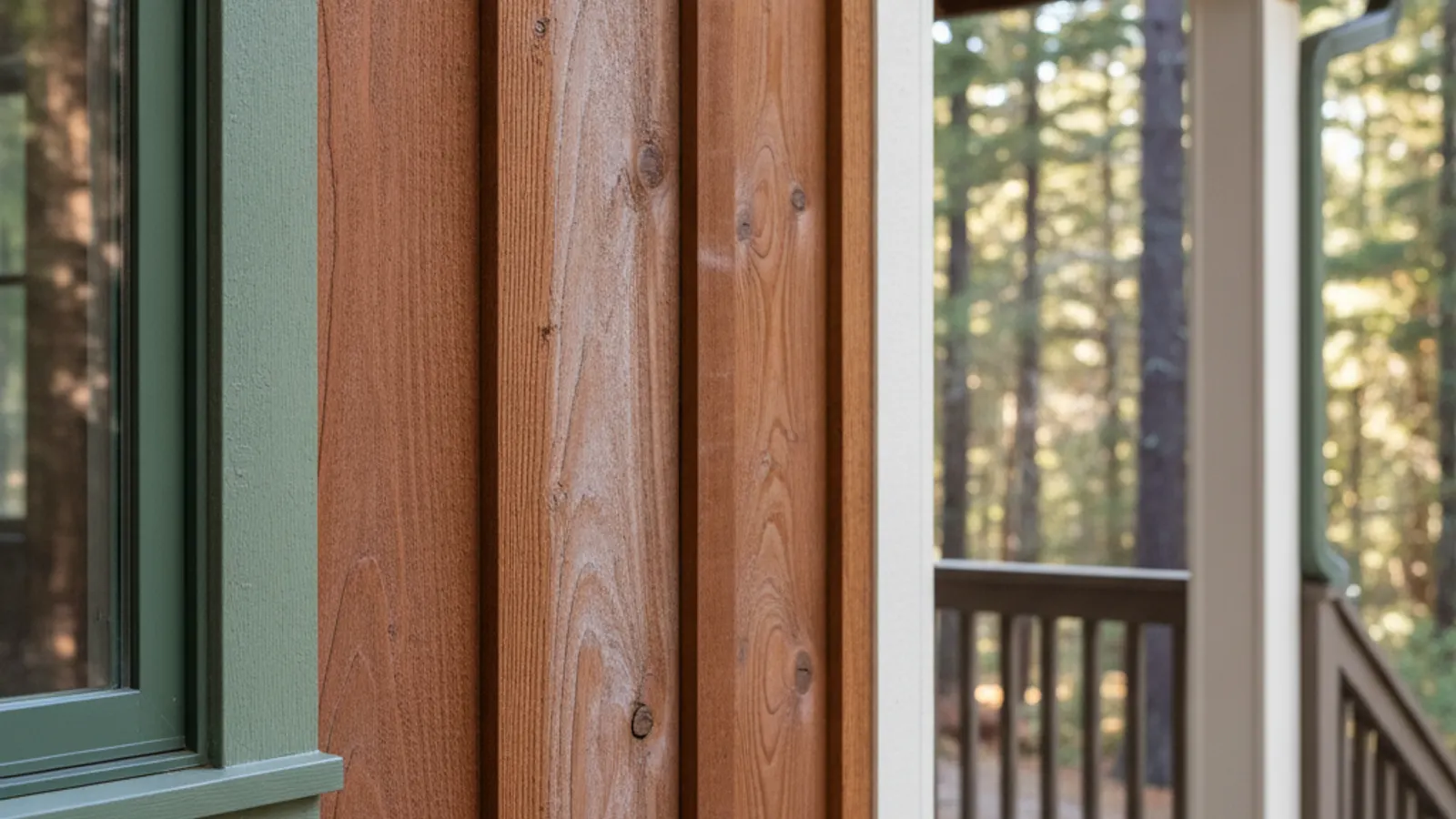
Redwood's durability is real and comes from natural extractives in the heartwood, not from density. The USDA Forest Products Laboratory Wood Handbook rates redwood old-growth heartwood as 'Resistant' to decay, and a Forest Service durability table places redwood heartwood among the 'most resistant' woods (an expected service life of 20+ years above ground in test conditions). Two precise caveats matter. First, heartwood versus sapwood: as Humboldt Sawmill (a current California redwood producer) states, the reddish-brown heartwood resists insects and decay, while the cream-colored sapwood 'does not possess the same resistance.' Second, old-growth versus second-growth: the FPL rates old-growth redwood 'Resistant' but young, second-growth redwood only 'moderately resistant' — so the heritage redwood on a 1950s home is often more durable than new redwood lumber.
How redwood ages in California
Left unfinished, redwood weathers gracefully but visibly: Humboldt notes it 'weather-bleaches to a soft driftwood gray' (a silvery tan in drier inland climates), driven by sunlight and water. That graying is cosmetic and can be slowed or reversed by finishing. The failure modes that actually matter are moisture-driven: decay in sapwood or at end-grain, joints, and ground contact where water lingers, and finish failure that exposes the wood to accelerated UV weathering. Redwood's natural stability means it's less prone to severe cupping and warping than many woods, but no wood is immune where water is trapped. To hold redwood's color, the industry guidance is straightforward — finish it and refinish 'every few years,' the interval depending on the product and exposure.
Restore or re-side — redwood deserves the question
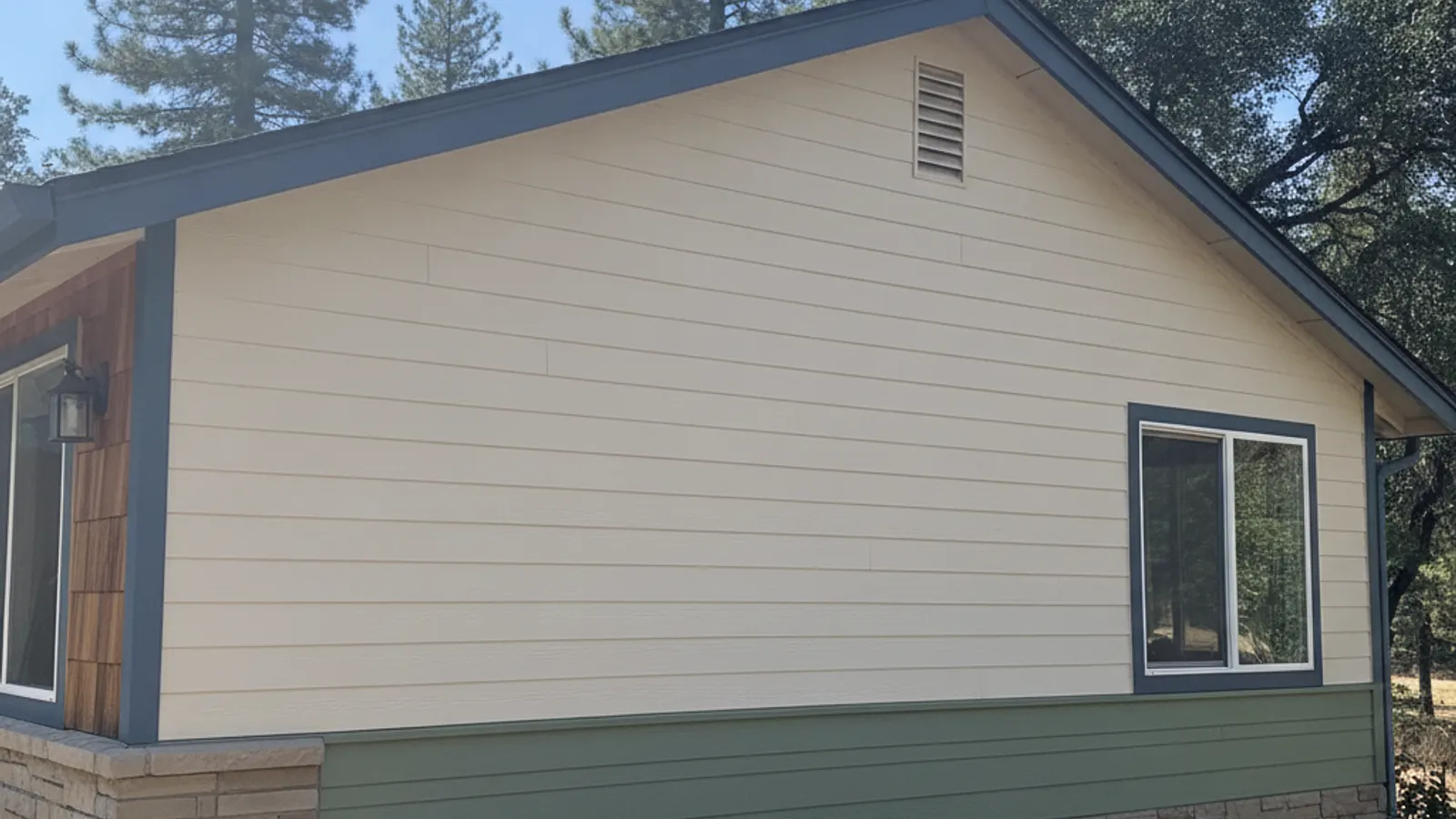
For redwood more than most materials, restoration is often the right call. Sound old-growth redwood heartwood with a tired finish is a cleaning-and-refinishing project, not a replacement — and re-cladding genuinely durable heritage redwood with a manufactured product is a real loss of character. Re-siding earns its place when there's widespread decay (often in sapwood-heavy or poorly detailed boards), when sun-and-moisture damage is beyond refinishing, or when wildfire exposure argues for non-combustible cladding — redwood, like all wood, is combustible, and the UC ANR Fire Network recommends noncombustible or ignition-resistant siding within 30 feet of neighbors. We'll always tell you honestly when your redwood is worth keeping; our wood siding maintenance guide covers the upkeep path.
If you do re-side: matching redwood's character
When redwood is genuinely past saving or a fire-hardened exterior is the goal, the common destination is non-combustible fiber cement (such as James Hardie) — made of cement, sand, and cellulose, it's noncombustible, resists moisture and rot, and is engineered for climate, while offering lap and shingle profiles that echo redwood's lines. It won't replicate redwood's living grain, and we won't pretend it does; what it offers is durability, a Class A fire rating, and freedom from the refinishing cycle. On any wildfire-exposed parcel, that fire performance is the decisive factor — see our fire-resistant siding work and the broader legacy-siding replacement hub.
Redwood vs. fiber cement (qualitative)
| Factor | Redwood (heartwood) | Fiber cement |
|---|---|---|
| Decay resistance | Old-growth 'Resistant' (FPL); 2nd-growth moderate; sapwood low | Doesn't decay like wood |
| Character | Living grain, NorCal heritage | Lap/shingle profiles echoing wood |
| Finish upkeep | Refinish to hold color; or gray naturally | Long-life factory finish available |
| Fire | Combustible | Non-combustible (Class A) |
| Best path | Often worth restoring | When decayed or fire-hardening is the goal |
Key takeaways
- Old-growth redwood heartwood is among the most decay-resistant domestic woods — but sapwood isn't, and second-growth is only 'moderately resistant.'
- Redwood grays to driftwood/silvery tan under UV; finishing slows it, refinish every few years to hold color.
- Failure is moisture-driven — sapwood, end-grain, joints, ground contact — not a flaw in sound heartwood.
- For heritage redwood, restoration is often the right answer; re-side only when decay is widespread or fire-hardening is the goal.
- If re-siding, fiber cement trades redwood's living grain for durability, low maintenance, and a Class A fire rating.
FAQ
Quick Answers
Often, yes, for durability. The USDA Forest Products Laboratory rates old-growth redwood heartwood as 'Resistant' to decay, but young, second-growth redwood — most of what's sold today — only 'moderately resistant.' So the heritage redwood on an older Northern California home is frequently more naturally durable than new redwood lumber, which is one reason restoring sound old redwood is often worth it.
Only if you want to preserve its color. Redwood can be left to weather naturally to a driftwood gray or silvery tan, which many owners like. To hold the warm redwood tone and add protection, the industry guidance is to finish it and refinish every few years, with the interval depending on the product and sun exposure. Either way, keeping water from lingering at joints and ground contact is what protects it.
For redwood, we'd weigh restoration first — sound old-growth redwood is genuinely durable and full of character worth keeping. Replacement makes sense when there's widespread decay, the damage is beyond refinishing, or wildfire exposure calls for non-combustible cladding. Fiber cement offers durability, low maintenance, and a Class A fire rating, but it won't replicate redwood's grain — it's an honest trade, decided by condition and fire risk.
Often, if the wood itself is sound. Grey weathering is surface breakdown of the fibres rather than decay, and cleaning followed by an appropriate finish can restore a great deal. What cannot be recovered is wood that has gone soft, where fasteners no longer hold, or where boards have split through. The honest test is mechanical rather than visual — sound redwood under grey surface is worth restoring, and grey redwood that yields under thumb pressure is not.
It can genuinely be, which is unusual. Old-growth redwood has a tightness of grain and durability that is not commercially available now, and salvaged boards have real value for repairs, for matching on other historic buildings, and to reclaimed timber buyers. If a house is being re-clad and the existing redwood is sound, it is worth asking what happens to it rather than treating it as disposal — that is a conversation most demolition scopes do not raise on their own.
There is a genuine trade rather than a single answer. Penetrating oil finishes look best on redwood and preserve the grain, and they need renewing most often, particularly on sun-loaded elevations. Solid-color coatings last considerably longer and obscure the thing that makes redwood worth having. Semi-transparent stains sit between the two. The decision is really about how much maintenance you intend to do, and it is more honest to frame it that way than to name a product.
Sources
Authoritative references
- USDA Forest Products Laboratory — Wood Handbook (FPL-GTR-282): Wood as an Engineering Material
- Humboldt Sawmill — redwood grades & heartwood vs. sapwood durability
- Humboldt Sawmill — redwood maintenance & weathering (graying, refinishing)
- Oregon State University Forest Research Lab — Natural Durability of Wood: Worldwide Checklist (Scheffer & Morrell)
- James Hardie — what is fiber cement siding (composition, noncombustible)
External links to government, code, and manufacturer sources. Sierra Siding is not affiliated with these organizations; references are provided for verification.