9 min read · Siding Replacement
Western red cedar is one of the best siding woods there is — dimensionally stable, naturally decay-resistant in the heartwood, and genuinely beautiful — which is exactly why replacing it deserves an honest conversation rather than a sales pitch. Cedar isn't maintenance-free and it isn't rot-proof, but it also isn't disposable; whether to refinish it or re-side depends on its condition, your appetite for upkeep, and your wildfire exposure. This guide covers what cedar siding actually is, how it ages and fails in California, and the honest decision between maintaining the cedar you have and replacing it with a lower-maintenance, non-combustible material.
What western red cedar siding actually is
Cedar's reputation rests on real properties. Per the Western Red Cedar Lumber Association, it has a very low shrinkage factor and is 'superior to all other coniferous woods in its resistance to warping, twisting and checking' — which is why it lies flat and holds finishes well. Its natural durability is genuine but specific: the USDA Forest Products Laboratory Wood Handbook rates western red cedar *heartwood* as 'Resistant' to decay. The important caveat the FPL is explicit about: the sapwood of essentially all species, cedar included, has low decay resistance. So cedar's durability lives in the heartwood and in keeping the wood finished and off the ground — the WRCLA notes cedar in prolonged ground contact should be treated with preservatives.
The maintenance cedar honestly requires
Here's where expectations need calibrating. The WRCLA itself states that 'all finishes applied to cedar require regular cleaning and maintenance to perform,' and that cedar can either be left to weather naturally to gray or be finished and periodically refinished to hold its color. It does not need to be painted — natural weathering is a legitimate look — but if you want to retain the warm cedar tone and maximum protection, refinishing is a recurring task. The FPL's service-life figures give the real cadence: clear water-repellents last roughly 1–2 years, semitransparent stains about 2–4 years on smooth wood, and paint longer. That cycle is cedar's true running cost, and it's often the deciding factor.
How cedar siding fails — and how to read it
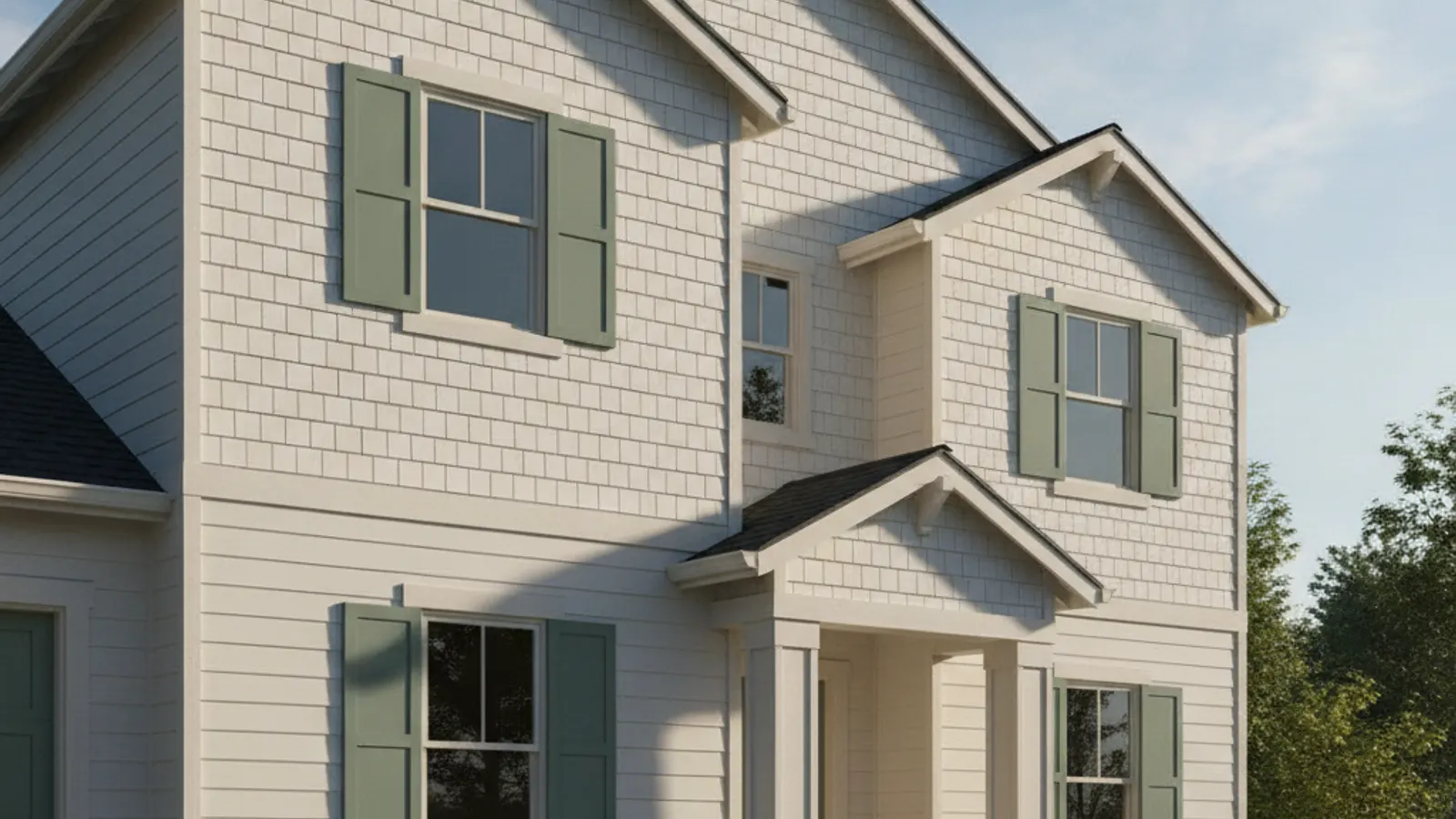
Cedar rarely fails as a material; it fails where water and neglect meet. The warning signs: finish that's cracking, peeling, or flaking (the FPL notes failing films carry away photo-degraded wood fibers with them); graying and roughening where the finish has worn through; soft or punky spots, especially at butt joints, end-grain, and any point near the ground or a leak, where moisture lingers; and cupping or splitting on boards that have been left unprotected. Sound cedar with a tired finish is a refinishing job. Cedar with widespread soft spots, rot at the joints, or sapwood-heavy boards that have decayed is past the point where finish will save it — that's a replacement conversation. Our on-site assessment of the wall tells you which.
Refinish or re-side — and what replaces cedar
Refinishing wins when the cedar is structurally sound, you value the natural material, and your wildfire exposure is low. Re-siding makes sense when decay is widespread, when the refinishing cycle has worn out its welcome, or when wildfire exposure argues for non-combustible cladding — cedar is, after all, combustible, and the UC ANR Fire Network recommends noncombustible or ignition-resistant siding where homes sit within 30 feet of each other. The common replacement is non-combustible fiber cement (such as James Hardie), which James Hardie notes resists water and holds 'little appeal' for woodpeckers and termites, and which offers cedar-like shingle and lap profiles with a long-life factory finish. It's a trade of natural character for lower maintenance and a Class A fire rating — an honest trade, not a clear-cut winner. Compare the fire angle in our fiber cement vs. wood guide.
Western red cedar vs. fiber cement (qualitative)
| Factor | Western red cedar | Fiber cement |
|---|---|---|
| Decay resistance | Heartwood 'Resistant' (FPL); sapwood not | Doesn't decay like wood |
| Finish upkeep | Refinish on a cycle (or weather to gray) | Long-life factory finish available |
| Fire | Combustible | Non-combustible (Class A) |
| Character | Authentic natural wood grain | Wood-look lap/shingle profiles |
| Pests | Can attract woodpeckers/borers | Holds little appeal for pests |
Key takeaways
- Cedar heartwood is rated 'Resistant' to decay by the FPL — real durability, but not 'very resistant,' and sapwood isn't durable.
- Cedar is not maintenance-free: the WRCLA says all finishes need regular upkeep; refinish cycles run ~1–4 years by product.
- It fails where moisture lingers — soft spots at joints, end-grain, and ground contact — not as a material.
- Refinish sound cedar you value; re-side when decay is widespread, upkeep has worn out, or wildfire argues for non-combustible.
- Fiber cement is the common replacement: wood-look profiles, low maintenance, Class A fire rating — a trade, not a clear win.
FAQ
Quick Answers
No. Cedar heartwood is naturally decay-resistant — the FPL rates western red cedar heartwood 'Resistant' — but it isn't immune, and the sapwood has low decay resistance like most woods. Cedar resists rot, especially when kept finished and off the ground, but it can and does decay where moisture is trapped, at end-grain, joints, and ground contact. 'Resistant' is the honest word, not 'rot-proof.'
It depends on the finish and exposure, not a single number. Per USDA Forest Products Laboratory figures, clear water-repellents last about 1–2 years, semitransparent stains roughly 2–4 years on smooth wood (longer on rough-sawn), and paint longer still, with sunnier south and west walls needing attention sooner. You can also let cedar weather naturally to gray, which the WRCLA treats as a legitimate option that still needs periodic cleaning.
It's a reasonable choice if the maintenance cycle has worn out its welcome, there's widespread decay, or wildfire exposure argues for non-combustible cladding — fiber cement offers wood-look profiles with low upkeep and a Class A fire rating. But if your cedar is sound and you value the natural material, refinishing is perfectly legitimate. It's a trade between authentic character and lower maintenance, and we'll give you the honest read.
Yes, and where damage is localised — a few boards under a failed gutter, say — that is the sensible repair. Two practical limits: matching profile and dimension on older cedar can be difficult because milling has changed, and new boards will not match the weathered color of the surrounding wall until they have aged, so a repair is visible for some time even when it is executed well. Where more than a modest proportion of an elevation is going, whole-wall replacement usually gives the better result.
Because it is generally not the same timber. Older cedar siding is frequently old-growth material with tight grain and a high proportion of heartwood, which is the naturally durable part of the tree. Much contemporary cedar is faster-grown second-growth with wider grain and more sapwood, which is measurably less resistant to decay. It is not a manufacturing failure, it is a different raw material — and it is why a like-for-like replacement in cedar may not deliver the lifespan the original did.
Removal is generally the better course. Cedar is dimensional and often cupped or weathered by the time it is being replaced, which makes an uneven substrate to fasten to, and going over it leaves whatever condition the barrier and sheathing are in unexamined and unaddressed. There are situations where going over is defensible, but the reason to remove is that it is the only opportunity to see and correct what is behind the wall.
Sources
Authoritative references
- Western Red Cedar Lumber Association — characteristics & properties of western red cedar
- Western Red Cedar Lumber Association — siding care & maintenance
- USDA Forest Products Laboratory — Wood Handbook Ch. 14: Biodeterioration of Wood (decay resistance, moisture thresholds)
- USDA Forest Products Laboratory — FinishLine: exterior finish service-life by product type
- James Hardie — fiber cement performance & durability (noncombustible, moisture- & pest-resistant)
External links to government, code, and manufacturer sources. Sierra Siding is not affiliated with these organizations; references are provided for verification.