
8 min read · Siding Replacement
Wood siding rewards maintenance and punishes neglect — and most of the confusion about it comes from not knowing which tasks actually matter or how often. The good news, straight from the USDA Forest Products Laboratory: under proper conditions wood gives 'centuries of service,' and it 'will not decay if it is kept air dry.' The catch is that keeping a finish intact and water from lingering is an ongoing job. This guide lays out the honest maintenance cycle, what really causes wood siding to fail, how to tell wood that's worth maintaining from wood that's past saving, and the point where re-siding becomes the better-value move.
The real refinishing cycle (with honest numbers)
Exterior finishes aren't permanent; the FPL's rule is simple — refinish 'only when the old finish has worn thin and no longer protects the wood.' The intervals depend on the finish and exposure, and the FPL's published figures are the honest yardstick: a water-repellent preservative lasts about 1–2 years; a semitransparent penetrating stain roughly 2–4 years on smooth wood (longer, up to ~10 years, on rough-sawn); and paint about 4–5 years for one coat over primer, up to roughly 10 years for a well-built two-coat system. Crucially, exposure changes everything — the FPL notes the north (shaded) side needs restaining far less often than the sun-blasted south side. Anyone promising a single 'repaint every X years' number for the whole house is oversimplifying. Refinishing is often paired with our exterior painting scope.
What actually causes wood siding to fail
Failure is moisture plus time, not age alone. Per the FPL, serious decay requires wood moisture content above the fiber-saturation point (around 30%), and wood kept reliably below about 20% won't decay — decay fungi simply need sustained moisture, oxygen, mild temperature, and the wood itself as food. That's why the failure points are predictable: end-grain and butt joints that wick water, board bottoms and ground contact, areas behind failed flashing or downspouts, and anywhere a finish has cracked and let water sit. UV weathering plays a supporting role — it grays and checks the surface and, once the finish fails, accelerates erosion — but it's the persistent moisture that turns weathering into rot. Keeping wood dry and finished is, quite literally, the whole game.
Maintainable wood vs. wood that's past saving
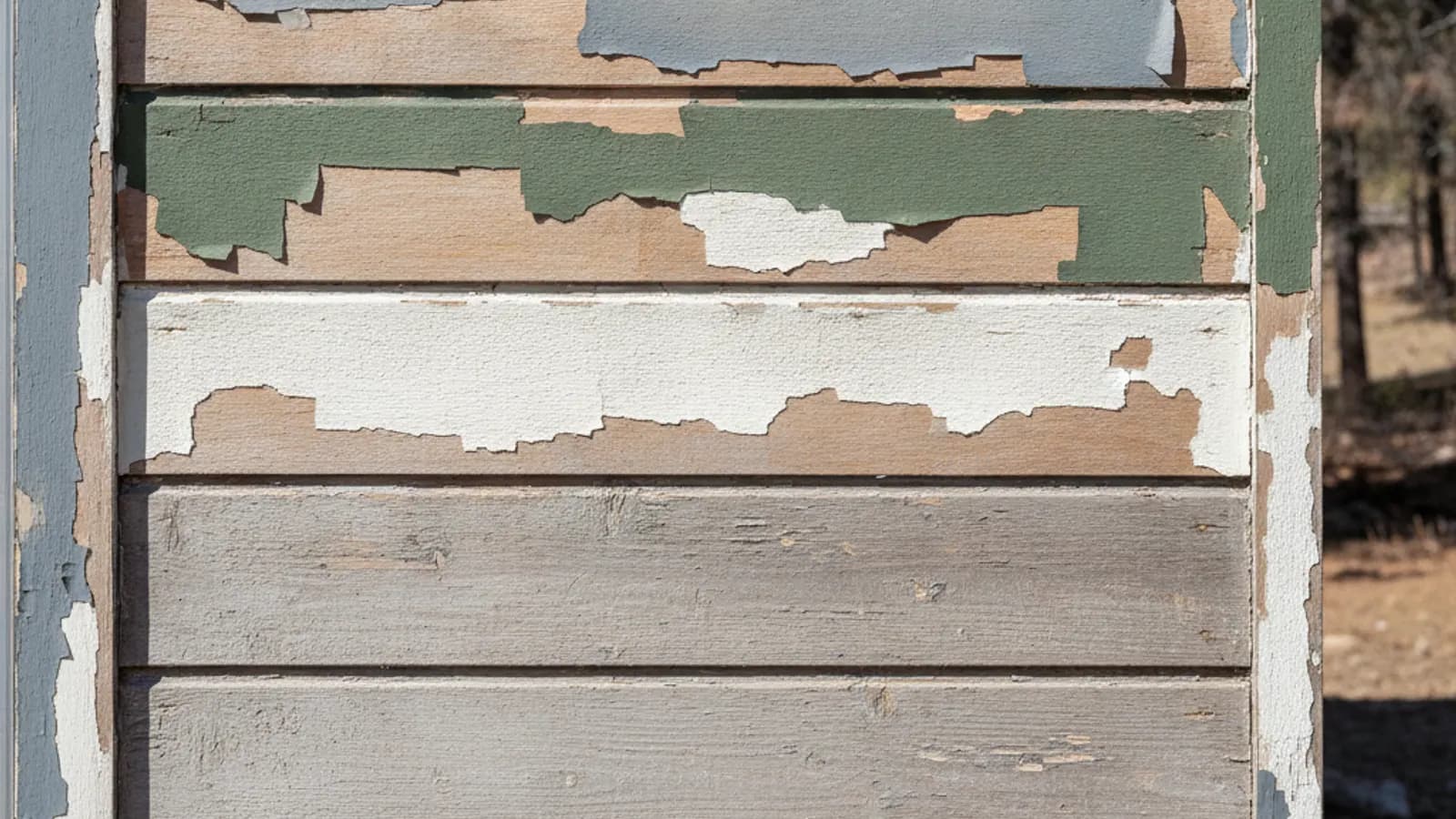
The honest test is structural, not cosmetic. Wood that's grayed, lightly checked, or has a tired finish but is still firm when probed is a cleaning-and-refinishing job — that's maintenance, not replacement. Wood that's soft, punky, or crumbles under a screwdriver tip has active decay; if it's localized (one board, a section near a fixed leak), it can be repaired and the source corrected, but widespread softness — especially at joints, board bottoms, and sapwood-heavy boards — means the wall is past the point a finish will save. Recurring failure after repairs, or decay that keeps reappearing, signals an underlying moisture or detailing problem that a re-side can resolve by rebuilding the assembly. Our team probes the wall and tells you honestly which category you're in.
When re-siding becomes the better value — and the fire factor
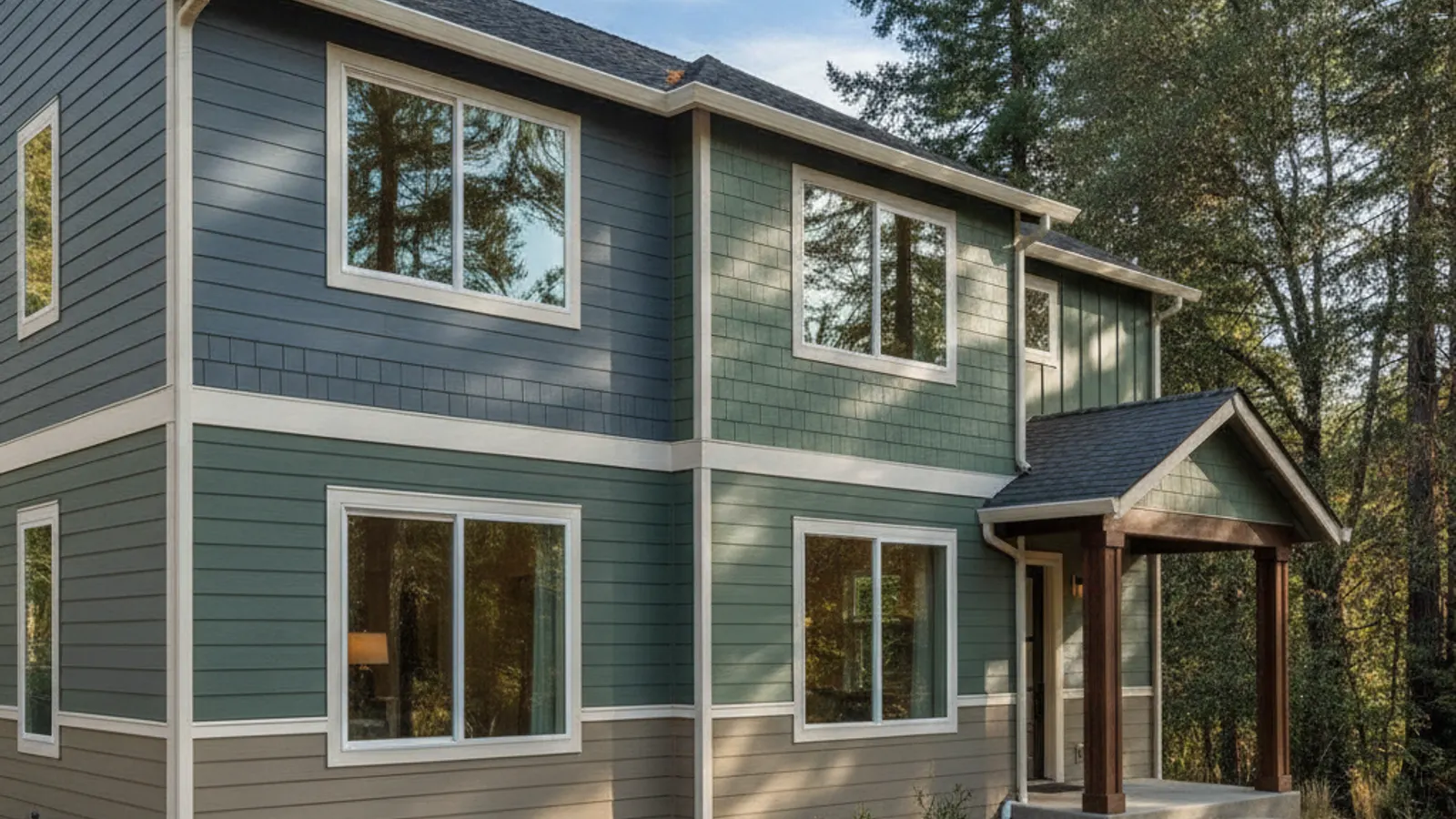
Re-siding earns its place on three triggers: widespread decay that outpaces repair; a maintenance burden that's no longer worth the recurring time and cost; and wildfire exposure. On that last point, the UC ANR Fire Network is direct that combustible siding is at risk and that homes within 30 feet of neighbors should use noncombustible or ignition-resistant siding — naming fiber cement, metal, and three-coat stucco as compliant options. When the math favors replacement, most California homeowners choose non-combustible fiber cement (such as James Hardie), trading the refinishing cycle for a long-life factory finish and a Class A fire rating. But we'll be clear: if your wood is sound and you value it, maintaining it is a legitimate, often cheaper, path — replacement is a choice, not a foregone conclusion. See the broader picture in our wood, cedar & redwood hub.
Key takeaways
- Refinish when the finish has worn thin — intervals are ~1–2 yrs (water-repellent), ~2–4 yrs (stain, smooth), ~4–10 yrs (paint), per FPL; sunny walls sooner.
- Wood fails from sustained moisture (decay needs ~30%+ MC); kept below ~20% it won't decay — so end-grain, joints, and ground contact are the risk points.
- Firm-but-tired wood is a refinishing job; soft, punky, crumbling wood has active decay and may be past saving.
- Recurring decay after repairs signals an underlying moisture/detailing problem a re-side can resolve.
- Re-side for widespread decay, maintenance fatigue, or wildfire exposure — but maintaining sound wood is a legitimate, cheaper choice.
FAQ
Quick Answers
There's no single number — it depends on the finish and the wall's exposure. The USDA Forest Products Laboratory's figures: water-repellent preservatives last about 1–2 years, semitransparent stains roughly 2–4 years on smooth wood (longer on rough-sawn), and paint about 4–5 years for one coat over primer up to ~10 years for a good two-coat system. South- and west-facing walls weather faster and need attention sooner than shaded sides.
When decay is widespread rather than localized. Firm wood with a tired finish is a refinishing job; wood that's soft, punky, or crumbles under a screwdriver has active decay. Isolated rot (one board, a spot near a fixed leak) can be repaired and the source corrected, but extensive softness — especially at joints, board bottoms, and sapwood — means the wall is past saving and a re-side is the durable fix.
Over the short term, maintaining sound wood is usually cheaper — refinishing costs far less than a re-side. The calculation shifts when decay is widespread, when the recurring maintenance time and cost stop feeling worth it, or when wildfire exposure argues for non-combustible cladding. There's no universal answer; it depends on your wood's condition, your fire risk, and how you value the upkeep versus a one-time replacement.
It can, easily, and it is one of the more common ways owners shorten the life of a wall they were trying to look after. High pressure erodes the softer spring growth between grain lines, raises the fibres, and drives water into joints and behind boards where it has no quick way out. Low pressure with an appropriate cleaning solution and a soft brush does the job without the damage. If a wash leaves the surface fuzzy, the pressure was too high.
Keeping the coating intact at the horizontal and end-grain surfaces — board bottoms, cut ends, the tops of trim, and anywhere water sits rather than runs. Those are where coatings fail first and where water enters, and they represent a small fraction of the surface area. Touching those up on a short cycle protects the wall far more per hour spent than repainting large sound elevations on a long one.
Because the cause is usually behind the paint rather than in it. Repeated coating failure in one location points to moisture reaching the back of the boards — a flashing defect above, a gutter overflowing, splash-back from paving, irrigation hitting the wall, or a shaded elevation that never dries. Repainting treats the symptom and the interval gets shorter each time. Finding the water path is the only thing that ends the cycle.
Sources
Authoritative references
- USDA Forest Products Laboratory — Wood Handbook Ch. 15: Finishing of Wood (finish service life, weathering)
- USDA Forest Products Laboratory — Wood Handbook Ch. 14: Biodeterioration of Wood (decay resistance, moisture thresholds)
- UC ANR Fire Network — Siding: combustible cladding & wildfire (noncombustible/ignition-resistant materials)
- James Hardie — fiber cement performance & durability (noncombustible, moisture- & pest-resistant)
External links to government, code, and manufacturer sources. Sierra Siding is not affiliated with these organizations; references are provided for verification.