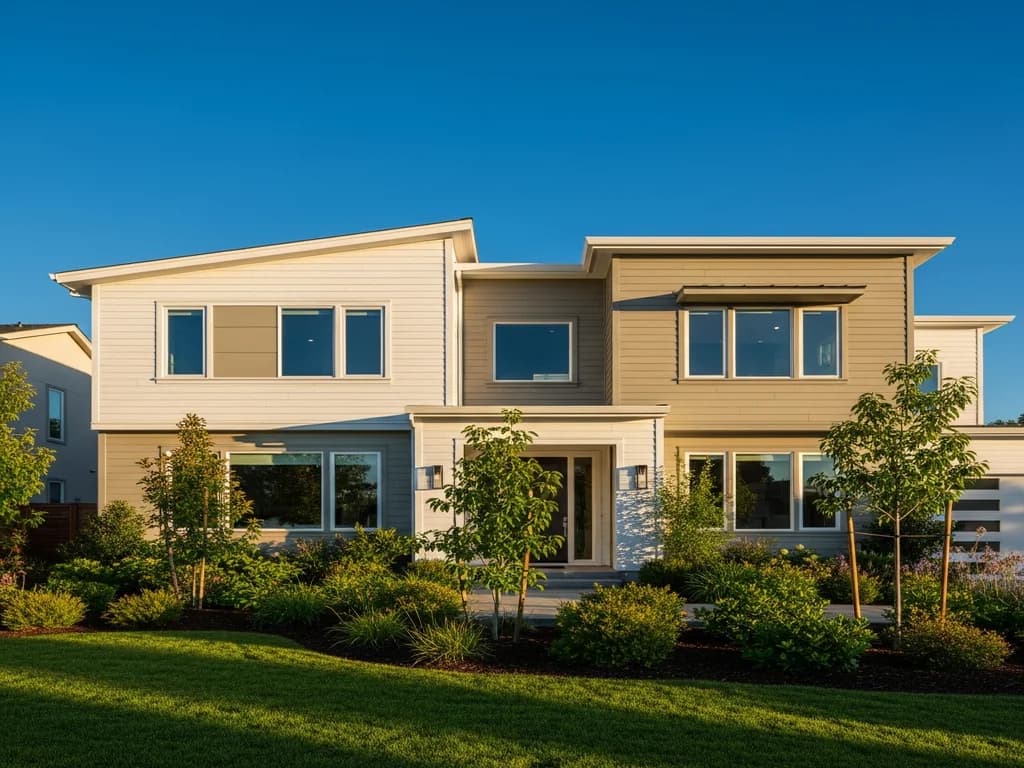
Siding in Ben Lomond
A Ben Lomond re-side is mid-valley redwood work, where two pressures meet on the same wall. Strung along Highway 9 between Felton and Boulder Creek, Ben Lomond sits under a heavy redwood canopy that keeps elevations shaded, slow to dry, and prone to rot, while the surrounding San Lorenzo Valley slopes carry serious wildfire exposure in the broader CZU-affected region. So a re-clad here is never a simple cosmetic refresh.
We scope Ben Lomond around that combination: noncombustible cladding for the fire side, a genuinely drying-capable wall for the canopy damp, and an honest read of access and post-fire rebuild context on each parcel.
Forest cabins and older valley homes
Much of Ben Lomond's stock is older San Lorenzo Valley housing: redwood-clad cabins that grew into year-round homes, board-and-batten cottages tucked off Glen Arbor and Hubbard Gulch, and modest custom builds on the slopes toward Ben Lomond Mountain. These walls were rarely detailed for today's dual threat. Original wood lap and shake cup, split, and grow moss on the shaded elevations, and they carry the fire load that mountain terrain no longer tolerates. We plan a re-side around what's actually behind the cladding rather than a clean material swap.
Damp first, then fire, in one assembly
Ben Lomond's defining problem is that the redwood canopy makes the wall both wet and flammable terrain at once. Harden the wall carelessly and trapped moisture rots it; build only for drying and it stays combustible. We resolve both deliberately: Class A noncombustible cladding over a vented rainscreen and continuous drainage plane, so the wall sheds the persistent shade-and-fog damp while presenting an ignition-resistant face. Neither risk is traded away for the other.
Mid-valley character between Felton and Boulder Creek
Ben Lomond is the middle of the San Lorenzo Valley, not the down-valley entry around Graham Hill nor the remote dead-end up toward Big Basin. Access is generally better than Boulder Creek's single-lane backwoods drives but tighter than flatland tract work, with homes reached off the Highway 9 spine and the creek lanes branching from it. That mid-valley position shapes scope and logistics: real forest-fire and damp exposure, real staging constraints on treed lots, but rarely the off-grid isolation of the upper valley.
Working shaded, sloped lots off the Highway 9 corridor
Re-siding in Ben Lomond means working parcels that fall toward Newell Creek and the San Lorenzo River or climb the lower flanks of Ben Lomond Mountain, where second-growth redwoods stand close to the walls. Scaffold footings have to respect shallow root flares rather than trench through them, and deliveries of heavy board often stage at the road and get carried in under the canopy. Deep shade keeps north and creek-facing elevations damp long after rain, so we sequence tear-off and re-wrap to avoid leaving sheathing open through a foggy valley night. We also confirm whether a parcel falls under county defensible-space review before scheduling, since that can change how much vegetation must be cleared from the work zone first.
Why this matters in Ben Lomond
- Specified for Santa Cruz Mountains conditions
- Class A non-combustible fiber cement as the recommended system
- Correctly detailed weather-resistive barrier and flashing
- Installed by a crew with 20 years combined experience
Recommended systems for Ben Lomond
- Class A non-combustible fiber cement
- James Hardie
- aggressive fire-hardening detailing
- drainage-plane detailing
Fiber Cement Siding for Ben Lomond homes
The full fiber cement siding approach — materials, weather-resistive detailing, and the manufacturer standards we install to — is covered on the main service page, then specified for Ben Lomond's conditions on this one.
Our Ben Lomond process
- Step 1
Consultation
We listen to your goals and assess your home on site — exposure, substrate, and architecture.
- Step 2
Design & Proposal
A clear written proposal with the right system specified for your climate and a transparent scope.
- Step 3
Expert Installation
Trained crews install to manufacturer best practices with careful weather-management detailing.
- Step 4
Walkthrough & Support
A final walkthrough, full cleanup, and a clear written record of the scope completed — work we stand behind.
FAQ
Siding in Ben Lomond — FAQ
Ben Lomond sits mid-valley between them, with the same redwood-damp-plus-fire combination but generally easier access than Boulder Creek's remote upper-valley drives. The hardening-and-drying standard is the same; the logistics sit in between.
Wood is combustible in this fire-exposed mountain terrain and it rots fast under the redwood canopy's chronic damp. We strongly favor noncombustible cladding over a drying-capable plane on Ben Lomond parcels.
Yes — deep shade plus fog drip keeps Ben Lomond walls wet and slow to dry, especially on north and creek-facing elevations. Moisture is usually what fails original siding here first.
Often, on older valley cabins — punky sheathing and trapped moisture are common. We plan for tear-off discovery and a corrected drainage plane rather than pricing a clean swap.
Yes — many valley homeowners are rebuilding or hardening after the fires, and we approach that factually and respectfully, scoping the exterior to today's standard without alarmist sales talk.
Keep Exploring
More for Ben Lomond homeowners
More in Ben Lomond
Other exterior services in Ben Lomond
Nearby Service Areas
Siding near Ben Lomond
Back to
Santa Cruz County & Ben Lomond
Helpful Exterior Guides