
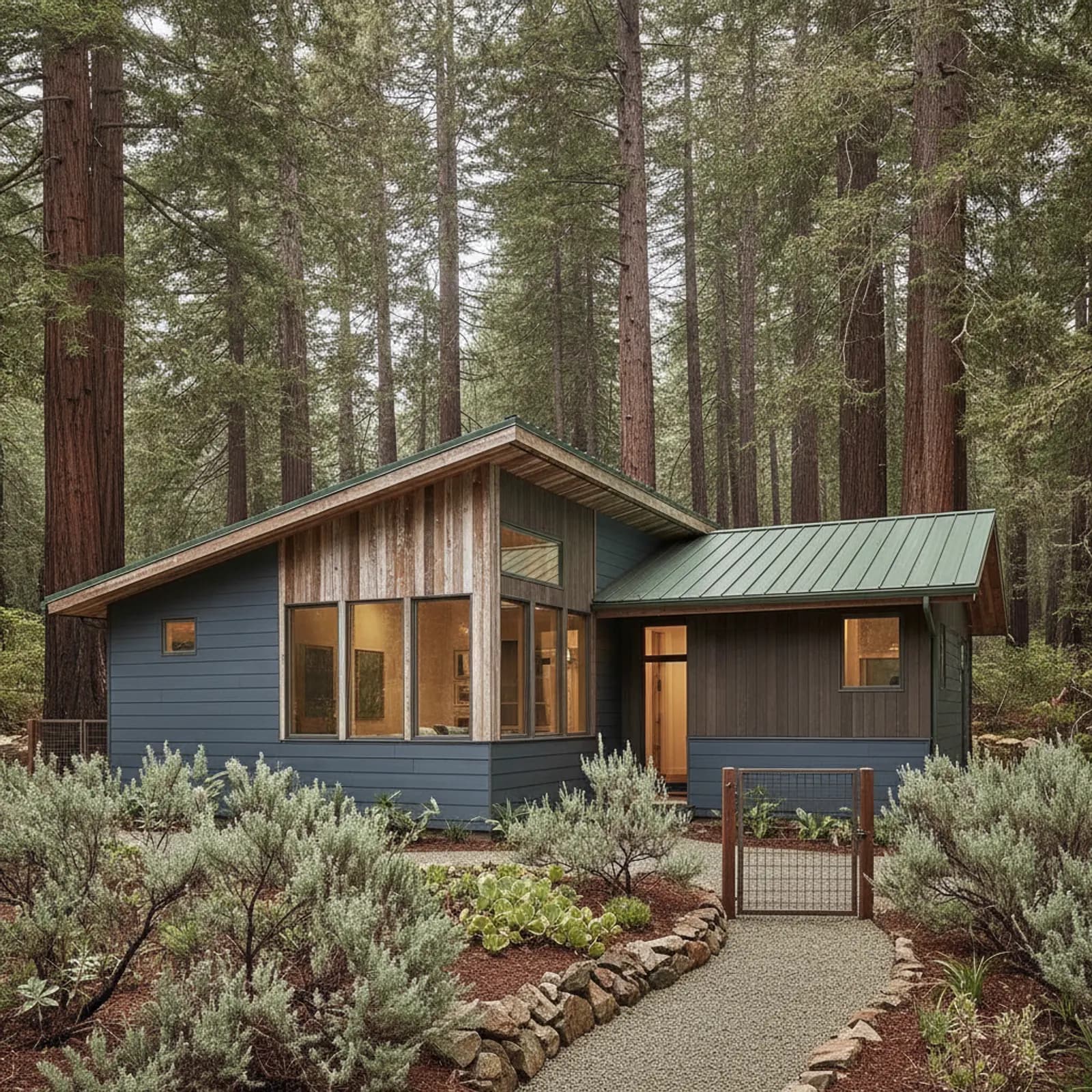
Fire-Resistant Siding in Ben Lomond
Fire-resistant siding is a primary service in Ben Lomond, because the mid-valley redwood setting carries serious wildfire exposure across the broader CZU-affected San Lorenzo Valley. The hard part here is that the same canopy that fuels the fire risk also keeps walls damp, so noncombustible cladding has to be detailed to dry, not just to resist embers. We treat both as load-bearing for survival.
Real valley-slope exposure, honestly framed
Ben Lomond's homes sit among second-growth redwoods on slopes within the region the 2020 CZU Lightning Complex burned through. This is genuine wildfire terrain — though the most catastrophic, single-road loss in the valley centered on neighbors deeper toward Big Basin. We specify Class A noncombustible cladding and harden eaves, soffits, vents, decks, and ground transitions as the baseline, while assessing each Ben Lomond parcel on its own slope, fuel, and access rather than a blanket template.
Ember defense from the soffit line down
On a Ben Lomond lot the threat isn't open grassland flame; it's wind-driven embers landing in the needle duff against the foundation. So we focus the install on the bottom six inches, the eave returns, and the inside corners where bark litter drifts. We carry noncombustible board down to a clean, gapless ground transition with a noncombustible kickout so a smoldering ember bed at grade can't reach an exposed framing edge. Soffit and frieze details get tight closure, and every vent penetration gets ember-rated screening so the re-side doesn't quietly reopen a path into the wall cavity.
Noncombustible board that still has to breathe
The redwood canopy that drops fire risk into the foundation also keeps Ben Lomond walls in deep, perpetual shade, with fog and drip long after the rain stops. So fire-resistant siding here has to win on two fronts: noncombustible cladding still fails early if the wall stays wet behind it. We pair Class A fiber-cement or mineral board with a rainscreen gap and back-ventilation so the forest moisture drains and dries on the shaded north and creek-facing elevations. Sealed cut edges matter more here than on a sunny ridge, and we flash conservatively where deck ledgers and stair connections meet the wall, since the fire-hardened ground transition and the moisture detail land on the same joint.
Hardening rebuilds and retrofits across the mid-valley
Fire-resistant siding in Ben Lomond rarely arrives alone. It comes bundled with the broader hardening conversation a homeowner is already having with their insurer and Santa Cruz County, and many valley projects are rebuilds or retrofits in the wake of the fires. The cladding is only as protective as the openings and edges around it, so we coordinate the wall scope with ember-resistant vents, enclosed noncombustible eaves, the deck-to-wall junction, and the first few feet of ground clearance where mulch, fences, and stored firewood routinely undo an otherwise hardened wall. We document materials and assemblies as we go, which helps when a Ben Lomond owner needs to show their work for coverage or a defensible-space inspection. Where a full envelope can't happen at once, we sequence the most exposed elevations and lower courses first.
Why this matters in Ben Lomond
- Specified for Santa Cruz Mountains conditions
- Class A non-combustible fiber cement as the recommended system
- Correctly detailed weather-resistive barrier and flashing
- Installed by a crew with 20 years combined experience
Recommended systems for Ben Lomond
- Class A non-combustible fiber cement
- James Hardie
- aggressive fire-hardening detailing
- drainage-plane detailing
Fire-Resistant Siding for Ben Lomond homes
The full fire-resistant siding approach — materials, weather-resistive detailing, and the manufacturer standards we install to — is covered on the main service page, then specified for Ben Lomond's conditions on this one.
Our Ben Lomond process
- Step 1
Consultation
We listen to your goals and assess your home on site — exposure, substrate, and architecture.
- Step 2
Design & Proposal
A clear written proposal with the right system specified for your climate and a transparent scope.
- Step 3
Expert Installation
Trained crews install to manufacturer best practices with careful weather-management detailing.
- Step 4
Walkthrough & Support
A final walkthrough, full cleanup, and a clear written record of the scope completed — work we stand behind.
FAQ
Fire-Resistant Siding in Ben Lomond — FAQ
Serious — mid-valley redwood slopes within the broader CZU-affected San Lorenzo Valley. We treat Class A noncombustible cladding and hardened detailing as the baseline, while reading each parcel's slope, fuel, and access honestly.
Comparable terrain, but the most catastrophic, single-road loss centered on neighbors deeper in the valley. Ben Lomond's exposure is real and we harden aggressively, parcel by parcel rather than by blanket assumption.
It does if there's no drying strategy — the central mistake in this microclimate. We pair the noncombustible cladding with a rainscreen so the wall sheds the redwood damp instead of sealing it in.
It can support insurability in the CZU-affected valley; we document materials and assemblies thoroughly, while being candid that insurers set their own criteria.
Keep Exploring
More for Ben Lomond homeowners
More in Ben Lomond
Other exterior services in Ben Lomond
Nearby Service Areas
Fire-Resistant Siding near Ben Lomond
Back to
Santa Cruz County & Ben Lomond
Helpful Exterior Guides