
12 min read · Buyer's Guide
San Jose has the most architecturally diverse housing stock in our service area — postwar Eichlers in Willow Glen, mid-century ranch in Almaden, traditional craftsman in Rose Garden, modern contemporary in Cupertino-adjacent districts, and increasingly substantial premium custom in the hillside districts. What unites them is Bay Area exposure: marine humidity influence, occasional fog penetration from the coast, premium architectural expectations, and construction costs that run 15-30% above Sacramento Valley equivalents. The exterior investments that command Silicon Valley resale premium share a specific set of decisions — and the homeowners getting them right in 2026 are positioning their homes for the strongest market response. Sierra Siding works across San Jose, Cupertino, Mountain View, and the broader Santa Clara County and Peninsula market.
1. Use Hardie HZ10 — the Bay Area climate-correct spec (not HZ5)
San Jose and Silicon Valley fall in James Hardie's HZ10 zone — the line built for the mild, low-freeze West. The Bay's marine influence is cool and damp, but it is not a hard freeze-thaw climate, so HZ5 (engineered for Northern snow regions) is the wrong product spec for San Jose despite identical-looking boards. Premium 2026 San Jose homeowners verify HZ10 in writing on the contract material specification. The real Bay concerns — marine humidity, salt air near the bay edge, and UV — are handled with rainscreen drainage and corrosion-rated fasteners, not a freeze-zone product. See Hardie HZ10 vs HZ5 California Climate Guide.
2. Invest in rainscreen drainage assembly behind the cladding
San Jose's marine humidity influence makes the wall assembly's drying capacity the most consequential durability factor. A premium cladding installed over standard 1-layer house wrap delivers 15-20 years; the same cladding over a rainscreen drainage assembly (Benjamin Obdyke HydroGap or Hydroflo, Hydrogap, or equivalent vented cavity) delivers 35-45+ years. The upgrade adds 5-7% to project cost and doubles assembly lifespan. Premium homeowners are treating rainscreen as standard scope on Bay Area projects. See Best Siding for Bay Area Moisture.
3. Coordinate windows with cladding for integrated flashing
Bay Area window/wall flashing failures are the #1 source of wall assembly water intrusion in San Jose. The integrated flashing details — pan flashing under window, integrated WRB lapping, head flashing tucked under cladding above — must be built as one continuous system. Replacing windows separately from cladding produces compromise flashing every time. Premium homeowners are combining the scope: window replacement during the re-side captures the integrated flashing assembly and saves 5-15% over serial projects. See Window and Siding Cost Together.
4. Select Hardie ColorPlus palettes that suit Bay Area architecture
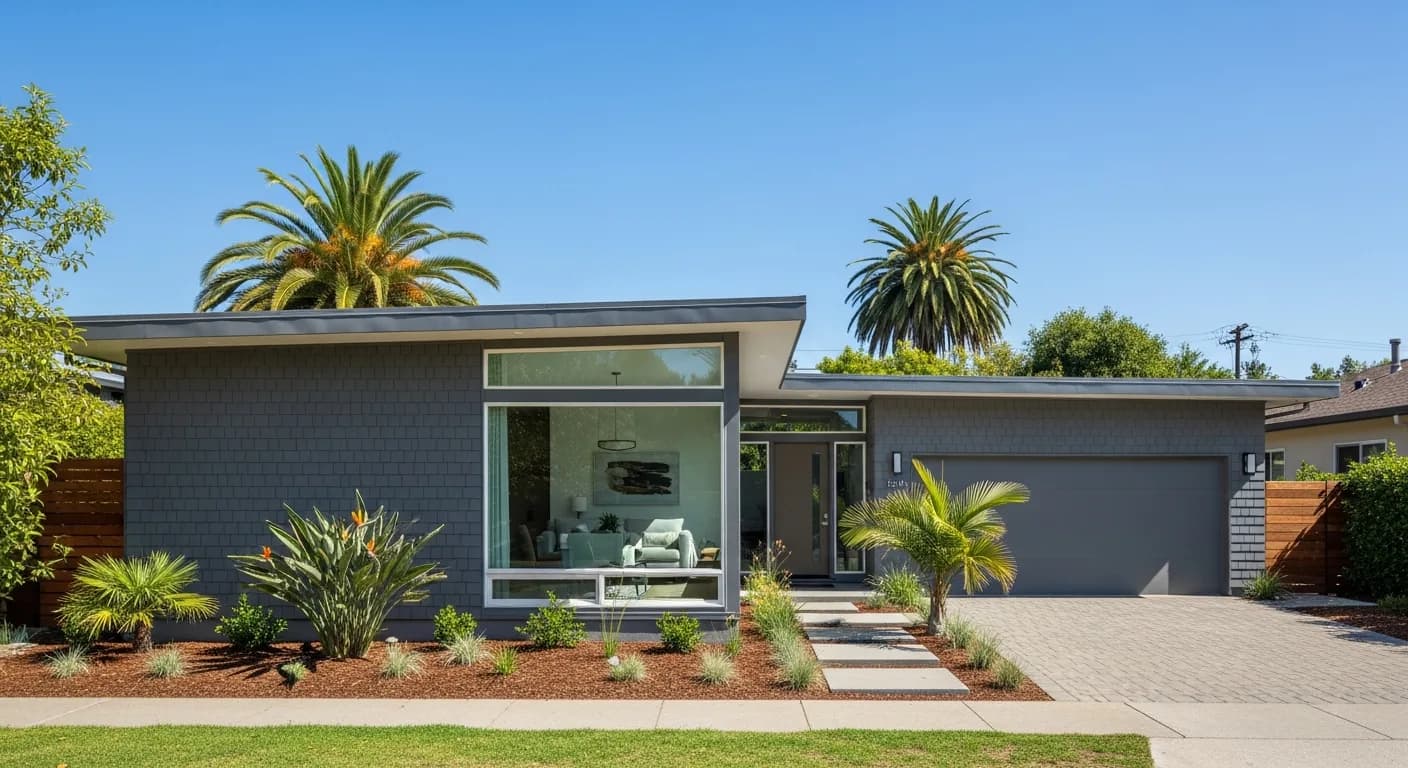
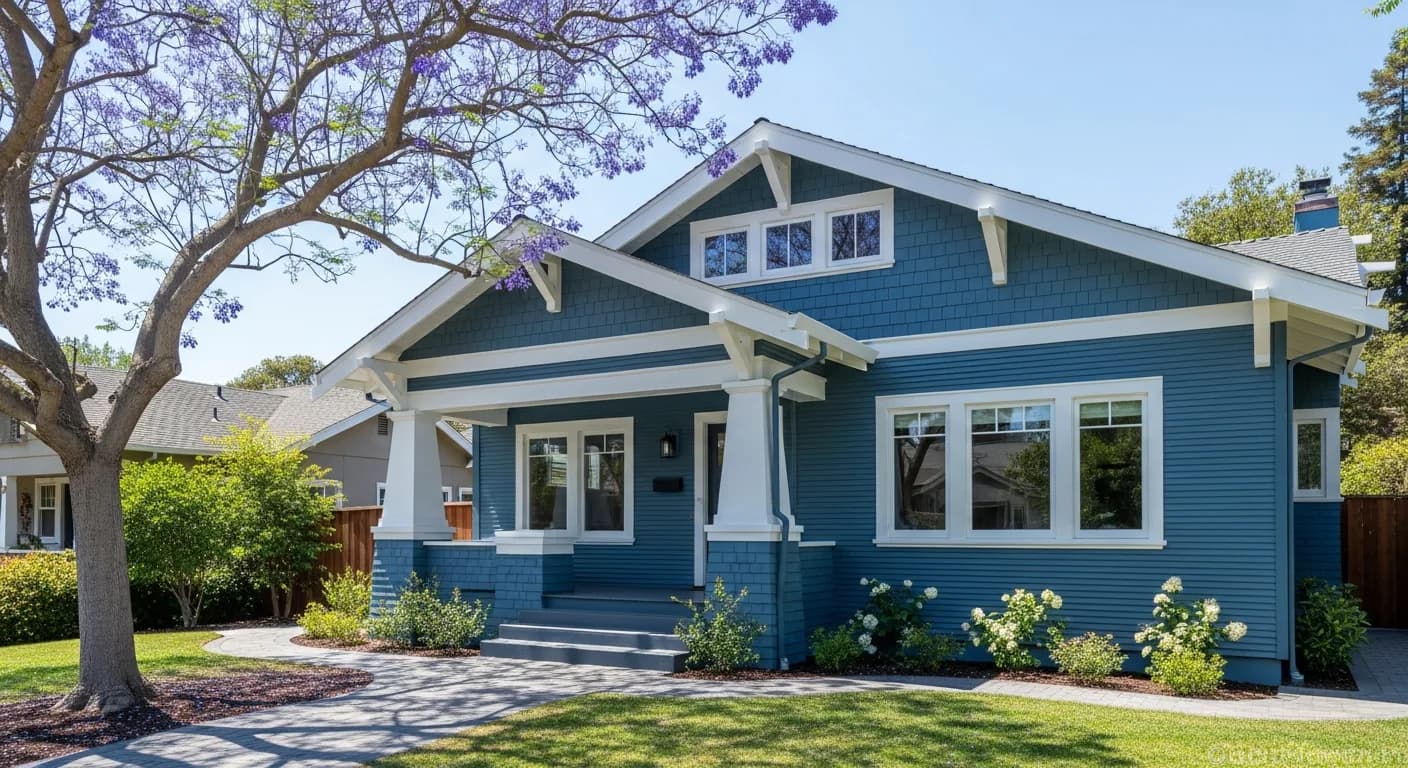
San Jose's diverse housing stock demands architecture-specific palettes. Eichler-era post-war: Iron Gray, Night Gray, or Aged Pewter bodies with floor-to-ceiling glass framed in black aluminum. Mid-century Almaden ranch: Mountain Sage, Boothbay Blue, or warm Cobble Stone bodies. Traditional Rose Garden: Cobble Stone, Arctic White with substantial craftsman trim. Contemporary modern: Iron Gray, Night Gray with floor-to-ceiling window integration. Wrong-vocabulary palette dilutes architectural execution; right vocabulary commands resale premium. See Best Hardie Colors for California.
5. Specify stainless or hot-dipped galvanized fasteners on coastal-adjacent properties
Properties within 1-2 miles of the Bay edge face salt-laden air that corrodes standard galvanized fasteners and flashing within 5-10 years. Premium homeowners on San Jose coastal-adjacent districts spec stainless steel or hot-dipped galvanized fasteners and stainless flashing at all penetrations. The cladding itself doesn't care about salt; the fastener and flashing corrosion is what causes the assembly failure. Premium spec adds modest cost but prevents 10-year-out failure modes.
6. Modernize windows with narrow-profile black fiberglass frames
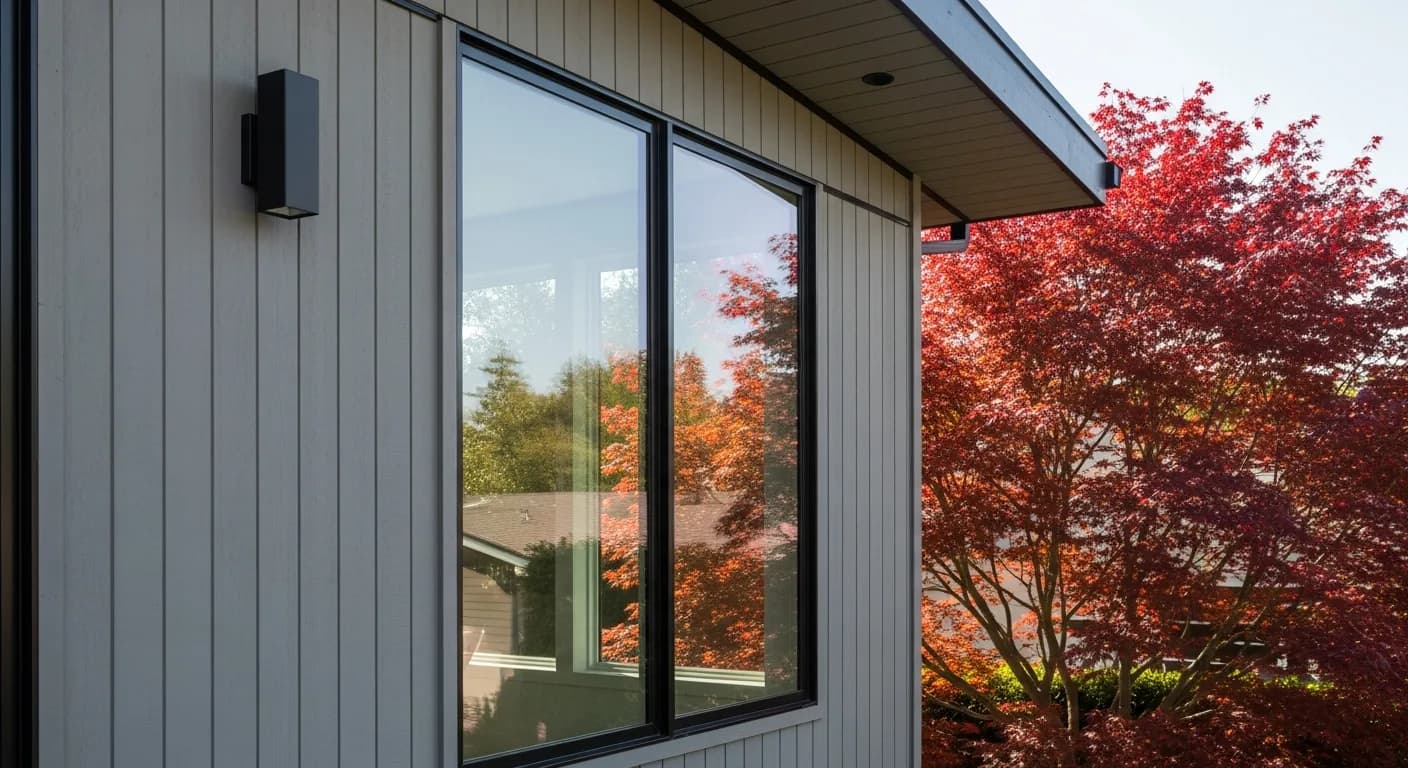
San Jose homes built before 2010 typically have white or bronze aluminum window frames with wide profile sightlines (3-5 inches). The frame profile dates the home as decisively as the body color. Premium homeowners replace with narrow-profile black fiberglass frames (Marvin Essential narrow line, Pella Impervia narrow — or Andersen 100 Series in Fibrex composite) — 1.5-2.5 inch sightlines that read modern. Combined replacement during re-side captures the architectural modernization at integrated cost. See Black Windows + Siding Combinations.
7. Plan permit and inspection timeline realistically
San Jose and Santa Clara County jurisdictions run substantial permit and inspection processes — typically 4-8 weeks for permit issuance plus inspection coordination during work. Premium homeowners plan this into the project timeline and don't pressure contractors to rush permitting (which produces permit-application errors and rejection cycles). The permit process exists for code compliance verification; navigating it cleanly is part of professional execution.
8. Combine gutter, soffit, and fascia work with cladding
San Jose homes from the 1960s-1990s era are typically reaching simultaneous end-of-life on cladding, soffit, fascia, and gutter systems. Combined-scope projects address all four with integrated flashing and consistent palette. We coordinate gutter scope with GutterFX — the Bay Area gutter specialist we refer to — for the integration. Net combined-project savings run 8-15%; integration value substantially exceeds the dollar savings.
9. Address energy envelope during the re-side scope
California Title 24 energy code applies to substantial exterior remodel work. San Jose climate (Zone 4) has both heating and cooling considerations, and the re-side is the rare moment when air-sealing the entire envelope is accessible. Premium homeowners add continuous insulation upgrades, sealed wall penetrations, and integrated window U-factor/SHGC compliance during the scope. Energy bill reductions of 12-20% are realistic; combined savings compound over the cladding lifespan. See Title 24 Siding Requirements California.
10. Document for resale — San Jose buyer due diligence is thorough
San Jose homes at $1.5M+ price points face thorough buyer due diligence at resale. Documented exterior work — dated photos, written material specification, manufacturer warranty registration, permit and final inspection records, contractor CSLB verification — supports premium pricing and reduces buyer-side renegotiation. Premium 2026 homeowners require this file as a project deliverable. The same exterior work undocumented commands less at resale. We provide this documentation on every San Jose project we complete.
11. Sequence demolition and dry-in to avoid weather exposure on older sheathing
Many San Jose homes built before the 1970s, especially Eichler-era and postwar ranch stock, hide surprises once the old cladding comes off: skip-sheathing gaps, brittle felt, or sections where the original builder used board sheathing with no continuous water-resistive barrier. The investment that protects your budget here is sequencing the tear-off so no wall stays open to the marine fog and overnight condensation that roll through the Santa Clara Valley. A disciplined crew strips only what can be re-papered and dried-in the same working day, rather than exposing an entire elevation that then sits open through a damp Bay Area night. This matters more in San Jose than in the dry Sacramento Valley because diurnal humidity swings can wet exposed framing even without rain. Ask your contractor how they stage the work elevation by elevation, and where temporary protection goes if a storm cell moves in off the coast. When older sheathing is found to be degraded, factor a sheathing replacement allowance into the contract before demolition rather than as a mid-project change order, which is where re-side budgets typically balloon. If you are weighing whether problem walls justify a full replacement versus targeted fixes, our siding repair page outlines how we distinguish localized damage from systemic failure, and the dry-in discipline described above is the single biggest driver of a watertight, long-lived result on a vintage San Jose envelope.
12. Budget realistically using independent Bay Area cost benchmarks
San Jose re-side budgets diverge sharply from national averages, and anchoring your expectations to the wrong reference number is how homeowners end up disappointed by qualified bids. Labor, disposal, and permit fees in Santa Clara County run materially higher than inland markets, and complex rooflines, multi-story elevations, and steep hillside access all add cost that a simple per-square-foot figure never captures. Rather than trusting a single online estimator, cross-check against several independent sources. The Remodeling Cost vs. Value report publishes regional fiber cement re-side figures and resale recoupment percentages for the Pacific region, which tracks closer to San Jose reality than a U.S. median. Our own California siding cost guide breaks down what drives the range here, from cladding grade to substrate condition to the integration work covered earlier in this list. When you read a bid, separate the cladding line from the assembly line: two estimates can quote identical Hardie product yet differ by many thousands because one includes proper flashing, a drainage gap, and fastener upgrades while the other does not. The cheapest number is rarely the cheapest project once mid-stream change orders land. Build a contingency of roughly ten to fifteen percent specifically for sheathing surprises on older homes, and treat any bid that omits a contingency conversation as incomplete rather than competitive.
13. Verify your contractor's standing and warranty chain before signing
The most overlooked exterior investment in San Jose is not a material at all; it is due diligence on who installs it. A fiber cement manufacturer's product warranty only holds when the cladding is installed to published specification, so the installer you choose directly determines whether your coverage survives a future claim. Before signing, confirm the contractor holds an active California license in the correct classification and that it is current, not lapsed or under disciplinary action. You can verify any license directly through the Contractors State License Board, which publishes status, bond, and workers' compensation records that a legitimate firm will happily let you check. Ask specifically how the company documents installation to manufacturer spec, because that paper trail is what converts a generic product warranty into an enforceable one years down the road. Also clarify the difference between the material warranty and the workmanship warranty: they come from different parties and cover different failures, and a homeowner who assumes one covers the other often discovers the gap only after a leak appears. Request proof of insurance naming you, and confirm who pulls the permit, since an owner-pulled permit can shift liability in ways most homeowners do not intend. When you are ready to compare proposals on these terms, you can start a conversation through our estimate request and use the standing checks above to evaluate every bid you receive, ours included.
14. Match the cladding strategy to your specific San Jose microclimate and lot
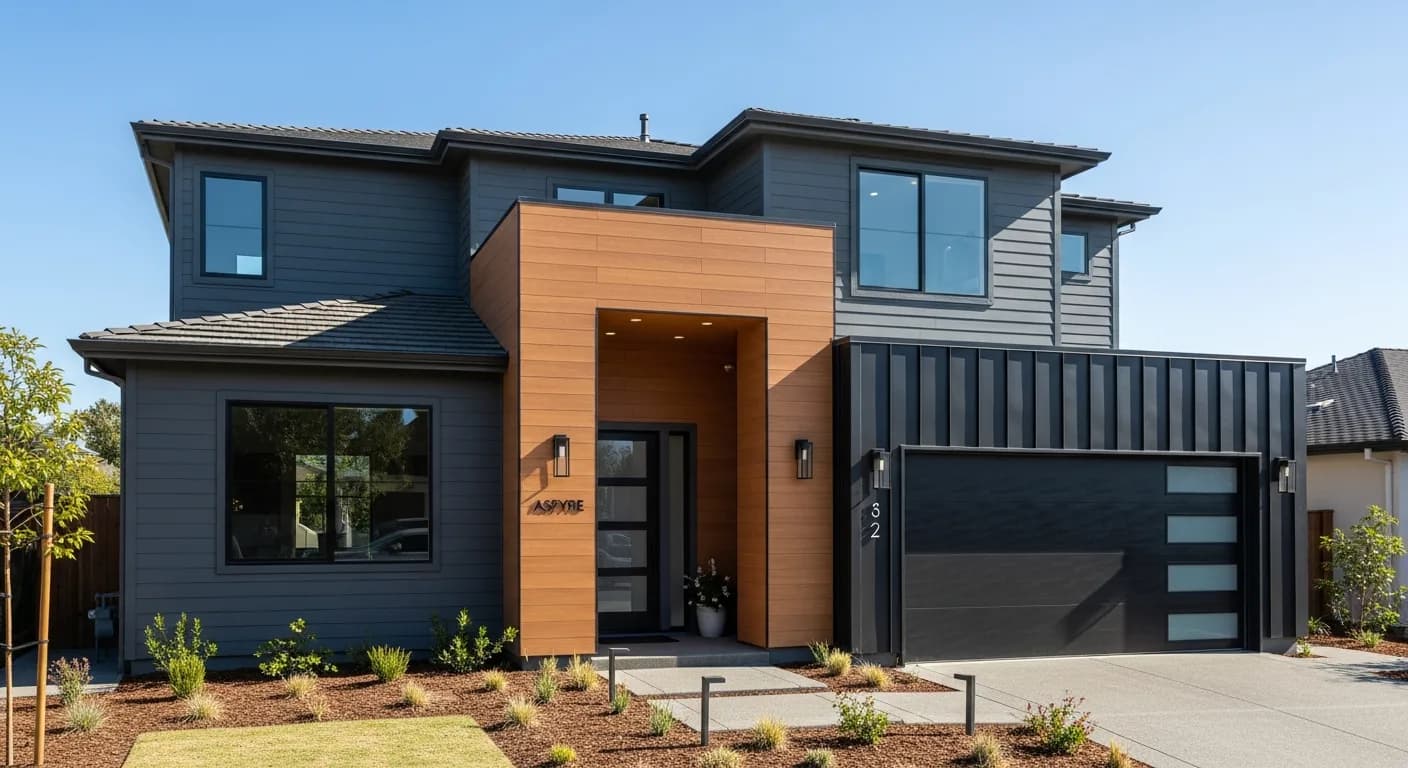
San Jose is not one climate; it is a patchwork, and the right exterior investment shifts with where your lot sits. Homes in the flatter central and west valley near the bay see more marine fog intrusion and overnight moisture, which rewards the drainage and fastener upgrades emphasized earlier. Properties in the eastern foothills and the Almaden and hillside districts trade that humidity for greater wildfire exposure and steeper, harder-access elevations. For those parcels, noncombustible cladding is more than an aesthetic choice; fiber cement carries a strong fire-resistance profile that aligns with hardening guidance published by CAL FIRE for homes in or near wildland-urban interface zones. If your address falls in a designated fire severity zone, the assembly details around vents, eaves, and the first few feet of wall become code-relevant, not optional. Sun orientation matters too: south and west elevations in San Jose's strong inland afternoons fade darker color faster and run hotter, which can influence both palette and the heat load behind the cladding. A north-facing wall in a fog-prone pocket has the opposite problem, holding moisture longer and rewarding ventilation behind the boards. Before you lock a single spec across the whole house, ask your contractor to walk each elevation and right-size the assembly to its actual exposure, because a strategy tuned to your specific lot is what turns a generic re-side into an investment matched to how your home actually weathers.
Key takeaways
- Hardie HZ10 is the Bay Area climate-correct spec — not HZ5
- Rainscreen drainage assembly is the single most impactful Bay Area durability upgrade
- Combined windows + cladding captures integrated flashing assembly value
- Architecture-specific palettes command Silicon Valley resale premium
- Coastal-adjacent properties need stainless/hot-dipped galvanized fastener spec
- Project documentation supports premium resale due-diligence
FAQ
Quick Answers
The typical San Jose scope band runs $52,000-$82,000 for Hardie HZ10 ColorPlus re-side with rainscreen. Combined with windows: $72,000-$118,000. Premium custom with substantial architectural integration: $95,000-$165,000+. See Hardie Siding Cost in San Jose.
For fog-belt and coastal-influenced districts (eastern foothills, Willow Glen, Rose Garden), yes — the durability extension typically more than justifies the 5-7% project cost premium. For drier inland districts (Almaden, Evergreen), the calculation is more marginal but still favorable on premium custom work where 40-year assembly life matters.
James Hardie zones the entire Bay Area and Silicon Valley as HZ10 — the line built for the mild, low-freeze West. The Bay's marine climate is cool and damp but not a hard freeze-thaw climate, so HZ5 (engineered for Northern snow regions) is the wrong product specification here. Spec HZ10 board, then handle the real Bay threats — humidity, salt air, and UV — with rainscreen drainage and corrosion-rated fasteners.
Within 1-2 miles of the Bay edge, yes. Standard galvanized fasteners and flashing corrode within 5-10 years in salt-laden air. Stainless or hot-dipped galvanized upgrade is essential for coastal-adjacent projects. Inland San Jose (Almaden, Evergreen, Cupertino-adjacent) doesn't face the same exposure.
San Jose permits typically run 6-10 weeks vs. Sacramento's 2-4 weeks. The Santa Clara County and city processes are more substantial, with thorough plan check and inspection coordination. Plan this into project timeline; rushing the permit process produces application errors and rejection cycles.
Yes — Eichler-era post-war architecture in Iron Gray or Aged Pewter Hardie ColorPlus with floor-to-ceiling glass and black aluminum window frames reads period-appropriate. The Hardie product line supports the architectural vocabulary cleanly. The original Eichler aluminum windows can be retained on intact specimens or replaced with thermally-broken modern aluminum that matches sightlines.
Sources
Authoritative references
- James Hardie — official product & installation resources
- James Hardie ColorPlus Technology
- California Energy Commission — Title 24 Building Energy Efficiency Standards
- National Fenestration Rating Council (NFRC) — window performance ratings
- Contractors State License Board (CSLB) — verify a California contractor
External links to government, code, and manufacturer sources. Sierra Siding is not affiliated with these organizations; references are provided for verification.