Exterior renovation in Shingle Springs
Shingle Springs is a rural El Dorado County community along Highway 50 between Cameron Park and Placerville: oak-woodland acreage homes, ranchettes, and equestrian properties spread across the western Sierra foothills. It sits in genuine wildfire country, and for most Shingle Springs homeowners an exterior project is a property-hardening decision first and a cosmetic one second.
Why hardening leads the conversation here
On these foothill parcels the exterior is the structure's first line against an ember event, and combustible wood or T1-11 cladding under heavy canopy is the exposure we most often find. Re-cladding in non-combustible material, paired with hardened eaves, soffits, and vents, is among the highest-value moves a Shingle Springs owner can make. We frame the project honestly around that exposure and document the assemblies so the work can support defensible-space and insurability efforts.
Considering an exterior project in Shingle Springs?
Shingle Springs housing and architecture
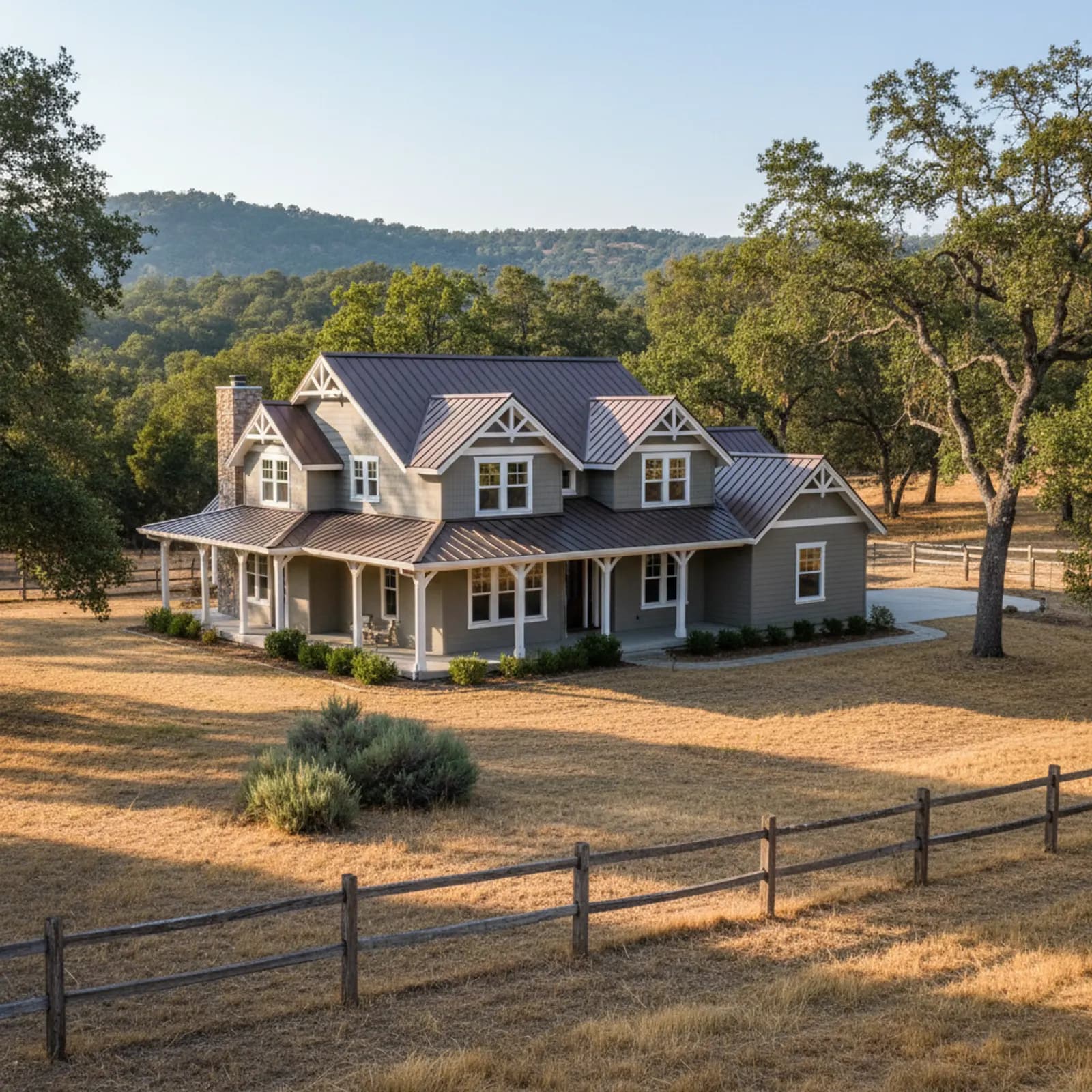
Shingle Springs's stock is overwhelmingly rural-residential and acreage homes on oak-and-pine lots, with outbuildings, barns, and equestrian facilities, plus some newer foothill subdivisions closer to the Highway 50 corridor. Many older homes wear combustible wood or T1-11 siding under heavy canopy, the highest-priority hardening targets here. The mix ranges from decades-old ranch homes that predate modern fire detailing to recent custom builds, so the right profile and trim package is set by the individual home rather than a single neighborhood pattern.
Shingle Springs's foothill climate
The controlling stressor in Shingle Springs is foothill fire, full stop. Summers are hot, dry, and high-UV with abundant oak-woodland fuel curing across acreage lots; winters are mild. That long, severe dry season and the rural fuel load set the exterior agenda far more than heat or moisture ever could. The specification answer is a non-combustible cladding backbone with fire-aware detailing at every wall opening, because the climate here is effectively a fuel calendar.
Hardening a Shingle Springs property
Shingle Springs's rural oak-woodland parcels carry high wildfire exposure, and we treat the whole site accordingly. We specify Class A non-combustible fiber cement and harden eaves, soffits, vents, and ground-to-wall transitions, then look beyond the main house to heavy canopy, outbuildings, and accessory structures that influence how a property behaves in an ember event. We document the materials and assemblies used so the work can support defensible-space and insurability efforts, while being clear that insurers set their own criteria.
Recommended materials for Shingle Springs
Non-combustible fiber cement is the clear recommendation for Shingle Springs given the rural fire exposure. We advise against combustible cladding regardless of aesthetic preference, because in this terrain the material choice is a safety choice. Fiber cement also carries the foothill heat and high-UV durability these lots demand, so there is no performance trade-off: the safer material is also the longer-lasting one, paired with robust flashing and fire-aware detailing at the openings.
What an exterior project costs in Shingle Springs
Shingle Springs projects carry fire-hardening scope, rural site access down long driveways, larger structures and outbuildings to consider, and substrate and dry-rot discovery on older foothill homes that have weathered decades of dry summers. Acreage staging and the distance from the main road can shape logistics and material handling. We assess on site and provide a written, itemized estimate; the fire-detailing scope is the core of the value here, so it appears clearly in the number rather than buried in a lump sum.
Acreage, outbuildings, and equestrian properties
Many Shingle Springs parcels include barns, shops, and stables alongside the residence, and an ember event doesn't respect the line between structures. When we scope a re-side here we factor in how the accessory buildings and their cladding sit relative to the house and the canopy, because hardening only the main home leaves obvious gaps. Rural access also means planning how crews and material reach the work without churning up a long dirt drive.
Older cladding under heavy canopy
The combustible wood and T1-11 siding common on Shingle Springs's older homes tends to sit under dense oak and pine, collecting needle litter and aging fast in the dry-season UV. That combination is exactly the wall we most want to convert to non-combustible material. Pulling the old cladding frequently reveals weathered substrate or dry rot that a quote written from the curb would miss, which is why the on-site assessment matters here.
Insurability and defensible-space context
Fire insurance in the western El Dorado foothills has tightened, and owners increasingly pursue exterior hardening as part of keeping coverage workable. We can document the non-combustible materials and the eave, vent, and ground-transition detailing used, which owners can carry into their defensible-space and insurer conversations. We don't promise an insurance outcome; carriers set their own standards, and our role is to do the hardening well and record it clearly.
Shingle Springs is unincorporated: county permits, EID, HZ10 + Very-High FHSZ
Shingle Springs is not a city. It is an unincorporated community in El Dorado County. Building permits go through the El Dorado County Community Development Agency in Placerville. Electric and gas are PG&E, and the area is in high-PSPS territory. Water is El Dorado Irrigation District (EID) on some parcels and private wells on others. Fire response is Rescue Fire Protection District or Cameron Park FPD alongside CAL FIRE. Shingle Springs is in James Hardie's HZ10 zone; installing HZ5 is a documented warranty misapplication. Essentially all of Shingle Springs sits in Moderate to Very High FHSZ under California's 2025 LRA Fire Hazard Severity Zone map, and the 2025 California Wildland-Urban Interface Code governs the exterior wall on nearly every re-side. Chapter 7A moved into the standalone WUI Code on January 1, 2026.
Our process in Shingle Springs
- Step 1
Consultation
We listen to your goals and assess your home on site — exposure, substrate, and architecture.
- Step 2
Design & Proposal
A clear written proposal with the right system specified for your climate and a transparent scope.
- Step 3
Expert Installation
Trained crews install to manufacturer best practices with careful weather-management detailing.
- Step 4
Walkthrough & Support
A final walkthrough, full cleanup, and a clear written record of the scope completed — work we stand behind.
Shingle Springs's rural oak-woodland setting carries real fire exposure, and a hardened, well-detailed exterior is how we protect it. We scope every Shingle Springs project on site, account for the whole property, and put the fire-detailing scope in writing so your estimate governs the work.
FAQ
Shingle Springs — Common Questions
In most cases yes — the rural oak-woodland setting carries high wildfire exposure. Re-cladding combustible siding in non-combustible material is one of the highest-value hardening actions available.
Class A non-combustible fiber cement with fire-aware eave, soffit, vent, and ground-transition detailing — it covers both the wildfire exposure and the foothill heat.
Yes — on Shingle Springs properties we consider how the whole site, including heavy canopy and accessory structures, behaves in an ember event.
We advise against combustible cladding given the rural fire exposure; fiber cement carries no durability penalty, so the safer material is also the sound one.
Yes — hot, dry, high-UV foothill summers. We specify durable finishes and detailing for that heat alongside the fire backbone.
Yes — rural site access and larger structures are routine considerations in our Shingle Springs project planning.
It can support insurability in this rural foothill terrain. We document the materials and assemblies used; insurers set their own criteria.
A correctly installed fiber cement system commonly performs 30+ years while materially reducing ignition risk over that lifespan.
Explore