9 min read · Buyer's Guide
Nevada County climate isn't one thing, but most of it is HZ10. Penn Valley, Grass Valley, Nevada City, and Alta Sierra sit in the lower Gold Country foothills with hot-dry summers and only occasional frost; Truckee sits at ~5,800 feet in alpine snow country. The Hardie product line includes HZ10 (hot-dry, mild, low-freeze West) and HZ5 (Northern cold/snow with hard freeze-thaw), and choosing wrong is a costly spec mistake. The populated Nevada County foothills are HZ10; only the high-mountain east near Truckee and Donner, above the snow line, is HZ5. Some contractors order whatever stock they have on hand; premium homeowners verify spec in writing on the contract. Here are 7 specific climate-spec decisions Nevada County homeowners should make in 2026. Sierra Siding works across Grass Valley, Nevada City, Penn Valley, and Truckee — full Nevada County climate range coverage.
1. Understand the HZ10 vs HZ5 distinction
James Hardie engineers two distinct climate-spec product lines. HZ10 is formulated for the hot-dry, mild, low-freeze West — Sacramento Valley, the Central Valley, the Bay Area, and the Gold Country foothills, including nearly all of populated Nevada County. HZ5 is formulated for Northern climates with hard freeze-thaw and sustained snow — the Pacific Northwest, Northeast, and in California only the high Sierra and Tahoe snow country. The boards look identical at the showroom; the underlying material formulation differs. See Hardie HZ10 vs HZ5 California Climate Guide.
2. Most of Nevada County is HZ10 territory
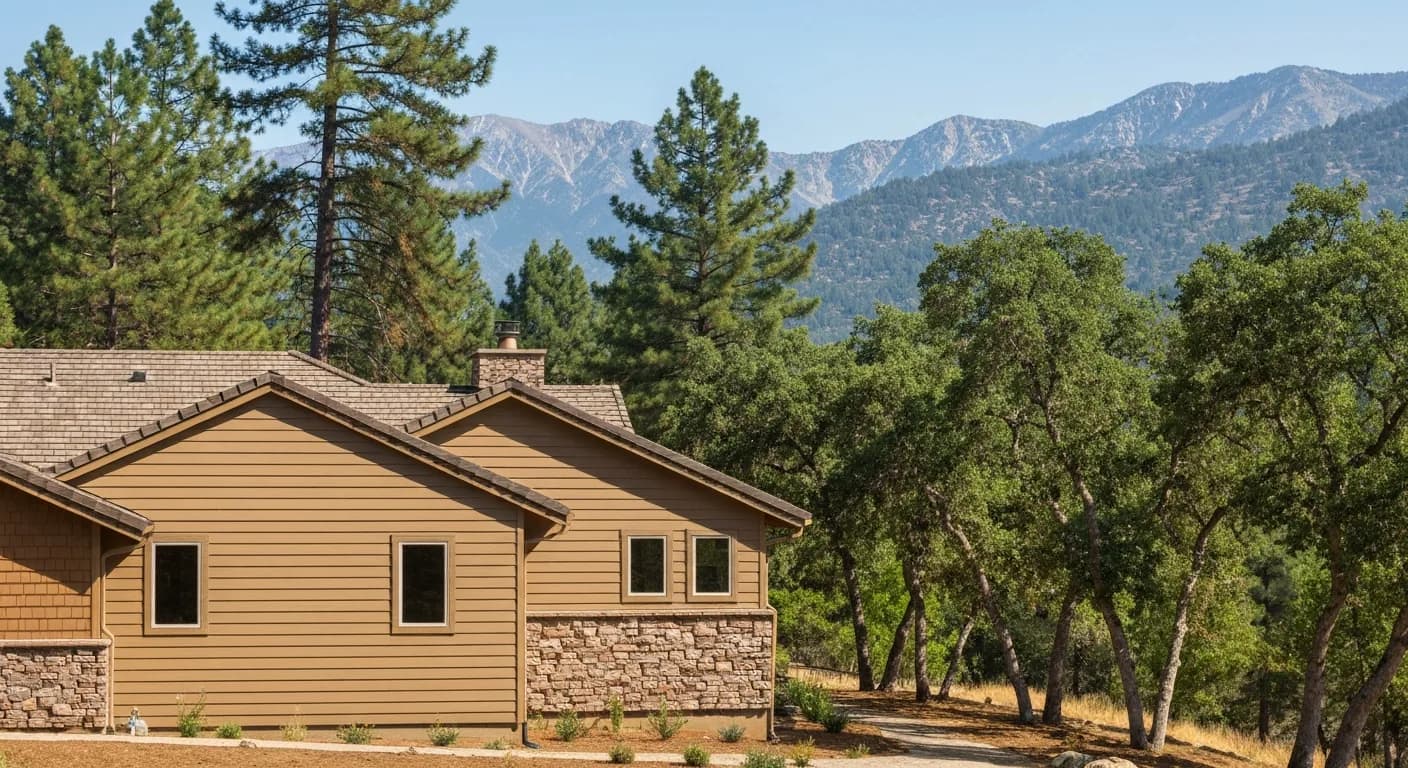
Penn Valley, Grass Valley (~2,400 ft), Nevada City (~2,500 ft), Alta Sierra (~2,800 ft), and Cedar Ridge are all lower Gold Country foothill settings with hot-dry summers and only occasional winter frost — James Hardie zones them HZ10. They do not see the sustained snow and repeated hard freeze-thaw that defines a freeze-belt climate. The exception is the high-mountain east: Truckee (~5,800 ft), Donner Summit, and Soda Springs, above the snow line, are genuine HZ5. So the rule for the county is straightforward — spec HZ10 across the populated foothills, and reserve HZ5 for the high-mountain Truckee/Donner-area parcels.
3. Verify HZ10 in writing on the contract (HZ5 only high-mountain)
For a foothill Nevada County parcel, the contract material specification line should read 'James Hardie HZ10 ColorPlus' explicitly. Generic 'fiber cement' or 'Hardie' language allows substitution. The one place this flips is the high-mountain east near Truckee, Donner, and Soda Springs, where HZ5 is the correct call — there, verify HZ5 instead. Either way, naming the specific line in writing is what protects the warranty, because the boards look identical and nobody can tell HZ10 from HZ5 on an installed wall.
4. Choose ColorPlus over field paint for foothill UV
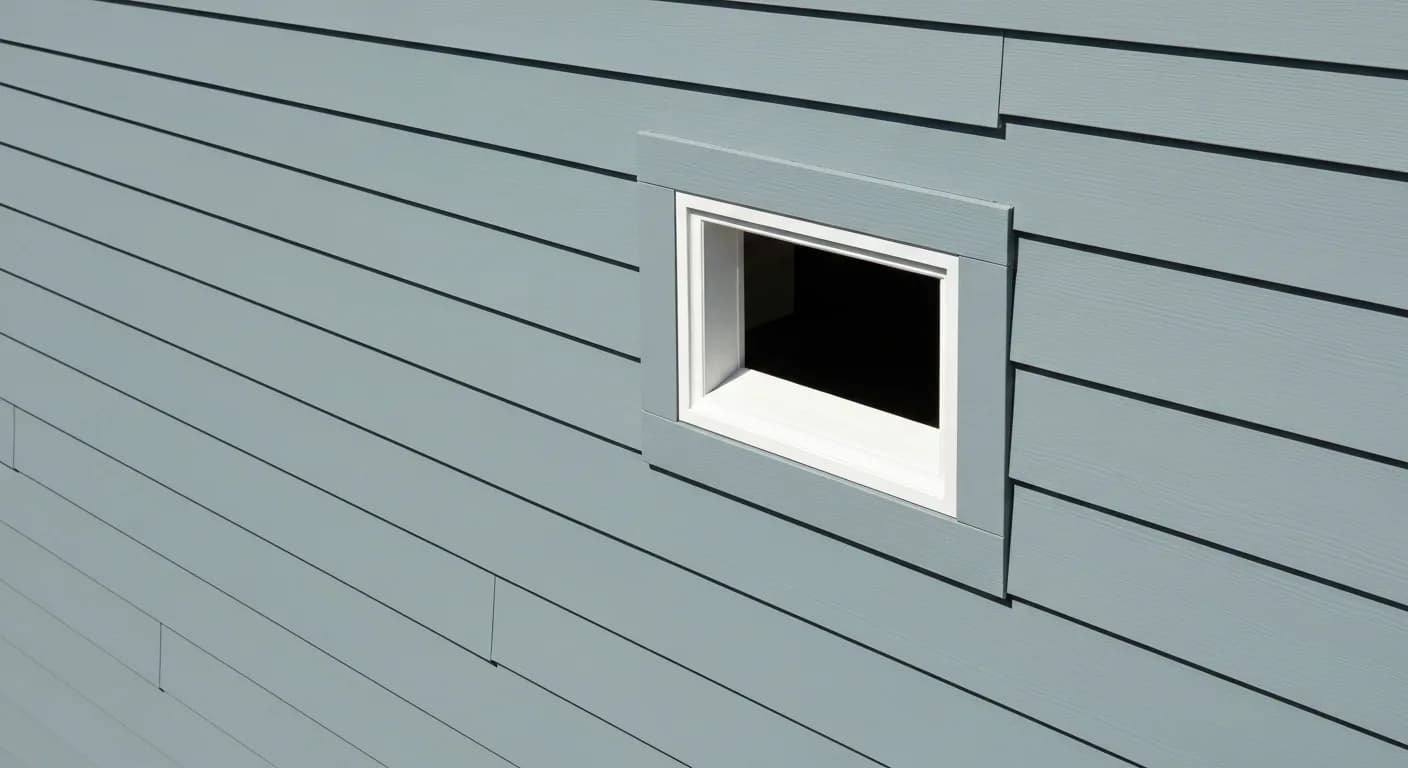
Nevada County foothill UV exposure — particularly south and west elevations on properties without substantial canopy — punishes field paint within 3-5 years. Factory ColorPlus finish (through-color, chemistry-bonded, baked-on) holds 12-15+ years before refresh consideration. Premium Nevada County homeowners spec ColorPlus on every primary elevation. Field paint is acceptable only on custom-color projects outside the 21-color ColorPlus palette.
5. Spec orientation-aware color for foothill exposure
Nevada County south and west elevations take 60-70% of total annual UV. Premium homeowners choose lighter mid-tones (Mountain Sage, Boothbay Blue, Cobble Stone) for sun-exposed primary elevations; reserve darker tones (Iron Gray, Aged Pewter, Night Gray) for north-facing primary where UV is moderate. The orientation strategy is foothill-specific and consequential for 30+ year fade performance. See Best Hardie Colors for California.
6. Plan for substrate-repair allowance honestly
Nevada County homes built between 1975 and 2000 commonly have aged Masonite-era hardboard, T1-11, or early-generation fiber cement that fails progressively at the bottom edge, around window openings, and at corner transitions. Premium homeowners budget substrate-repair allowance honestly — $2,500-$6,000 on typical homes, more on visibly stressed stock. Substrate work that surfaces mid-project as 'extra' is often pre-existing and pre-discoverable.
7. Coordinate climate-spec with WUI-code compliance
Hardie fiber cement satisfies both Nevada County climate-spec requirements and the WUI code Class A non-combustible cladding requirements regardless of zone. On a foothill parcel that means HZ10 ColorPlus as the integrated climate + fire-safety solution; on a high-mountain Truckee/Donner-area parcel it means HZ5. Either way, premium homeowners pair the correct line with ember-resistant vents, boxed non-combustible eaves, and Zone 0 detailing for a full WUI-code assembly. See California Fire-Resistant Exteriors.
8. Account for elevation-driven freeze-thaw at Truckee and Donner-area parcels
If your parcel sits above roughly 5,000 feet near Truckee, Donner Summit, or Soda Springs, the binding spec concern shifts from UV to repeated freeze-thaw cycling. At those elevations water can intrude into a hairline gap, freeze overnight, and expand against the panel edge dozens of times each winter. Fiber cement tolerates this far better than wood or vinyl, but only when the installation details respect it: blind-nailing rather than face-nailing where exposure permits, generous gapping at butt joints, and a continuous weather-resistive barrier behind the cladding so meltwater drains rather than pools. Flashing at horizontal transitions, deck ledgers, and window heads matters more here than anywhere else in the county, because a single unflashed shelf collects snow that melts and refreezes against the wall. Caulk selection also changes at altitude; a low-temperature-rated sealant stays flexible through a Sierra cold snap, while a cheaper product cracks and admits water by the second winter. Ask whoever installs your cladding to walk the snow-load and drainage details before work starts, not after. If you are weighing a full re-clad versus targeted fixes on an older mountain home, our siding repair page outlines when patching freeze-damaged sections still makes sense and when the panel field is too compromised to save. Getting these alpine details right is what separates a 40-year wall from one that telegraphs swelling and edge spalling within a decade.
9. Match trim and fascia spec to the body, not just the panels
Homeowners obsess over the lap or panel choice and then let the trim default to whatever is cheapest, which undoes the climate logic entirely. Trim boards, fascia, and frieze take the harshest beating on a foothill home because they sit at edges and corners where wind-driven rain and direct sun both concentrate. A reliable spec uses Hardie trim rated for the same climate zone as the body cladding, finished to match, and detailed with proper end-grain sealing where boards are field-cut. End grain is the vulnerable face on any fiber cement piece; an unsealed cut at a rake board wicks moisture and is a frequent failure point in inspections. Outside corners deserve particular attention. Mitered wood-look corners look refined but open up over seasonal movement, whereas factory corner solutions or properly gapped butted corners hold up through the county's swing from 100-degree summer afternoons to sub-freezing winter nights. Window and door surrounds should be planned as a system with the flashing, not added as an afterthought once the field is hung. If you want to understand how these pieces fit the overall material, our fiber cement siding overview covers the trim and accessory families that pair with each panel line. Specifying trim to the same standard as the body is a small line item that protects the entire wall assembly, and it is worth confirming on the written scope before anyone orders material.
10. Build a realistic budget range before you compare bids
A climate-correct Hardie spec costs more upfront than the bargain alternative, and going in with a grounded number prevents you from being pulled toward a cheaper, wrong-zone product mid-negotiation. The variables that move a Nevada County price are substrate condition behind the old cladding, the amount of trim and corner work the architecture demands, access difficulty on steep foothill lots, and whether WUI-code wildfire details apply to your parcel. A two-story home on a tight hillside with extensive eave and rake detail will land well above a single-story rectangle on flat ground, even at identical square footage. National benchmarks are a useful sanity check; the Remodeling Cost vs. Value report tracks fiber cement re-side averages and the resale recovery that follows, which consistently ranks among the strongest of any exterior project. Treat those figures as a frame, not a quote, since California labor and the foothill access premium push real numbers higher than the national midpoint. We keep a plain-language breakdown of what drives local pricing on our siding cost in California resource so you can see which line items are fixed and which you can influence through scope choices. The goal is not to find the lowest bid but to recognize when a low bid is low because it skipped flashing, used wrong-zone product, or buried the substrate-repair allowance. An honest range lets you read bids critically instead of emotionally.
11. Verify your installer's license and wildfire-detail experience
The spec only matters if the people executing it understand foothill conditions, and that is something you can check before signing. In California any contractor performing this scope should hold an active license, which you can confirm directly through the Contractors State License Board using the business name. A clean license is the floor, not the ceiling; the more telling question is whether the crew has installed in your specific elevation band and around the wildfire-hardening details that apply in the Sierra foothills. Ask to see recent foothill work, and ask how they handle the transitions that fail most often: roof-to-wall intersections, deck ledgers, and the vent and eave details that overlap with ember-resistant construction. A team that has only done valley tract work will often miss the gapping, flashing, and drainage choices that a high-UV, freeze-prone, wildfire-exposed parcel demands. Confirm in writing who is responsible if hidden substrate damage appears once the old cladding comes off, since that is where vague scopes generate disputes. It is also fair to ask which product zone they intend to order and to see that zone written into the scope, so the climate decision you made does not quietly revert to leftover valley stock on delivery day. The contractor who answers these questions specifically, rather than reassuring you in generalities, is usually the one whose wall will still look right after a decade of Sierra sun, snow, and smoke.
Key takeaways
- HZ10 vs HZ5 is climate-dependent, not preference-dependent
- Most of Nevada County (the populated foothills) is HZ10 territory
- HZ5 applies only to the high-mountain east near Truckee and Donner
- Verify the correct line (HZ10 in the foothills) in writing on the contract
- ColorPlus saves 4-5x over field paint in foothill UV exposure
- The right Hardie line satisfies both climate and WUI-code requirements integrated
FAQ
Quick Answers
For the populated foothills — Penn Valley, Grass Valley, Nevada City, Alta Sierra, Cedar Ridge — yes, HZ10 is the climate-correct spec. These are hot-dry foothill climates without sustained snow or hard freeze-thaw. The exception is the high-mountain east near Truckee, Donner Summit, and Soda Springs (above the snow line), where HZ5 is correct. Match the line to where the parcel actually sits.
It's still a misapplication of the regional product. James Hardie zones the populated foothills as HZ10, and installing the Northern freeze-belt line outside its intended climate is a documented mismatch that can affect warranty coverage. Spec the line James Hardie maps to your parcel — HZ10 in the foothills — not whichever line a contractor happens to stock.
Negligibly — the two lines are typically within 2-3% of each other at distribution. The cost difference isn't meaningful; installing the climate-correct line for your parcel matters far more than the modest material cost increment.
No — they look identical visually. The difference is in the material formulation. Verify by product label (HZ10 vs HZ5 marked on packaging) and require the contract material specification to identify the product line explicitly.
Hardie's warranty terms specify climate appropriateness by region. Installing HZ5 in an HZ10 foothill climate — or HZ10 in a high-mountain HZ5 zone — is a documented misapplication that may limit warranty coverage. Verify with your contractor and the manufacturer documentation; using the line Hardie maps to your parcel is what activates full warranty protection.
Ask candidates: which Hardie product line do you spec for foothill Nevada County, and why. Quality contractors will explain HZ5 vs HZ10 climate distinction unprompted. Vague or generic answers ("we use Hardie") suggest they don't know the climate-spec distinction.
Sources
Authoritative references
- James Hardie — official product & installation resources
- James Hardie ColorPlus Technology
- California Energy Commission — Title 24 Building Energy Efficiency Standards
- 2025 California Wildland-Urban Interface Code (Title 24, Part 7) — exterior walls & wall coverings, §504.5
- Contractors State License Board (CSLB) — verify a California contractor
External links to government, code, and manufacturer sources. Sierra Siding is not affiliated with these organizations; references are provided for verification.