
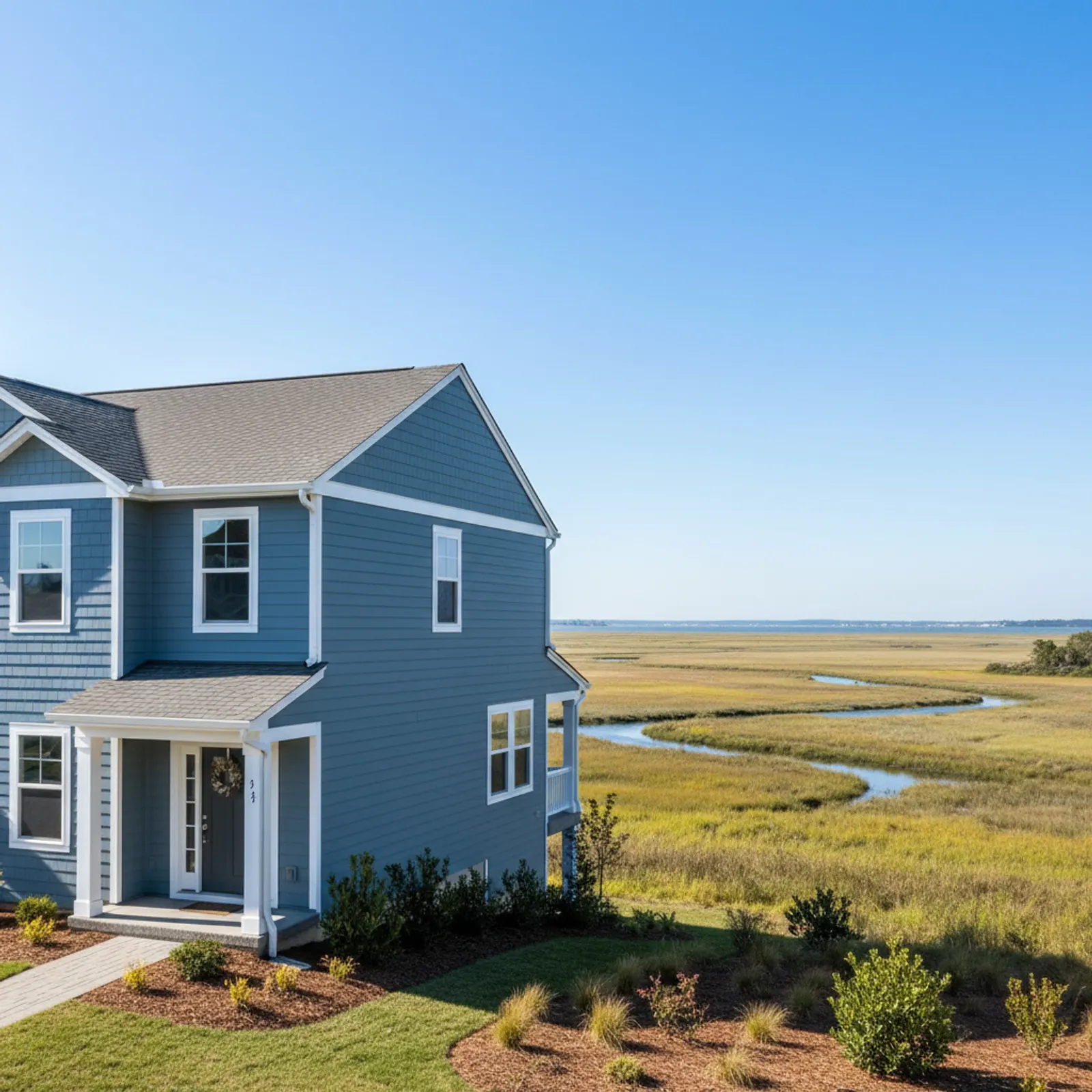
Exterior renovation in Suisun City
Suisun City sits on the edge of the Suisun Marsh and waterfront, a Solano County city with a revitalized waterfront district, established tract neighborhoods, and a strong, near-constant wind off the marsh and Suisun Bay. Its exterior priority is unambiguous: wind-driven moisture management, with marsh humidity and waterfront exposure shaping every detail.
Why Suisun City siding fails the way it does
The same Suisun gap wind that makes this one of the windiest spots in the region also carries salt off the bay and marsh, and that drives the failures we see here. Wind-driven rain hits walls sideways rather than straight down, finding any poorly flashed joint, while standard electro-galvanized nails and cheap trim screws bleed rust streaks down a fresh wall within a couple of seasons on waterfront-adjacent homes. The durable answer is fiber cement over a rigorously detailed drainage plane with hot-dip or stainless fasteners, corrosion-rated and gasketed flashing at windows, kickout flashing at roof-wall intersections, and end-coated cut edges, plus a ventilated rainscreen gap that lets trapped moisture dry between weather events. None of it is exotic, but skipping it on a Suisun City waterfront elevation is the single most common reason a re-side ages poorly here.
Considering an exterior project in Suisun City?
Suisun City housing and architecture
Suisun City's stock is largely 1980s–2000s production tract homes plus waterfront-district and older core homes. The tract homes modernize strongly with a clean lap-and-batten re-side; waterfront-adjacent homes add corrosion- and wind-aware detailing on top of the moisture baseline.
Suisun City's marsh-edge climate
Suisun City is among the windiest spots in the region — the Suisun gap funnels strong, sustained wind off the marsh and bay, with persistent humidity and some salt influence near the water. Wind-driven rain and moisture are the controlling exterior factors here.
Recommended materials for Suisun City
Fiber cement over a rigorously detailed drainage plane, with strong wind-aware fastening and corrosion-resistant detailing on waterfront parcels, is the core recommendation — it resists the marsh moisture and wind-driven rain far better than the original tract cladding.
What an exterior project costs in Suisun City
Suisun City pricing follows the standard drivers — size and stories, trim complexity, substrate and rot condition once cladding is removed, window integration, and the wind- and moisture-management scope (heavier here than typical valley work). We provide a written, scoped estimate after an on-site assessment.
Working a re-side in Suisun City's neighborhoods
Suisun City splits into two very different work environments, and the access plan changes with each. The Old Town and waterfront district near Main Street and the Harbor sits on narrow, older lots with tight setbacks, alley-style rear access, and limited street parking close to the marina, so staging a lift, scaffold, or material drop takes coordination and sometimes a weekday window before harbor traffic builds. The tract neighborhoods north of Highway 12 around the Crystal and Heritage areas are the opposite: wide streets, deeper driveways, and uniform two-story elevations that make a full lap-and-batten wrap fast and predictable once the crew lands. Many of those subdivisions carry an HOA, so siding profile, color, and trim style usually need architectural-committee sign-off before tear-off begins. Planning your re-side around these realities, pulling the City of Suisun City permit early and confirming HOA approval, keeps the project from stalling between demolition and dry-in, which matters here because the marsh wind gives you a short clean-weather runway to keep the wall assembly open.
Corrosion-aware fastening near the marsh and bay
The same Suisun gap wind that drives moisture into walls also carries salt off the bay and marsh, and that quietly changes the hardware spec on a waterfront-adjacent home. Standard electro-galvanized nails and cheap trim screws can bleed rust streaks down a fresh wall within a couple of seasons here, so the durable approach leans on hot-dip galvanized or stainless fasteners, corrosion-rated flashing, and end-coated cut edges on fiber-cement to keep the salt-laden humidity from finding a way in. Joint detailing matters just as much as the panel: continuous, gasketed flashing at windows, kickout flashing at roof-wall intersections, and back-caulked butt joints all earn their keep against wind-driven rain that hits the wall sideways rather than straight down. Ventilated rainscreen gaps behind the siding give trapped moisture a path to dry out between weather events, which is the difference between a wall that lasts and one that traps damp. None of this is exotic, but skipping it on a Suisun City waterfront elevation is the most common reason a re-side ages poorly.
Our process in Suisun City
- Step 1
Consultation
We listen to your goals and assess your home on site — exposure, substrate, and architecture.
- Step 2
Design & Proposal
A clear written proposal with the right system specified for your climate and a transparent scope.
- Step 3
Expert Installation
Trained crews install to manufacturer best practices with careful weather-management detailing.
- Step 4
Walkthrough & Support
A final walkthrough, full cleanup, and a clear written record of the scope completed — work we stand behind.
Suisun City rewards an exterior engineered for relentless marsh wind and moisture — that detailing is the core of the value here.
FAQ
Suisun City — Common Questions
Fiber cement over a rigorously detailed drainage plane with strong wind-aware fastening — corrosion-resistant detailing added on waterfront parcels.
The Suisun gap funnels strong, sustained wind off the marsh and bay; it drives rain into walls and makes flashing and fastening detail unusually critical.
Usually wind-driven moisture finding poorly flashed joints in a humid marsh climate. Wind-aware, drying-capable detailing fixes the root cause.
On waterfront and near-bay parcels there is a measurable salt influence; we add corrosion-resistant fastening and detailing there.
Low — it is a marsh-edge city. Non-combustible fiber cement remains a sound, low-regret choice.
Yes — the 1980s–2000s production homes are reaching re-side age and modernize strongly with a clean profile and trim program.
When feasible, yes — correct flashing integration is especially important in this wind-driven-rain environment.
A correctly detailed, wind- and moisture-aware fiber cement system commonly performs 30+ years in Suisun City's marsh-edge climate.
Explore
Exterior Services
Helpful Exterior Guides