James Hardie Siding in Esparto
In a high-fire, high-sun market like Esparto, the case for James Hardie rests on two properties at once: the material is non-combustible, and the factory finish survives a UV load that ends field paint early.
Both matter here, and it is worth being clear about which problem each one actually solves — because the fire performance of a wall is not the same thing as the fire performance of a house.
Non-combustible is a real property with a specific meaning
Fiber cement does not contribute fuel to a fire, and on a parcel near the Capay Valley wildland that is worth having as a baseline. The precise claim is about the material: it will not ignite and carry flame the way wood or some engineered products can. What it is not is a guarantee about the building. Embers arrive ahead of any fire front and enter through vents, open eaves and debris at the base of a wall — paths the cladding does not touch. Being exact about that distinction is the difference between a useful specification and a false sense of security.
HZ10 is the line for this climate, and it is a fair question to ask
James Hardie manufactures to climate zones. HZ10 is the line engineered for California's hot, dry interior — built around sustained heat, heavy UV and the swing between a rainless summer and a wet winter, rather than around the freeze-thaw cycling that governs mountain markets. Esparto sits firmly in that zone. Confirming that the product being quoted is the one built for these conditions is a reasonable thing to ask any contractor and a simple thing for them to answer.
Color on a treeless lot, and what fades first
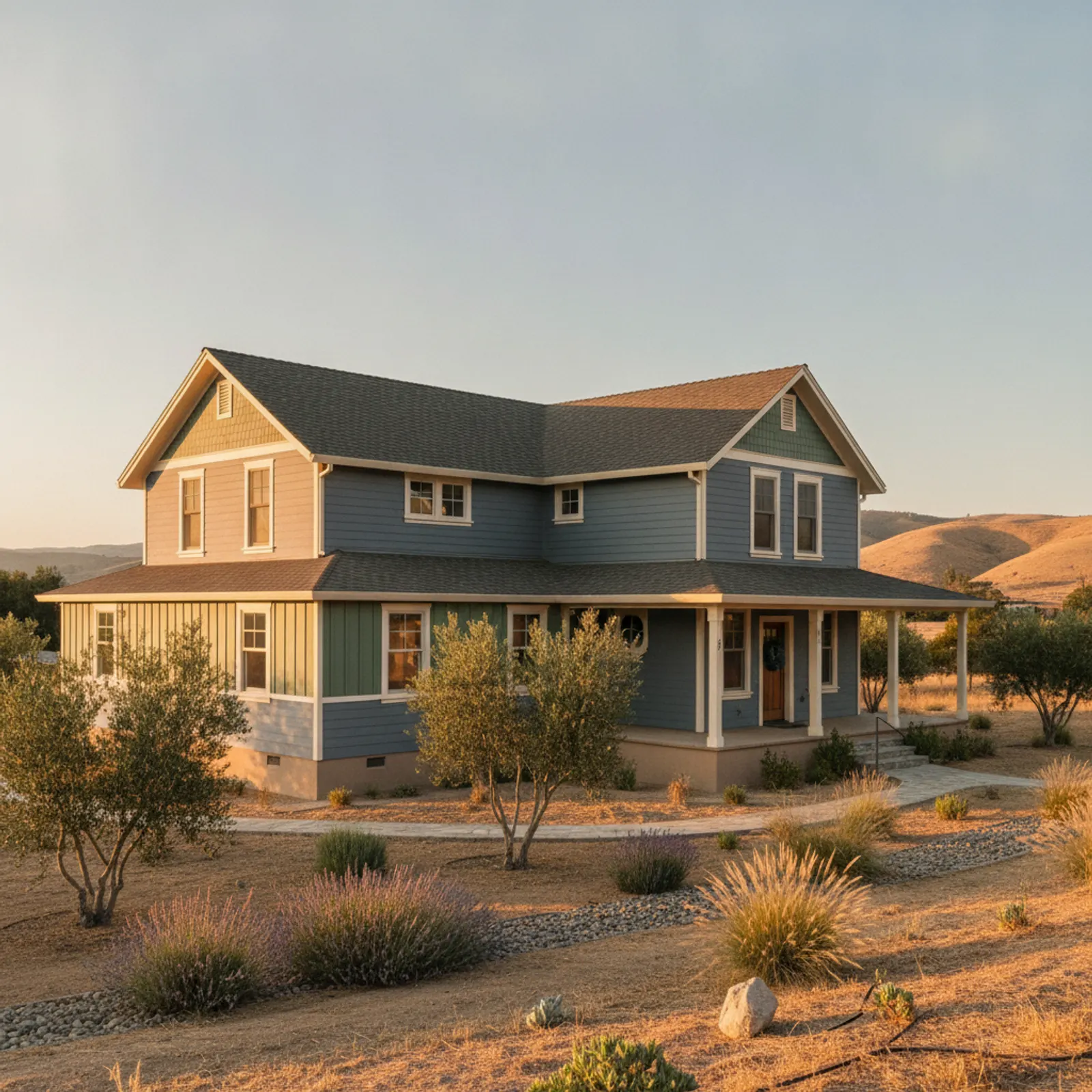
Esparto's open agricultural parcels have little to no shade, which means color choices are being tested under close to worst-case conditions. Deep, saturated colors absorb more heat and show their age earliest on whichever elevation takes the afternoon. That is a reason to choose with the west wall in mind rather than the entry, not a reason to default to pale. It is also a reason the factory finish earns its cost here more clearly than it would in a shaded neighbourhood — the alternative is a repaint cycle running against the same sun.
The detailing that turns a Hardie job into a hardened one
On an Esparto parcel the additions worth making alongside the cladding are consistent and unglamorous: ember-resistant vents, because vents are the most direct entry path into an attic or crawl space; enclosed or non-combustible eaves and rafter tails, because open eaves collect embers under the roof edge; and a hardened ground transition kept clear of mulch, litter and stored fuel. Attached wood decking deserves an honest look too, since it is frequently the largest single vulnerability on a rural property and it sits directly against the wall being upgraded.
Why this matters in Esparto
- Specified for Sacramento Valley conditions
- James Hardie fiber cement as the recommended system
- Correctly detailed weather-resistive barrier and flashing
- Installed by a crew with 20 years combined experience
Recommended systems for Esparto
- James Hardie fiber cement
- fire-aware detailing toward the Blue Ridge
- factory finishes
- durable trim packages
James Hardie Siding for Esparto homes
The full james hardie siding approach — materials, weather-resistive detailing, and the manufacturer standards we install to — is covered on the main service page, then specified for Esparto's conditions on this one.
Our Esparto process
- Step 1
Consultation
We listen to your goals and assess your home on site — exposure, substrate, and architecture.
- Step 2
Design & Proposal
A clear written proposal with the right system specified for your climate and a transparent scope.
- Step 3
Expert Installation
Trained crews install to manufacturer best practices with careful weather-management detailing.
- Step 4
Walkthrough & Support
A final walkthrough, full cleanup, and a clear written record of the scope completed — work we stand behind.
FAQ
James Hardie Siding in Esparto — FAQ
It makes the walls non-combustible, which is genuinely valuable and is not the same claim. The material will not ignite and carry flame the way wood can. The building is a different question: embers arrive ahead of the fire and enter through vents, open eaves and debris at the base of the wall — paths the cladding does not address at all.
HZ10 — the line built for California's hot, dry interior, engineered around sustained heat, heavy UV and the swing from a rainless summer to a wet winter rather than around mountain freeze-thaw. Esparto is firmly in that zone, and confirming the quoted product is the right one is a simple question for any contractor.
Ember-resistant vents first, since vents are the most direct path into an attic or crawl space. Then enclosed or non-combustible eaves, because open eaves collect embers under the roof edge, and a hardened ground transition kept clear of mulch and stored fuel. Attached wood decking is worth an honest look — on rural parcels it is often the largest single vulnerability.
Not bad, but tested harder than most owners expect. With no canopy, deep colors absorb more heat and show age first on the elevation taking the afternoon sun. Choose with the west wall in mind rather than the entry. It is also where the factory finish earns its cost most clearly — the alternative is a repaint cycle running against that same sun.
Keep Exploring
More for Esparto homeowners
More in Esparto
Other exterior services in Esparto
Nearby Service Areas
James Hardie Siding near Esparto
Helpful Exterior Guides