
Fiber Cement Siding in Olivehurst
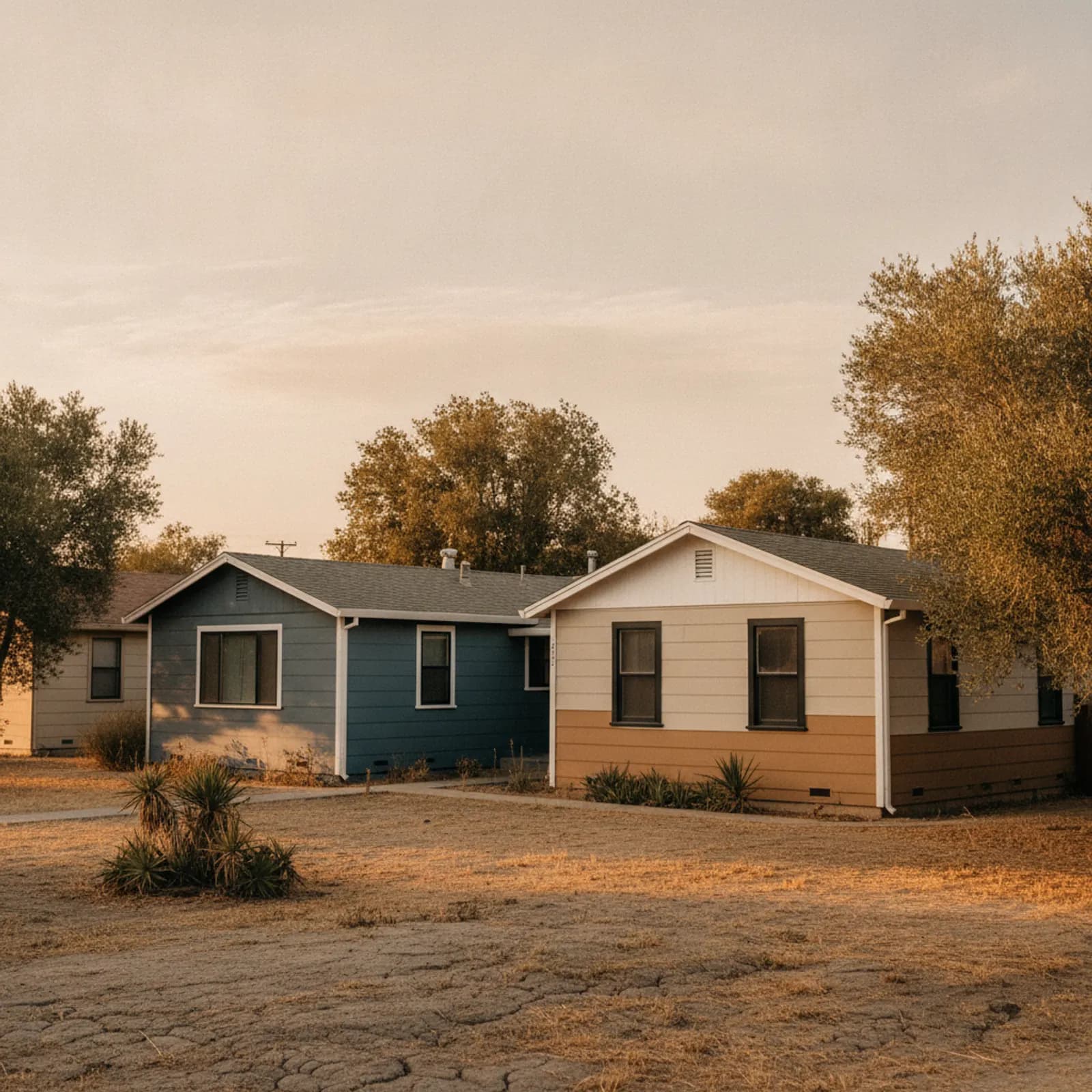
Olivehurst has a housing stock that makes it genuinely different from the tract subdivisions around it: a deep mix of older self-built and owner-modified homes alongside post-war and tract construction.
That changes the nature of a re-side here. The sun is the same relentless valley sun as everywhere else on this floor, but the thing that determines how the project goes is what is found when the old cladding comes off.
The substrate is the real unknown, and it should be priced as one
A significant share of Olivehurst's housing was built or extended incrementally, sometimes by owners, over decades. That produces walls that can contain more or less anything: framing at non-standard spacing, several generations of cladding layered over each other, additions framed differently from the original house, sheathing that is present in some areas and absent in others, and occasionally no weather barrier at all. None of that is visible from outside. A quote that treats this housing as though the wall behind the siding is a known quantity is making an assumption, and the honest approach is to price the unknown explicitly rather than discover it mid-job.
Why removal is where the project is actually decided
On this stock, the moment the existing cladding comes off is the moment everyone learns what the job really is. Sound framing with intact sheathing is a straightforward re-side. Rot at the base of walls, framing that has moved, or an addition with no barrier behind it is a different scope and a different number. Both outcomes are common enough here that a contractor should be able to describe how each will be handled before starting — how it is assessed, how it is priced, who decides. Agreeing that in advance turns a bad surprise into a planned contingency.
Additions, mixed materials and making a house read as one building
Where a house has grown over time it often wears the history on its walls: an addition in a different cladding, a porch enclosure in a third material, patches where something was repaired with whatever was available. A re-side is the point at which all of that can become one coherent building, and for many owners that is the real value of the project rather than the technical performance. It also usually simplifies the maintenance, because a single system with a single finish behaves predictably where a patchwork does not.
The sun, which is the part that is the same as everywhere here
Olivehurst sits on the same open valley floor with the same absence of canopy, so the UV load is the familiar one and it drives the same failure sequence: finish chalking and fading, boards cupping through thermal cycling, joints opening, winter rain finding them. A factory-applied finish is the correct specification for that, and on a house where the previous surface was field-painted repeatedly over mixed substrates, the improvement in how long it stays looking right is usually the most visible outcome of the whole project.
Why this matters in Olivehurst
- Specified for Sacramento Valley conditions
- James Hardie fiber cement as the recommended system
- Correctly detailed weather-resistive barrier and flashing
- Installed by a crew with 20 years combined experience
Recommended systems for Olivehurst
- James Hardie fiber cement
- factory finishes
- modern lap and board-and-batten profiles
- durable trim packages
Fiber Cement Siding for Olivehurst homes
The full fiber cement siding approach — materials, weather-resistive detailing, and the manufacturer standards we install to — is covered on the main service page, then specified for Olivehurst's conditions on this one.
Our Olivehurst process
- Step 1
Consultation
We listen to your goals and assess your home on site — exposure, substrate, and architecture.
- Step 2
Design & Proposal
A clear written proposal with the right system specified for your climate and a transparent scope.
- Step 3
Expert Installation
Trained crews install to manufacturer best practices with careful weather-management detailing.
- Step 4
Walkthrough & Support
A final walkthrough, full cleanup, and a clear written record of the scope completed — work we stand behind.
FAQ
Fiber Cement Siding in Olivehurst — FAQ
Because much of this housing was built or extended incrementally over decades, sometimes by owners. Walls can contain non-standard framing, layered generations of cladding, additions framed differently, patchy sheathing or no weather barrier at all — none of it visible from outside. A quote that assumes the wall is a known quantity is guessing.
By pricing it explicitly rather than discovering it mid-job. Ask how hidden damage will be assessed, how it will be priced and who decides — before work starts. Both outcomes, a straightforward re-side and a significant repair, are common enough here that any competent contractor should be able to describe both paths in advance.
That is often the main value of the project. A re-side is the point where an addition in one cladding, a porch enclosure in another and assorted patches become one coherent building. It also simplifies maintenance — a single system with a single finish behaves predictably where a patchwork does not.
Identical. Open floor, no canopy, the same failure sequence — finish chalking and fading, boards cupping through thermal cycling, joints opening and winter rain finding them. A factory finish is the right answer, and on a house that has been field-painted repeatedly over mixed substrates it is usually the most visible improvement of the whole project.
Keep Exploring
More for Olivehurst homeowners
More in Olivehurst
Other exterior services in Olivehurst
Nearby Service Areas
Fiber Cement Siding near Olivehurst
Helpful Exterior Guides