
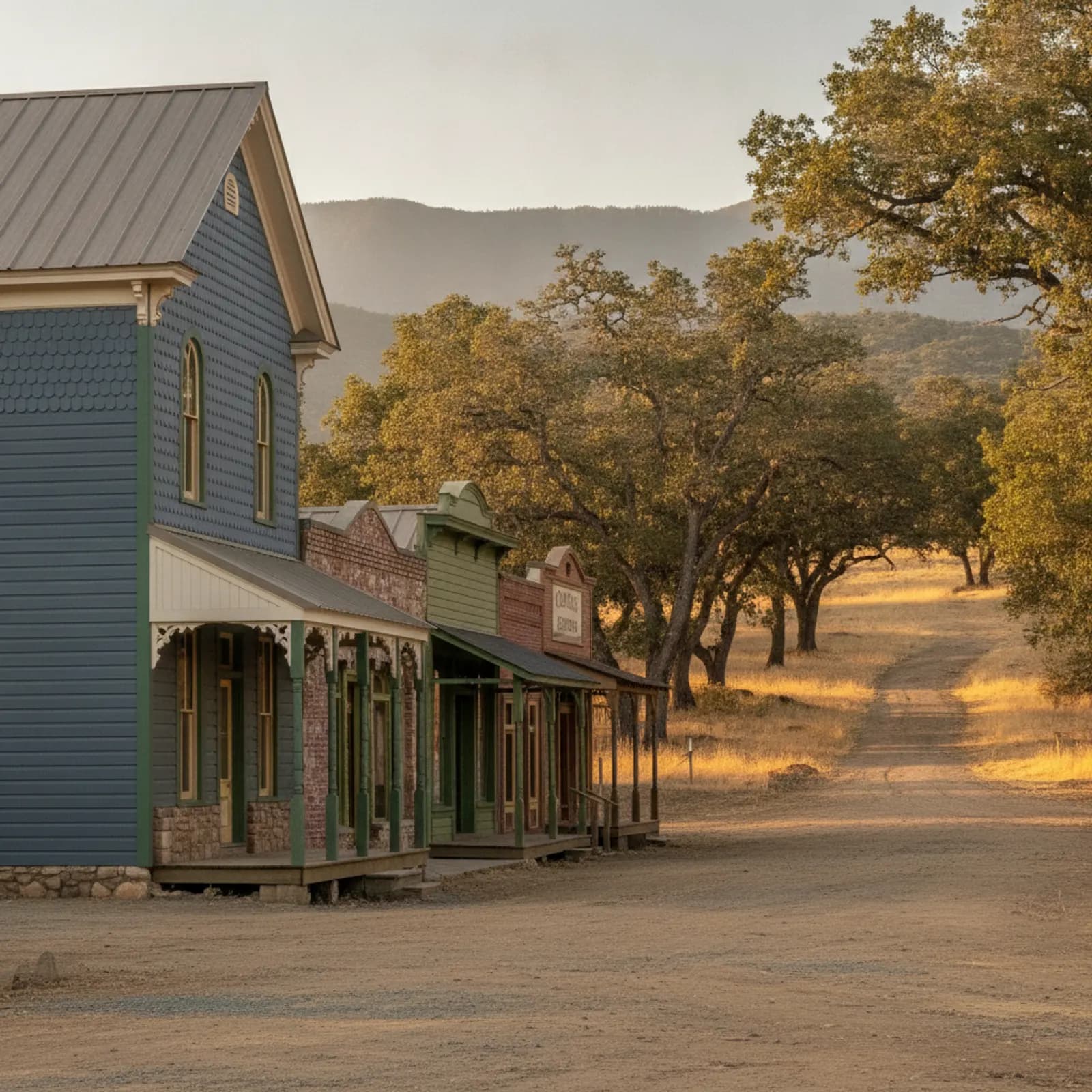
Fire-Resistant Siding in Jackson
This is a primary service in Jackson. The county seat sits squarely in the wildland-urban interface, with steep, wooded terrain and oak-grassland and brush that cure to flashy fuel through the long, rain-free summer, so fire-resistant siding here is a central exterior decision rather than a precaution.
Wind-driven embers, not a wall of flame, are the realistic threat across most of town, and that shapes the spec: non-combustible Class A cladding detailed together with hardened eaves, vents, and ground transitions into one continuous defensible envelope, with the hardening matched honestly to each parcel's real exposure.
Genuine WUI exposure across the townsite
Jackson is real foothill wildland-interface country — wind-driven foothill fire is a known regional threat, and ember exposure across the steep, wooded townsite is a seasonal hazard, not a remote one. We read each parcel honestly, though: a home tucked into the sheltered downtown core sits differently than one backing onto a brushy slope above town. We will not overstate the risk on a protected lot or understate it on a fuel-adjacent hillside parcel, and the hardening scope follows that per-parcel assessment.
The WUI code and what WUI code drives on a Jackson re-side
Because Jackson falls inside mapped wildland-hazard terrain, a fire-resistant re-side is governed by California's WUI-code provisions, which reach well beyond the wall covering itself. The cladding moves to non-combustible or ignition-resistant material, but the same standard drives ember-resistant vents, hardened eaves and soffits, fire-rated trim, and tight detailing wherever the wall meets a deck, fence, or grade. We treat the tear-off as the chance to bring the whole exterior up to that WUI standard rather than swap one cladding for another, because the assemblies that actually admit embers in a foothill fire are the eaves, vents, and the gap where siding meets the foundation, not the field of the wall.
Class A cladding and the Zone 0 ember problem on Jackson slopes
On the subdivisions and acreage climbing the slopes above Jackson, the fire threat is rarely direct flame contact; it is wind-carried embers landing against the base of the house, often well ahead of any front. That reality changes what goes on the wall. We lean on non-combustible Class A cladding — fiber cement or mineral-based panels — because charred wood siding becomes its own fuel against a foothill structure. The first several inches above grade and the deck-to-wall junction get particular attention, since dried oak leaves, pine needles, and grass collect against hillside homes all summer and embers lodge exactly there. We hold cladding off the splash and ignition zone, detail non-combustible base trim, and close the seams where a spark would otherwise wedge behind a board. For the downtown homes with original wood character, we can keep the period look with a fire-rated profile rather than asking owners to choose between heritage and a defensible exterior, matching cladding to a hardened soffit and trim package so the whole envelope reads as one fire assembly.
Honest defensible-space context and documentation
Fire-resistant siding is one layer of home hardening, and we are candid that it works alongside defensible-space management the homeowner controls — the cleared, irrigated, and ember-resistant Zone 0 within five feet of the wall does as much as any board we install. On Jackson's wooded slopes we point out where firewood stacks, wood fences tying into the wall, or brush against the foundation undercut an otherwise hardened exterior, because a Class A wall over an open ember trap still feeds fire upward. We document the Class A materials and the hardened detailing we install so the record is available when a homeowner, buyer, or insurer asks what is on the walls. That documentation can support an Amador home's insurability and resale standing in a wildland setting, though insurers and assessors set their own criteria — we provide the evidence, not a guarantee.
Why this matters in Jackson
- Specified for Sierra Foothills conditions
- James Hardie fiber cement as the recommended system
- Correctly detailed weather-resistive barrier and flashing
- Installed by a crew with 20 years combined experience
Recommended systems for Jackson
- James Hardie fiber cement
- non-combustible fire-hardened detailing
- factory finishes
- period-appropriate lap and trim packages
Fire-Resistant Siding for Jackson homes
The full fire-resistant siding approach — materials, weather-resistive detailing, and the manufacturer standards we install to — is covered on the main service page, then specified for Jackson's conditions on this one.
Our Jackson process
- Step 1
Consultation
We listen to your goals and assess your home on site — exposure, substrate, and architecture.
- Step 2
Design & Proposal
A clear written proposal with the right system specified for your climate and a transparent scope.
- Step 3
Expert Installation
Trained crews install to manufacturer best practices with careful weather-management detailing.
- Step 4
Walkthrough & Support
A final walkthrough, full cleanup, and a clear written record of the scope completed — work we stand behind.
FAQ
Fire-Resistant Siding in Jackson — FAQ
Genuinely high — Jackson is wildland-urban-interface country where the oak-grassland and brush around the steep, wooded townsite cure to flashy fuel every summer. Non-combustible cladding and ember-resistant detailing are a sound, low-regret baseline here.
Inside mapped WUI terrain, the standard drives non-combustible or ignition-resistant cladding plus ember-resistant vents, hardened eaves and soffits, fire-rated trim, and tight detailing where the wall meets decks, fences, and grade — not just the wall covering.
No — eaves, soffits, vents, the ground-to-wall transition, and the defensible-space Zone 0 within five feet of the house complete the protection. We treat the cladding and those details as one fire assembly and are candid about the part homeowners control.
It can support an Amador home's insurability, and we document the Class A materials and hardened assemblies so the record is available to a homeowner, buyer, or insurer — though carriers set their own criteria.
Yes — we can keep the period character with a fire-rated profile and matching hardened soffit and trim, so the home gets a defensible exterior without sacrificing the Gold Rush streetscape that downtown Jackson is known for.
Keep Exploring
More for Jackson homeowners
More in Jackson
Other exterior services in Jackson
Nearby Service Areas
Fire-Resistant Siding near Jackson
Helpful Exterior Guides