
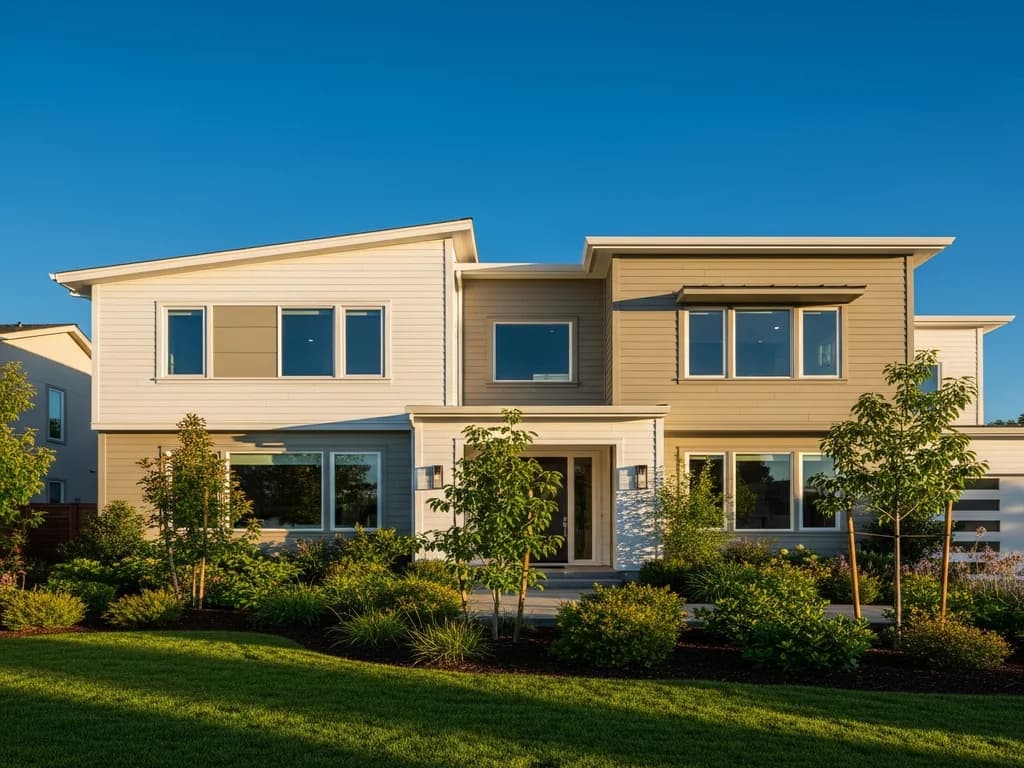
Fire-Resistant Siding in Lafayette
Lafayette's fire picture is easy to misread. The city's own fire-hazard map page reports the 2025 state map at about 41 acres Very High, 5,309 acres High, and 1,668 acres Moderate. So most of Lafayette is not Very High — it is High. That distinction matters, because High is still a mapped zone, and the rolling grass-and-oak hills around Lafayette's ranch and mid-century homes cure to fuel every summer.
For a homeowner, the practical question is what a re-side should include on a High-zone parcel. Our answer is the same core set of hardening details used in Very High areas — non-combustible cladding, ember-resistant vents, hardened eaves — scaled to the house and confirmed against what the permit requires.
Free estimate
Get your free Lafayette estimate
On-site assessment with a written, itemized scope. We reply within one business day.
Licensed, Bonded & Insured
High versus Very High in Lafayette's 2025 map
The 2025 map was adopted through the Contra Costa County Fire Protection District, which serves Lafayette, and took effect July 10, 2025. Under it, Very High covers only around 41 acres of the city, while High covers more than 5,300. That means a typical Lafayette homeowner is far more likely to be in High than Very High, and some homes are Moderate or unmapped. Because the zone is parcel-specific, we start every fire-resistant siding conversation by checking the address on the OSFM Fire Hazard Severity Zone viewer. Our 2025 remap guide explains how the new maps were drawn and why so many homes changed category.
What the WUI code covers, and where re-sides fit
Lafayette notes that the WUI building code applies to new buildings in High and Very High zones and covers roofing, siding, decking, windows, and vents. An existing home being re-sided is a different situation from new construction, and the exact requirements depend on scope, so we confirm with the permit authority what applies to a given project. Separate from the minimum, the code's list is a sensible standard for any High-zone re-side: if the wall is coming off anyway, putting back a non-combustible assembly costs far less than retrofitting it later. Fiber cement is non-combustible under ASTM E136 and carries a Class A rating, which is why it is our default cladding in Lafayette's mapped zones.
Ember entry points on Lafayette ranch homes
Lafayette's housing is mostly 1950s and 1960s ranch and split-level homes, with hillside custom homes and newer infill. On the older houses, the usual weak points are open eaves, wood decks built against the wall, and soil sitting against siding on the downhill side. Embers driven across the grass hills lodge in exactly those places. During a re-side we close or harden the eaves, replace old vents with ember-resistant units, detail the deck-to-wall connection so debris cannot pile against the cladding, and pull grade back from the base of the wall. Non-combustible trim at the bottom course completes the transition. Our fire-resistant exteriors guide lists each detail.
Windows that were caulked instead of flashed
Many older Lafayette homes have windows sealed with caulk rather than integrated flashing, which shows up as rot below the sills when the old siding comes off. In a fire zone, the window is also a heat weak point. Replacing windows during the re-side lets each opening be flashed into the new weather barrier and glazing be chosen with fire exposure in mind, rather than tying new cladding into an opening that is already leaking.
Lafayette Planning & Building, then county inspection
Lafayette's Planning & Building department reviews projects, and the city contracts building plan check and inspection to the Contra Costa County Building Inspection Department. In single-family zones, design review is triggered by larger or taller projects, and minor exterior changes can often be handled at staff level — but the city's checklist decides what counts as minor. We confirm whether a fire-hardening re-side needs any planning sign-off before applying for the building permit, so the schedule does not stall after material is ordered.
Why this matters in Lafayette
- Specified for East Bay conditions
- James Hardie as the recommended system
- Correctly detailed weather-resistive barrier and flashing
- Installed by a crew with 20 years combined experience
Recommended systems for Lafayette
- James Hardie
- fiber cement
Fire-Resistant Siding for Lafayette homes
The full fire-resistant siding approach — materials, weather-resistive detailing, and the manufacturer standards we install to — is covered on the main service page, then specified for Lafayette's conditions on this one.
Our Lafayette process
- Step 1
Consultation
We listen to your goals and assess your home on site — exposure, substrate, and architecture.
- Step 2
Design & Proposal
A clear written proposal with the right system specified for your climate and a transparent scope.
- Step 3
Expert Installation
Trained crews install to manufacturer best practices with careful weather-management detailing.
- Step 4
Walkthrough & Support
A final walkthrough, full cleanup, and a clear written record of the scope completed — work we stand behind.
FAQ
Fire-Resistant Siding in Lafayette — FAQ
No. The city reports about 41 acres Very High and more than 5,300 acres High under the 2025 map. Most Lafayette homes in a mapped zone are High — still a zone where the WUI code applies to new buildings. Check your parcel.
Requirements for an existing-home re-side depend on scope, and we confirm them with the permit authority. Regardless of the minimum, non-combustible siding, ember-resistant vents, and hardened eaves are the sensible standard in High zones.
The Contra Costa County Fire Protection District. The 2025 state map was adopted through the district and took effect July 10, 2025.
Yes. It is non-combustible (ASTM E136) and Class A, and factory-finished board also holds up to Lafayette's inland sun. It performs best paired with hardened vents, eaves, and decks.
At minimum, detail the connection where the deck meets the wall so leaves and embers cannot collect against the siding. Decking itself is on the WUI code's list, so it is worth including in the conversation.
Keep Exploring
More for Lafayette homeowners
Nearby Service Areas
Fire-Resistant Siding near Lafayette
Back to
Contra Costa County & Lafayette
Helpful Exterior Guides