Fiber Cement Siding in Kentfield
Fiber cement is the core recommendation for Kentfield because it answers the community's defining condition: the persistent canopy damp draining off the Mt. Tamalpais slopes, with the moderate slope-edge fire exposure handled by the same non-combustible board. Where wood feeds rot in the fog-shaded lots and offers nothing to the mountain-edge fire question, fiber cement resists both — provided the wall behind it is built to dry.
Why wood fails on these wooded slopes
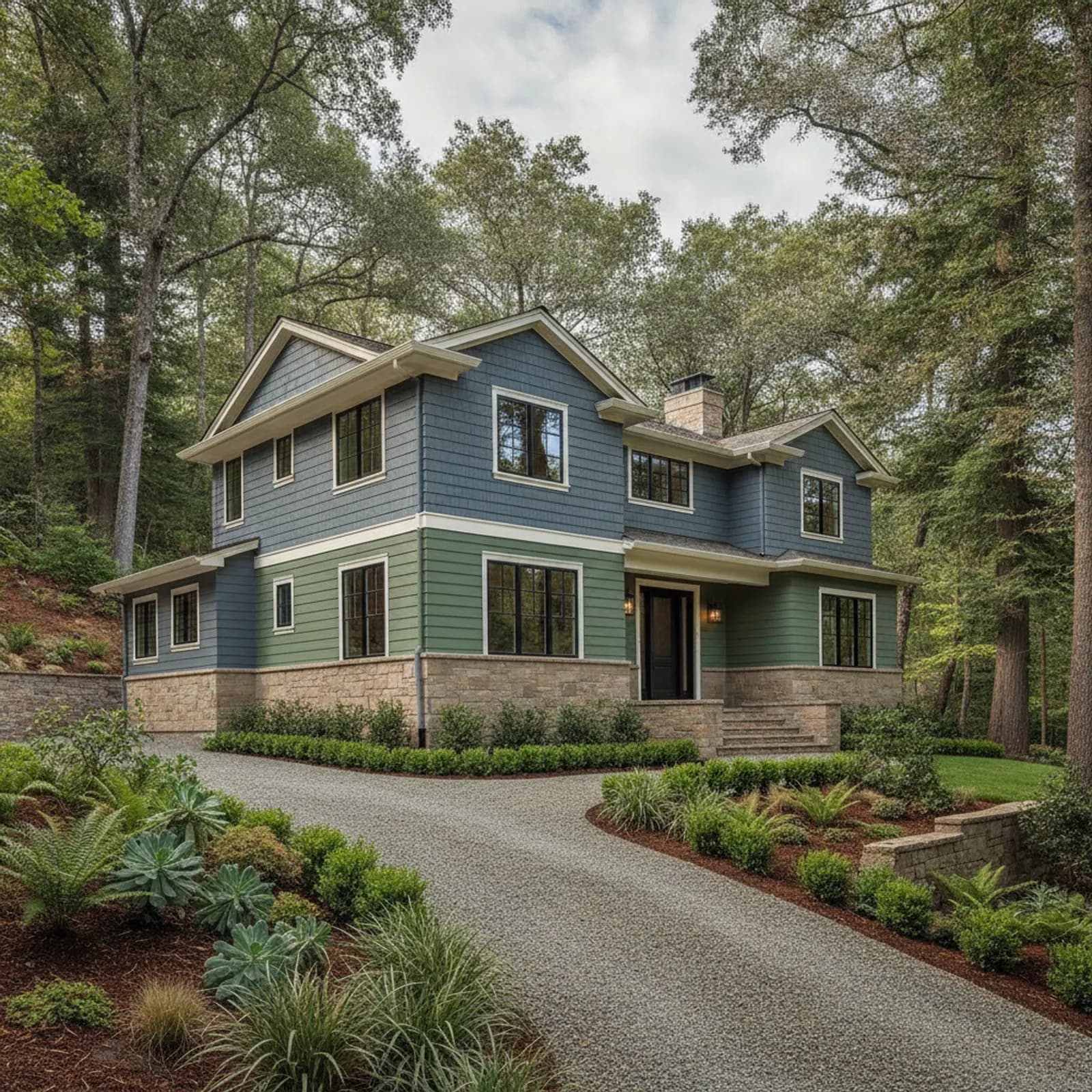
The original wood siding on Kentfield's mid-century and custom homes was never matched to the climate it sits in. Fog settling under the tree canopy keeps the shaded elevations damp for hours each cool-season morning, and wood that stays wet that long swells, splits at the fasteners, and rots from the back face inward where no one sees it until the sheathing goes soft. Fiber cement is dimensionally stable through that wetting and drying, holds paint far longer in the shade, and will not feed a fire on the parcels nearer the mountain. It reproduces the lap, board, and shingle profiles these homes were built with, so the durable material carries no aesthetic penalty against Kentfield's established character.
The system, not just the board
Fiber cement only earns its reputation in Kentfield when it is installed as a drying assembly. On a slope where moisture comes down with the fog and lingers in the canopy shade, we back the board with a continuous weather-resistive barrier and a vented rainscreen gap so air circulates and the rear face releases what it absorbs. Clearances at grade keep the bottom course off damp soil and leaf litter; kickout and head flashing route roof runoff away from the wall rather than into it. The board itself is inert to the damp, but a tight, unvented install on a fog-shaded north elevation can still trap water against the framing. The detailing is where the longevity lives, and it is what we scope to each elevation's exposure.
Fiber cement on mid-century proportions
Kentfield's mid-century homes lean on horizontal lines, wide reveals, and clean deep-eave geometry, and fiber cement suits that vocabulary well. We can run smooth wide-lap or panel profiles that hold the era's calm, uninterrupted face rather than chopping it up with busy detailing. On the custom homes, the same product range lets us mix lap, board-and-batten, and shingle deliberately to compose more modern elevations against the tree backdrop. Because so many of these lots are viewed through filtered canopy light, the matte, factory-finished surface reads more refined than glossy vinyl ever could. Matching the existing exposure and trim proportion keeps a re-clad Kentfield home looking intentional rather than re-wrapped, while quietly removing the wood's vulnerability to the slope damp underneath.
Cutting and staging fiber cement on a canopy lot
Installing fiber cement on a Kentfield hillside parcel is a logistics exercise as much as a carpentry one. The boards are heavy and ship in long bundles, and many of these lots sit off narrow lanes with short driveways and a real carry up to the wall through trees. We plan the delivery drop, scaffold footing on the grade, and the cut-station location before the first board comes down. That cutting station matters here: silica dust has to be kept out of adjacent windows and away from the mature oak and bay canopy that defines the lot, so we position and shroud it deliberately. On a downhill elevation we sequence the work to dry-in the most exposed faces first, because the fog and slope-driven weather give little margin for an open wall.
Why this matters in Kentfield
- Specified for North Bay conditions
- Class A non-combustible fiber cement as the recommended system
- Correctly detailed weather-resistive barrier and flashing
- Installed by a crew with 20 years combined experience
Recommended systems for Kentfield
- Class A non-combustible fiber cement
- James Hardie
- rigorous drainage-plane detailing
- fire-hardened eave and vent detailing
Fiber Cement Siding for Kentfield homes
The full fiber cement siding approach — materials, weather-resistive detailing, and the manufacturer standards we install to — is covered on the main service page, then specified for Kentfield's conditions on this one.
Our Kentfield process
- Step 1
Consultation
We listen to your goals and assess your home on site — exposure, substrate, and architecture.
- Step 2
Design & Proposal
A clear written proposal with the right system specified for your climate and a transparent scope.
- Step 3
Expert Installation
Trained crews install to manufacturer best practices with careful weather-management detailing.
- Step 4
Walkthrough & Support
A final walkthrough, full cleanup, and a clear written record of the scope completed — work we stand behind.
FAQ
Fiber Cement Siding in Kentfield — FAQ
Yes — it is dimensionally stable through the canopy damp that rots wood, holds finish far longer in the shade, and is non-combustible for the moderate mountain-edge fire exposure. Over a vented rainscreen it is the durable answer for these slopes.
Not when it's installed as a drying assembly — a vented rainscreen gap and proper flashing let the back of the board release moisture. A sealed, unvented install on a shaded wall is what traps water, which is exactly what we avoid.
Slowly — the cool, canopy-shaded slope climate is gentle on factory finish, and the substrate keeps performing long beyond any color refresh. It outlasts wood paint by a wide margin in this shade.
Yes — wide smooth lap and panel profiles hold the era's horizontal, uninterrupted face, and we match the existing reveal so the home reads as intentional rather than re-wrapped.
Keep Exploring
More for Kentfield homeowners
More in Kentfield
Other exterior services in Kentfield
Nearby Service Areas
Fiber Cement Siding near Kentfield
Helpful Exterior Guides