Fiber Cement Siding in Monterey
Fiber cement is the core Monterey recommendation because it does not rot or corrode in the peninsula's near-constant fog and bay salt the way wood does — provided it is installed over a continuously drying plane with corrosion-rated metal, which is what governs longevity in this saturated marine climate.
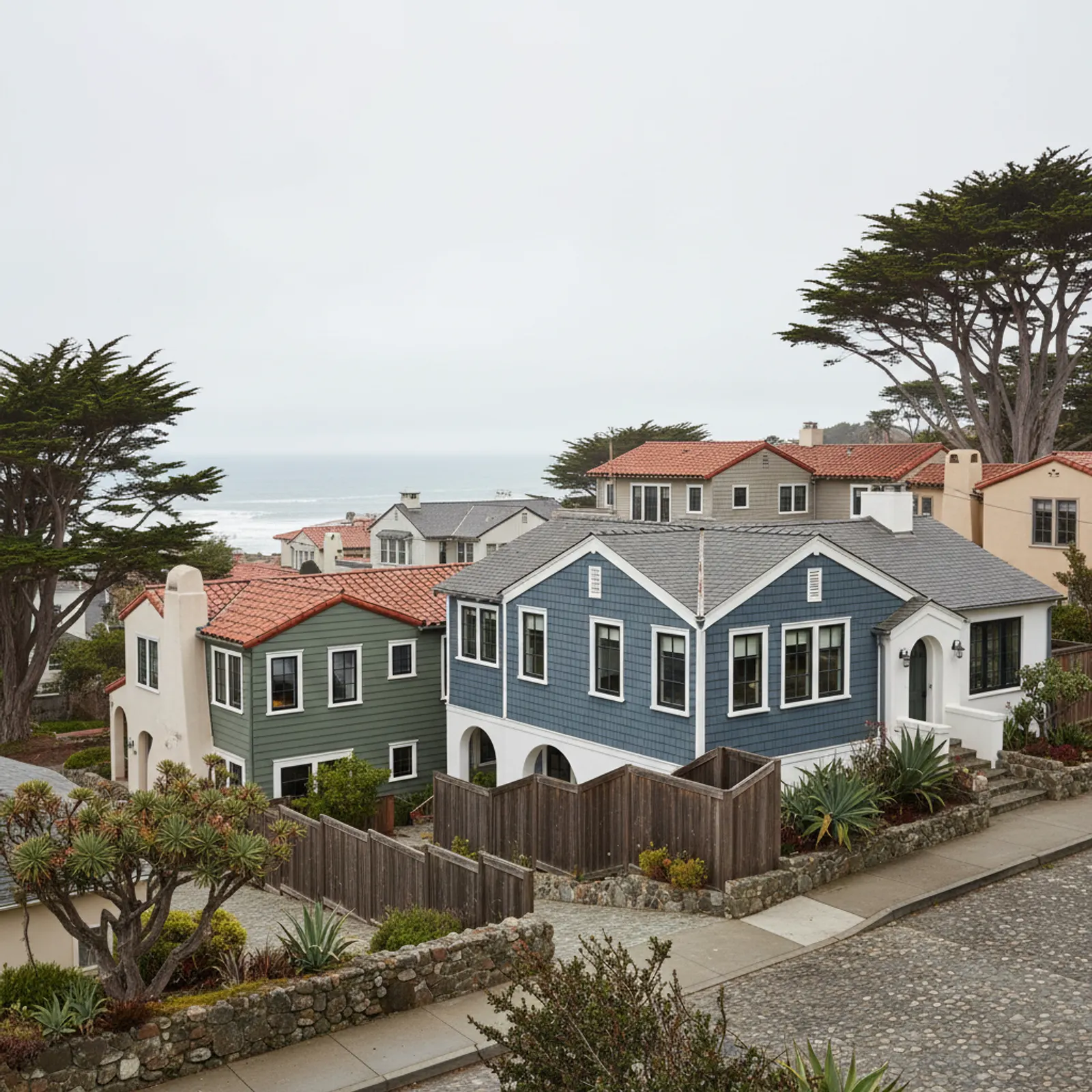
The historic homes around New Monterey and the streets above Cannery Row carry decades of layered cladding history — original redwood lap, vinyl re-clads from the 80s, painted-over rot at the bottom courses. Stripping that to install fiber cement is a real envelope reset, not a patch, and it's the project most older Monterey owners need rather than another paint cycle that will fail in three years.
The board is inert; the assembly must dry
Fiber cement itself shrugs off Monterey's fog and salt, but performance depends on a continuously drying plane and corrosion-rated fasteners and flashing. We specify the whole assembly to peninsula grade, not just the cladding.
Why fiber cement beats wood on the peninsula
Monterey's relentless damp decays wood and degrades its finish faster than almost anywhere inland; fiber cement holds shape and color far longer and ends the recurring rot-and-repaint cycle peninsula homes suffer.
Fasteners and flashing decide the job on the bay
On the Monterey waterfront the cladding board is rarely what gives out first; the metal holding it together is. The marine layer that rolls in off the bay above Cannery Row and through New Monterey keeps surfaces damp for long stretches, and ordinary fasteners and flashing bleed rust streaks down a fresh wall within a season. For fiber cement here we spec hot-dip galvanized or stainless nails, stainless or coated screws at the trim, and corrosion-rated head and pan flashing at every window and door. The kick-out flashing where a roof meets a sidewall matters even more on the hillside homes above the water, where wind-driven mist drives moisture sideways into joints that would stay dry inland. Butt joints get backed and the bottom course gets a generous gap above grade and walkways so capillary salt does not wick up. Treat fiber cement as a system tuned for salt exposure, not just a better board, and a Monterey re-side holds its line for decades rather than telegraphing corrosion at the seams.
Working around Monterey's historic-district and access limits
A fiber cement re-side in Monterey is as much a logistics problem as a building one. Many downtown-area and adobe-adjacent homes sit inside or near historic-review boundaries, so exterior changes can trigger design scrutiny over profile, exposure, and color before a board ever goes up; choosing a lap reveal and finish that reads as period-appropriate keeps approvals moving. The coastal hillside homes above the bay bring their own constraints: narrow lots, steep driveways, and tight setbacks that leave little room for scaffold, a cut station, or material staging, and fiber cement must be cut with dust control to keep silica off neighboring properties stacked close on the slope. Parking and street width near New Monterey often mean smaller deliveries and hand-carrying plank up grade. None of this is unusual for the peninsula, but it shapes the schedule and crew size in ways a flat inland lot never would. Planning the staging, dust capture, and any historic sign-off up front is what keeps a Monterey project from stalling halfway through the tear-off.
Why this matters in Monterey
- Specified for Monterey Peninsula conditions
- non-combustible fiber cement as the recommended system
- Correctly detailed weather-resistive barrier and flashing
- Installed by a crew with 20 years combined experience
Recommended systems for Monterey
- non-combustible fiber cement
- corrosion-resistant fastening
- rigorous drainage detailing
Fiber Cement Siding for Monterey homes
The full fiber cement siding approach — materials, weather-resistive detailing, and the manufacturer standards we install to — is covered on the main service page, then specified for Monterey's conditions on this one.
Our Monterey process
- Step 1
Consultation
We listen to your goals and assess your home on site — exposure, substrate, and architecture.
- Step 2
Design & Proposal
A clear written proposal with the right system specified for your climate and a transparent scope.
- Step 3
Expert Installation
Trained crews install to manufacturer best practices with careful weather-management detailing.
- Step 4
Walkthrough & Support
A final walkthrough, full cleanup, and a clear written record of the scope completed — work we stand behind.
FAQ
Fiber Cement Siding in Monterey — FAQ
Yes — the board is inert to fog and salt; longevity depends on pairing it with a continuously drying plane and corrosion-rated metal, which we specify as standard here.
Markedly — it resists the relentless marine damp that decays wood quickly here and removes the rot-and-repaint cycle.
Slowly — the peninsula's cool, overcast, low-UV conditions are gentle on factory finish; the substrate keeps performing well beyond any refresh.
Yes — in faithful profiles and proportions it suits the adobe/Colonial and downtown stock while adding fog-and-salt durability.
Keep Exploring
More for Monterey homeowners
More in Monterey
Other exterior services in Monterey
Nearby Service Areas
Fiber Cement Siding near Monterey
Helpful Exterior Guides