Fiber Cement Siding in North Auburn
North Auburn is one of the few markets where heat and fire both genuinely drive the cladding decision, and fiber cement is the material that answers both without a compromise. This unincorporated stretch of Placer County above the American River canyon runs hot through long summers with hard UV on unshaded tract elevations, and it sits in oak-and-pine foothills with a long and serious fire season. Most materials are good at one of those problems.
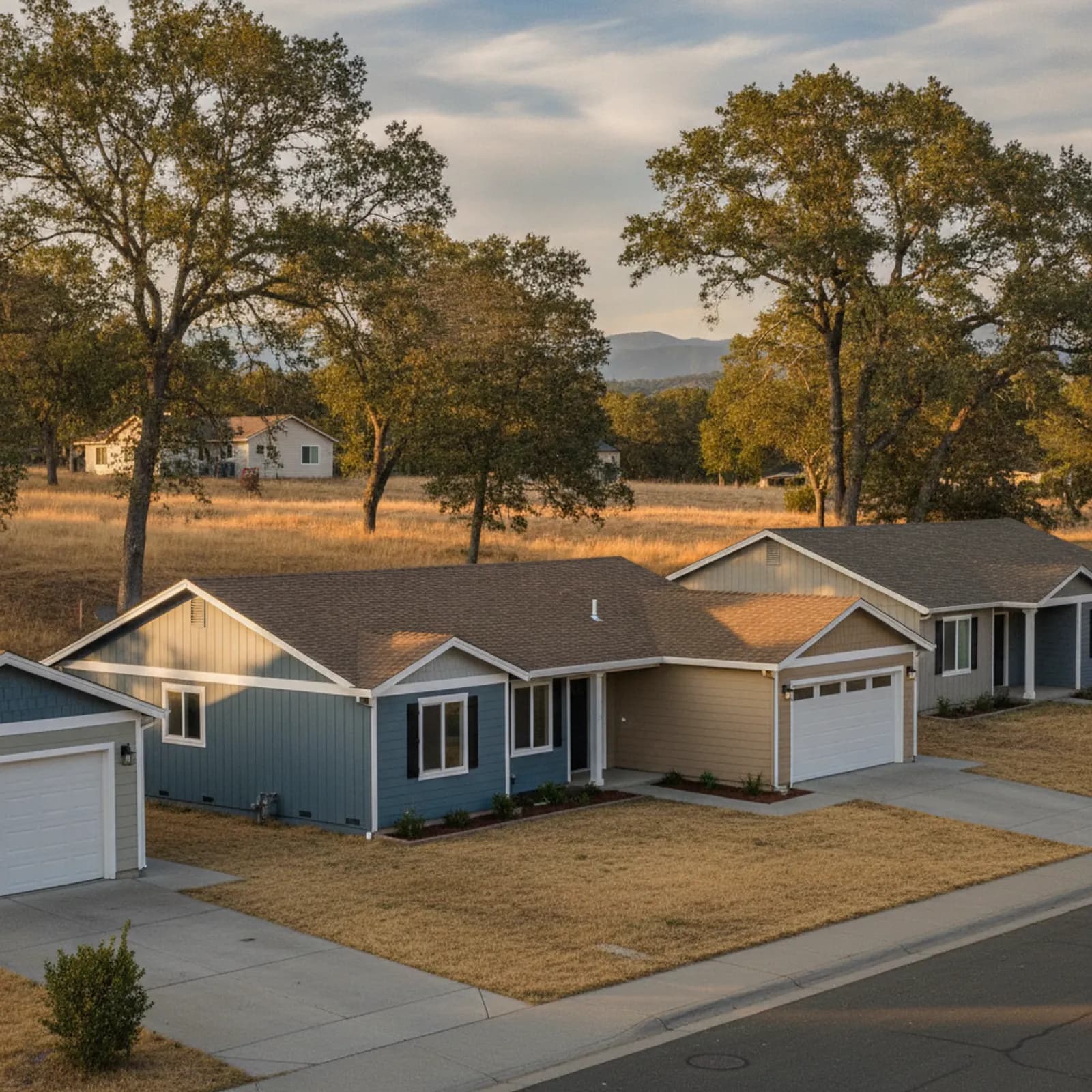
The housing here is largely 1960s through 1990s ranch and subdivision stock along the Highway 49 and Bell Road corridor, much of it wearing original wood-clad or stucco elevations that have simply aged out. Those homes are straightforward fiber cement candidates: sound framing, tired cladding, and two environmental pressures the material handles at once.
One material, two problems
Fiber cement is dimensionally stable through the day-night heat cycling that defines a North Auburn summer, and factory-applied finishes hold color against the UV load that chalks and fades field paint on south and west elevations. It is also non-combustible and Class A rated, which is what the foothill setting requires. The reason that combination matters is that the alternatives force a trade: engineered wood handles heat well and holds paint beautifully but is combustible, which rules it out on the fire-exposed parcels along the corridor's edges; vinyl distorts under sustained heat load in this climate. Fiber cement is the material that does not ask you to choose which risk to accept.
Reading exposure across an unincorporated corridor
North Auburn is not uniform, and treating it as one market produces the wrong spec on half of it. The tract subdivisions along the Highway 49 and Bell Road corridor sit in a more built-up setting with lower wildland exposure, where heat and finish durability lead. The rural-residential parcels on the fringes and toward the canyon rim carry substantially more fire exposure and warrant the full hardened package — ember-resistant vents, enclosed or non-combustible eaves, disciplined ground transitions. Because this is unincorporated Placer County, the fire hazard severity zone designation for a specific parcel and whether a given scope triggers a code requirement is a question for the county, not something a contractor should assert. We spec to the exposure regardless of what the permit requires.
What fails first on this stock, and why
The 1960s-through-1990s elevations here fail in a recognizable order. South and west walls go first, and within those the joints, butt seams, and trim details open under repeated heat cycling. On wood-clad homes the tell is a paint film that stops holding — a repaint that peels again within a season or two is not a workmanship problem, it is the substrate telling you it has stopped taking coating. On stucco elevations the pattern is cracking at stress points and around openings. In both cases the underlying question is whether the drainage plane behind the cladding is still doing its job, which is only answerable once the wall is open. We scope that honestly rather than promising a fixed number before anyone has seen behind the siding.
The canyon-rim elevations
Homes near the American River canyon rim get a distinct set of conditions: more wind, more direct sun on the canyon-facing side, and terrain below that can channel fire uphill toward the structure. On those parcels we treat the canyon-facing elevation as the governing one and detail it accordingly, and we are more insistent about the eave and vent package because upslope fire behaviour puts more energy against the underside of a house than a flat-lot fire does. It is also worth saying that on a canyon-rim lot the vegetation management below the structure does more for the home's odds than any cladding decision, and we will say so.
Why this matters in North Auburn
- Specified for Sierra Foothills conditions
- Class A non-combustible fiber cement as the recommended system
- Correctly detailed weather-resistive barrier and flashing
- Installed by a crew with 20 years combined experience
Recommended systems for North Auburn
- Class A non-combustible fiber cement
- James Hardie
- fire-aware detailing
Fiber Cement Siding for North Auburn homes
The full fiber cement siding approach — materials, weather-resistive detailing, and the manufacturer standards we install to — is covered on the main service page, then specified for North Auburn's conditions on this one.
Our North Auburn process
- Step 1
Consultation
We listen to your goals and assess your home on site — exposure, substrate, and architecture.
- Step 2
Design & Proposal
A clear written proposal with the right system specified for your climate and a transparent scope.
- Step 3
Expert Installation
Trained crews install to manufacturer best practices with careful weather-management detailing.
- Step 4
Walkthrough & Support
A final walkthrough, full cleanup, and a clear written record of the scope completed — work we stand behind.
FAQ
Fiber Cement Siding in North Auburn — FAQ
Genuinely both, which is unusual and is why fiber cement fits so well here — it handles the sustained UV and heat cycling and it is non-combustible. The alternatives make you pick: engineered wood is excellent on heat and holds paint well but is combustible, and vinyl struggles with sustained heat load in this climate.
No, and exposure varies a lot across the area. The built-up tract subdivisions along the Highway 49 and Bell Road corridor carry lower wildland exposure than the rural-residential fringes and the canyon-rim parcels. We scope the hardening to the actual exposure at the address rather than applying one package everywhere.
If a competently done repaint fails again within a season or two, the problem is almost always the substrate rather than the painting. Wood that has cycled through decades of North Auburn summers eventually stops holding a coating, and at that point repainting is buying time rather than fixing anything. Worth having the wall looked at before spending on another paint cycle.
That is a question for Placer County rather than for us — the fire hazard severity zone designation for a specific parcel and whether a given scope triggers a requirement are determinations the county makes. What we can say is that we specify to the real exposure on fire-exposed parcels whether or not a permit compels it.
Keep Exploring
More for North Auburn homeowners
More in North Auburn
Other exterior services in North Auburn
Nearby Service Areas
Fiber Cement Siding near North Auburn
Helpful Exterior Guides