Fiber Cement Siding in Northstar
Fiber cement at Northstar has to do two jobs that pull against each other: hold an architectural composition that the Martis Valley market genuinely cares about, and survive a winter that is indifferent to design intent. Most exterior failures here are one of those done well at the expense of the other.
The material handles the winter. What decides the result is whether the composition was designed with the winter in mind, or drawn first and engineered afterwards.
Mixed-profile programs and where they break
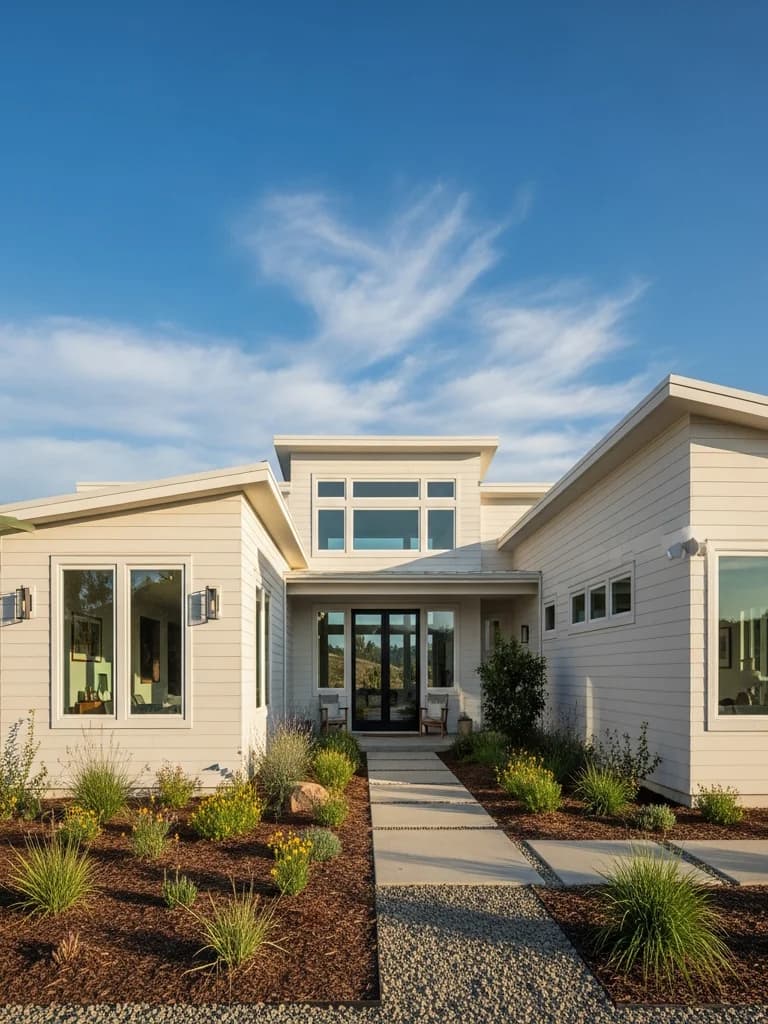
The mountain-modern vocabulary here favours a deliberate mix — board-and-batten against lap, panel against shingle, a dark body with a contrasting element, considered reveals where materials change. Fiber cement supports all of it, and the risk is not the material but the transitions. A material change is a junction, and a junction is where water gets in and where the eye goes. On these elevations we design the transitions first and let the panel layout follow, because the reverse order produces details resolved on site by whoever is holding the saw. That is the difference between a composition and a collection of cladding.
Long planes need somewhere for movement to go
Large uninterrupted runs of cladding are central to the look and are a genuine engineering constraint at this elevation, where the annual temperature swing is wide and Martis Valley's cold-air drainage makes overnight lows colder than the elevation alone predicts. Thermal movement has to go somewhere; if a long plane is assembled without deliberate provision, the movement telegraphs into split joints and cracked trim at the least convenient point. Breaking long runs intentionally — with a reveal, a material change, or a trim element that reads as part of the design — is invisible and free at design stage, and a compromise afterwards.
Dark finishes, which are the local default
The dark-body palette read against a snow line is the dominant look in Martis Valley and it is genuinely handsome. Two honest notes. Dark finishes absorb more solar energy, which increases thermal cycling on sun-facing elevations and makes the movement provision above more important rather than less. And color retention on a deep saturated finish is more demanding than on a mid-tone, which is a strong argument for factory-applied finishes here regardless of budget. Neither argues against the palette — they argue for specifying it properly rather than choosing from a chip and hoping.
The winter engineering does not get a discount
Everything true of a Sierra exterior remains true at a higher price point. Grade clearances set for real snow depth, kickout flashings at every roof-to-wall junction, back-primed and properly gapped butt joints, coated or stainless fasteners rated for the cycle count, and a drained cavity behind the cladding. Freeze-thaw and meltwater are indifferent to the budget and to the architect. What a larger budget genuinely buys is composition, material quality, and the ability to resolve transitions properly — not an exemption from the physics.
Why this matters in Northstar
- Specified for Martis Valley / Sierra Alpine conditions
- non-combustible fiber cement as the recommended system
- Correctly detailed weather-resistive barrier and flashing
- Installed by a crew with 20 years combined experience
Recommended systems for Northstar
- non-combustible fiber cement
- mixed-profile architectural cladding programs
- snow-rated clearances and meltwater flashing
- high-UV factory finishes
Fiber Cement Siding for Northstar homes
The full fiber cement siding approach — materials, weather-resistive detailing, and the manufacturer standards we install to — is covered on the main service page, then specified for Northstar's conditions on this one.
Our Northstar process
- Step 1
Consultation
We listen to your goals and assess your home on site — exposure, substrate, and architecture.
- Step 2
Design & Proposal
A clear written proposal with the right system specified for your climate and a transparent scope.
- Step 3
Expert Installation
Trained crews install to manufacturer best practices with careful weather-management detailing.
- Step 4
Walkthrough & Support
A final walkthrough, full cleanup, and a clear written record of the scope completed — work we stand behind.
FAQ
Fiber Cement Siding in Northstar — FAQ
Yes — mixed profiles, deliberate reveals, and considered material transitions are all achievable. The risk is not the material, it is the transitions. We design those first and let panel layout follow, because the reverse order leaves details to be resolved on site.
They are a constraint rather than a problem. Thermal movement has to go somewhere, and Martis Valley's cold-air drainage widens the swing. Breaking long runs deliberately — a reveal, a material change, a trim element that reads as design — is free at drawing stage and a visible compromise afterwards.
They raise the stakes rather than causing trouble. Dark finishes absorb more solar energy and cycle harder on sun-facing walls, making movement provision more important, and deep saturated colors are more demanding to hold, which argues for a factory finish. Neither is a reason to avoid the palette.
No. Clearances, kickout flashings, joint gapping, and fastener selection are the same at every price point, because freeze-thaw and meltwater do not care what the house cost. A larger budget buys composition and the ability to resolve transitions properly — not an exemption from the engineering.
Keep Exploring
More for Northstar homeowners
More in Northstar
Other exterior services in Northstar
Nearby Service Areas
Fiber Cement Siding near Northstar
Helpful Exterior Guides