
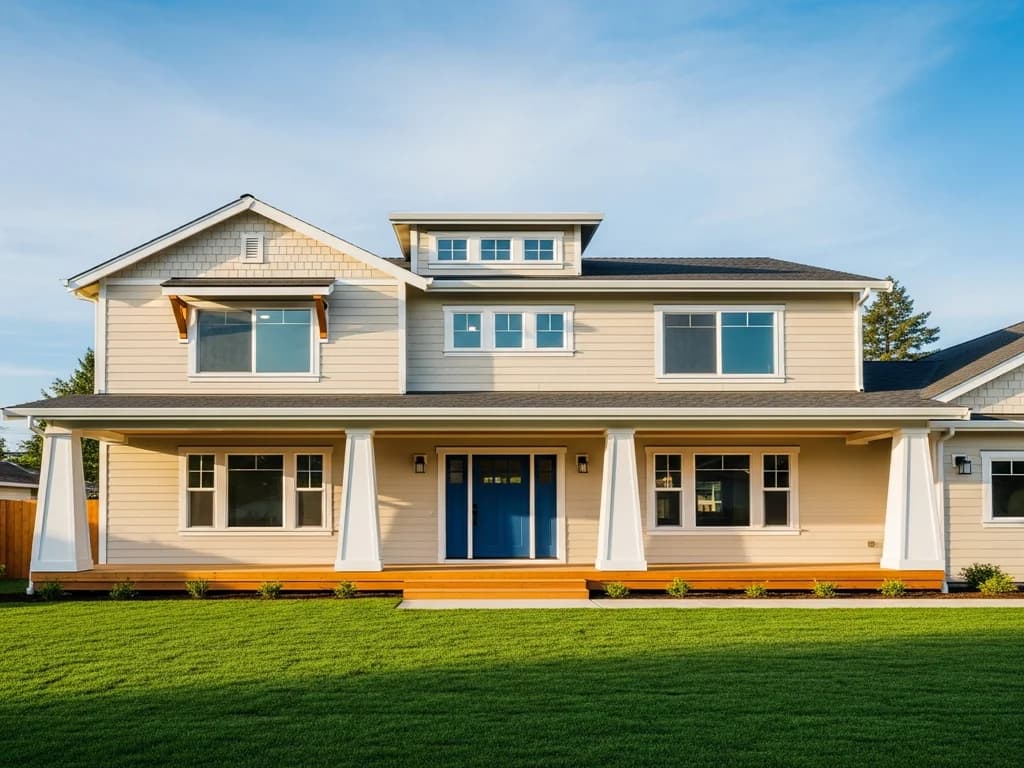
Window Replacement in Serene Lakes
Windows at Serene Lakes contend with a long, genuinely cold heating season at 6,910 feet, drifted snow sitting against lower openings for weeks, and — on lakefront elevations — a lot of glass placed deliberately to face the water. That last point is the local wrinkle: the openings owners care most about are usually the ones most exposed.
As with everything on this stock, the flashing around the opening matters more than the unit going into it.
U-factor governs here
Most California window guidance leads with solar heat gain coefficient because valley cooling load dominates. At 6,910 feet the priority inverts: the heating season is long and cold, so U-factor — the rate at which heat escapes through the whole assembly — is what governs comfort and running cost. Frame material carries more weight than usual, because a poorly insulated frame conducts heat out all winter regardless of the glass. Solar heat gain still applies through the short bright summer, particularly on lake-facing walls that take reflected light off the water, but it is the secondary number here.
Lake-facing glazing is where the design pressure sits
Homes here are oriented to the water, which means the largest openings usually face the lake — and often face weather at the same time. That is a genuine tension: the view argues for more glass and larger units, while the climate argues for fewer thermal weak points. The workable resolution is usually to accept the glazing the view demands and spend on making it perform — better frames, appropriate coatings, and genuinely correct flashing — rather than compromising the reason someone bought a lakefront property. What we would push back on is large glazing installed into an opening that was not properly flashed, because that combination fails expensively.
Snow against the opening, and seals at altitude
Drifted snow can sit against a lower window for weeks, putting sustained moisture against the sill and frame and delivering water wherever the flashing lets it when it melts. Sill pans matter enormously for that reason, and clearances need to account for snow depth rather than grade. Separately, insulated glass units are sealed assemblies containing gas at a factory-set pressure, and altitude combined with a wide temperature swing works them harder than a mild climate does. Fog or haze between panes means the seal has gone and the unit is performing closer to single glazing — repair services address the appearance, not the performance.
Why the opening outranks the unit
A sill pan beneath the window catches and drains anything that gets past it; head flashing above directs water out over the unit onto the cladding face; and both have to lap correctly against the wall's weather barrier in sequence. On older summit construction those details are frequently minimal or absent, and meltwater finds every gap. A replacement that drops a better unit into an unimproved opening has upgraded the thermal performance and left the water path untouched — which is why a window that starts leaking after replacement is almost always reporting a flashing error rather than a defective product. If cladding is coming off anyway, that is the affordable moment to rebuild the openings.
Why this matters in Serene Lakes
- Specified for Donner Summit / Sierra Alpine conditions
- non-combustible fiber cement rated for extreme snow load as the recommended system
- Correctly detailed weather-resistive barrier and flashing
- Installed by a crew with 20 years combined experience
Recommended systems for Serene Lakes
- non-combustible fiber cement rated for extreme snow load
- snow-depth grade clearances and meltwater flashing
- freeze-thaw-tolerant gapped and back-primed joints
- high-UV factory finishes
Window Replacement for Serene Lakes homes
The full window replacement approach — materials, weather-resistive detailing, and the manufacturer standards we install to — is covered on the main service page, then specified for Serene Lakes's conditions on this one.
Our Serene Lakes process
- Step 1
Consultation
We listen to your goals and assess your home on site — exposure, substrate, and architecture.
- Step 2
Design & Proposal
A clear written proposal with the right system specified for your climate and a transparent scope.
- Step 3
Expert Installation
Trained crews install to manufacturer best practices with careful weather-management detailing.
- Step 4
Walkthrough & Support
A final walkthrough, full cleanup, and a clear written record of the scope completed — work we stand behind.
FAQ
Window Replacement in Serene Lakes — FAQ
U-factor. The heating season at 6,910 feet is long and genuinely cold, so the rate of heat loss through the whole assembly governs comfort and running cost — the reverse of valley guidance. Frame material matters more than usual too. Solar heat gain is secondary but still applies on lake-facing walls that take reflected light.
Usually not, and we would not lead with that. The view is generally the reason the property exists. The better resolution is to accept the glazing and spend on making it perform — frames, coatings, and genuinely correct flashing. What does not work is large glazing installed into a poorly flashed opening.
Not in a way that restores performance. Fog means the seal has failed and the insulating gas is gone, so the unit performs closer to single glazing. Altitude and a wide temperature swing work these seals harder than a mild climate does. Services exist that clear the appearance but the thermal loss remains.
Yes. Drifted snow can sit against them for weeks, holding moisture against the sill and frame and delivering water into whatever the flashing allows when it melts. Sill pans and snow-depth clearances are the answers, and lower openings deserve the most scrutiny in any inspection on this stock.
Keep Exploring
More for Serene Lakes homeowners
More in Serene Lakes
Other exterior services in Serene Lakes
Nearby Service Areas
Window Replacement near Serene Lakes
Helpful Exterior Guides