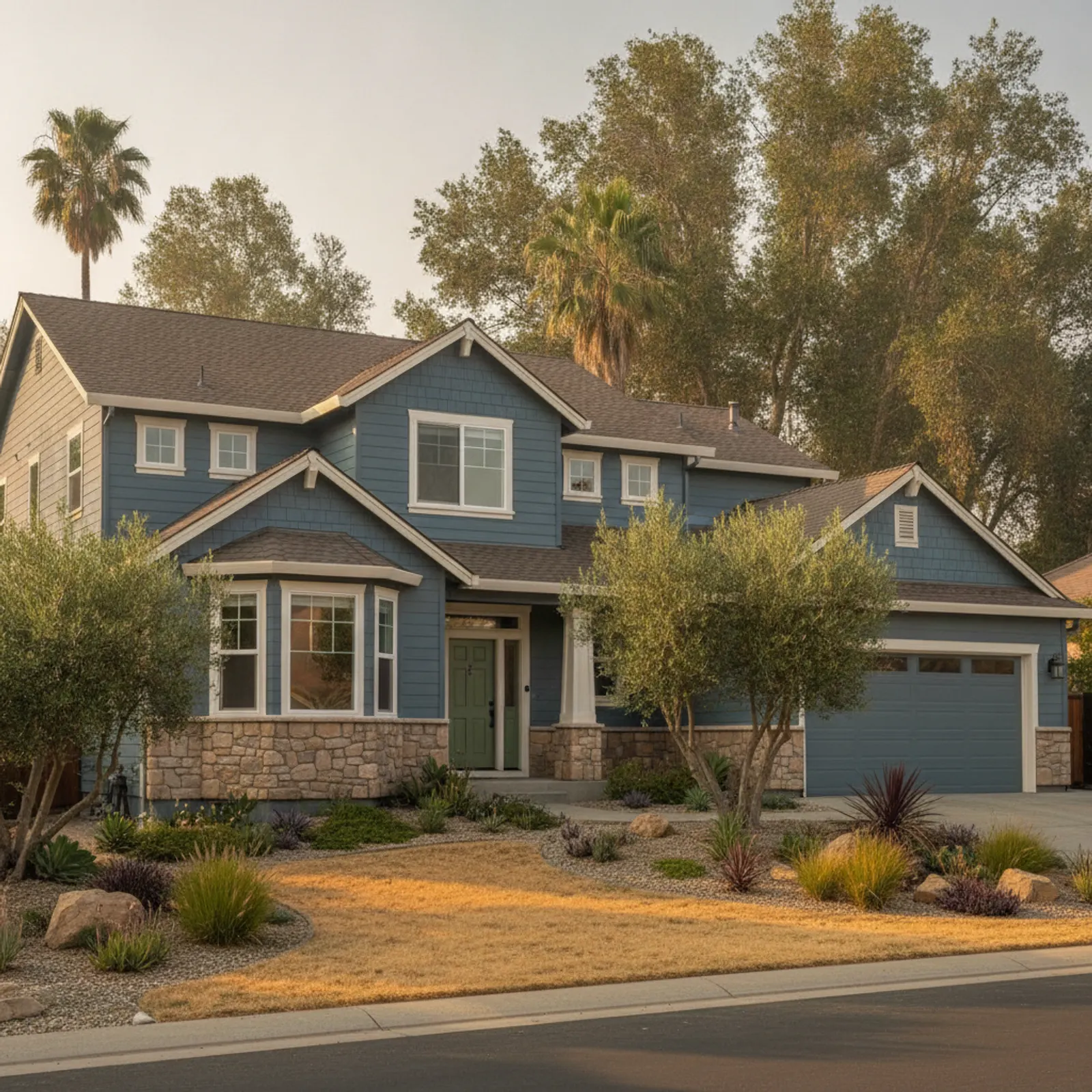
Exterior renovation in Gold River
Gold River is a planned community of roughly a dozen named villages laid out along the south bank of the American River off Sunrise Boulevard, built almost entirely as a single coordinated development from the late 1980s through the 1990s. That history makes it an unusually consistent re-side market: a large, fairly uniform stock of executive production homes that all left the builder around the same time and are now hitting the same end-of-life window together. The community's higher price point also raises the bar — homeowners here expect an exterior renovation that reads as a genuine upgrade, not a patch, and that preserves the polished, cohesive look that gives Gold River its appeal.
Why it matters here specifically
Gold River's homes carry the stucco, hardboard, and early composite trim typical of premium 1990s construction, and after three decades of valley sun those materials show their age in chalked paint, cupped trim, and tired sun-facing elevations. Because the villages share a deliberately limited set of Mediterranean and transitional elevations, a careful re-side and color program is one of the few ways to refresh a home while keeping it in harmony with its neighbors and the design covenants that hold the community together.
Considering an exterior project in Gold River?
Gold River housing and architecture
Gold River is overwhelmingly late-1980s and 1990s master-planned executive homes, leaning heavily on Mediterranean and Spanish-revival styling with stucco fields, tile or composite roofs, and accent siding and trim, plus a band of larger two-story custom homes on the bluff lots closest to the American River. These homes were built well but to a coordinated palette, so the highest-value re-side keeps the architectural language intact while upgrading the cladding and trim — refreshed fiber cement accents, crisp trim returns, and a color update tuned to the original Mediterranean intent rather than a wholesale style change that would clash with the village around it.
Built for Gold River's valley heat
Heat and UV are the controlling exterior stressors in Gold River. The community sits on the open valley floor with only a young-to-mature street canopy across most villages, so south- and west-facing walls take a sustained, high-UV afternoon load through long summers that chalks paint and fatigues trim and joints. That forces fade-resistant factory finishes, heat-aware gapping and fastening so boards and trim move without buckling, and finish selection matched to which elevations bake hardest. The American River corridor just to the north adds a mild moisture influence on the bluff-edge lots, so we keep the drainage plane and flashing rigorous there.
Recommended materials for Gold River
James Hardie fiber cement with a factory fade-resistant finish is the core recommendation for Gold River. It holds color far better than the original field-painted hardboard and composite trim, stays dimensionally stable through valley heat swings, and lets us reproduce the crisp Mediterranean trim profiles the community's elevations were designed around. Where a homeowner wants deeper wood character on accent areas, engineered wood is acceptable on these low-fire valley parcels. The factory finish is the real payoff in this sun: it pushes out the repaint interval that defeats premium 1990s exteriors.
What an exterior project costs in Gold River
Gold River pricing follows the usual drivers, with a few local accents. Many homes are two-story with articulated Mediterranean elevations, so trim and profile complexity runs higher than a simple ranch, and the larger bluff customs add square footage. Substrate and dry-rot condition behind decades-old stucco-and-siding combinations only reveals itself once cladding is opened. The community's design covenants typically add a color- and material-approval step that affects timeline. We provide a written, scoped estimate after an on-site assessment so bids compare on substance rather than a headline number.
The village layout and design covenants
Gold River's identity comes from its village structure and the coordinated design standards that keep every street looking deliberate. That cohesion is an asset but it also governs exterior color and material choices, so a re-side here is as much about working within the approved palette as it is about the build. We confirm the applicable design-review requirements before scoping so the colors and profiles we propose are ones that will clear review, sparing homeowners the delay of a rejected submittal and keeping the finished home in step with its village.
The American River bluff lots
The homes closest to the American River parkway on Gold River's northern edge enjoy the community's best setting and its largest custom floor plans, but proximity to the river corridor introduces a damper microclimate the interior villages don't feel as sharply. On these lots we pair the same heat-durable fiber cement with more attentive drainage-plane, flashing, and bottom-course clearance detailing, so the wall handles both the relentless afternoon sun and the added moisture load along the bluff.
Protecting an upscale resale position
Gold River competes near the top of the eastern Sacramento County market, and exterior condition is one of the first things buyers read. A faded, chalked facade undercuts an otherwise strong home, while a clean, low-maintenance fiber cement re-side in a covenant-appropriate palette signals that the property has been kept to the community's standard. We approach every Gold River project with that resale lens, treating the exterior as both protection and a visible statement about how the home has been maintained.
Sacramento County, SMUD, Golden State Water, and Sac Metro Fire
Working exteriors in Gold River coordinates with a few local authorities. Gold River is unincorporated Sacramento County — there is no city government, so building permits come through Sacramento County Building Permits and Inspection rather than a municipal department. Electric is SMUD (the customer-owned Sacramento Municipal Utility District), and gas is PG&E. Water is supplied by Golden State Water Company (Cordova system), an investor-owned utility serving Gold River and adjacent Rancho Cordova neighborhoods. Fire response is the Sacramento Metropolitan Fire District (Sac Metro Fire, a regional agency covering most of the county's unincorporated area) with Cal OES / CAL FIRE coordination on any regional event. The Gold River Station 50 Association is the community-level design-review authority governing exterior colors and materials across the villages.
HZ10 and the American River corridor FHSZ reality
Gold River is in James Hardie's HZ10 climate zone; installing HZ5 is a documented warranty misapplication. On the fire side, the entire village grid sits in Low FHSZ territory or unmapped under California's 2025 LRA Fire Hazard Severity Zone map — Gold River's valley-floor setting keeps wildland fire off the direct threat list for interior lots. The wooded American River Parkway corridor immediately north of the community carries higher local grass-fire potential in dry-summer/east-wind windows, and Sac Metro's response reflects that. Non-combustible fiber cement remains a sound low-regret choice on the north-edge bluff lots even without a designated FHSZ requirement.
Our process in Gold River
- Step 1
Consultation
We listen to your goals and assess your home on site — exposure, substrate, and architecture.
- Step 2
Design & Proposal
A clear written proposal with the right system specified for your climate and a transparent scope.
- Step 3
Expert Installation
Trained crews install to manufacturer best practices with careful weather-management detailing.
- Step 4
Walkthrough & Support
A final walkthrough, full cleanup, and a clear written record of the scope completed — work we stand behind.
Gold River homeowners get the strongest result when a re-side respects the community's coordinated design language while upgrading to a heat-durable, factory-finished system. We confirm design-review requirements up front and scope every project on site, so the written estimate reflects your home's real elevation, exposure, and substrate. The goal is an exterior that holds its color and crispness through decades of valley summers and keeps the home firmly at the top of its village.
FAQ
Gold River — Common Questions
James Hardie fiber cement with a factory fade-resistant finish. Gold River's open valley setting delivers a sustained, high-UV afternoon load, and factory-finished fiber cement holds color and crisp trim profiles far longer than the original field-painted hardboard and composite.
Yes — we confirm the applicable design-review requirements before scoping so the colors, materials, and profiles we propose are ones that will clear review and keep the home in step with its village.
Original 1990s hardboard, composite trim, and field paint were never specified for three decades of valley UV; chalking, cupped trim, and faded sun-facing elevations are the typical end-of-life pattern here.
Same heat-durable cladding, but we give extra attention to drainage-plane, flashing, and bottom-course clearances because the river corridor adds a damper microclimate the interior villages don't feel as sharply.
Low — Gold River is a valley-floor community. Non-combustible fiber cement remains a sound, low-regret choice alongside its heat durability.
Yes — the highest-value approach keeps the architectural language intact: refreshed fiber cement accents, crisp trim returns, and a color update tuned to the original Mediterranean intent rather than a wholesale style change.
When feasible, yes — combining them ensures correct flashing integration, avoids duplicated trim work, and produces a better-integrated exterior in one project.
A correctly installed fiber cement system commonly performs 30+ years in the valley climate, with factory finishes extending the interval before any cosmetic refresh.
Helpful Exterior Guides