
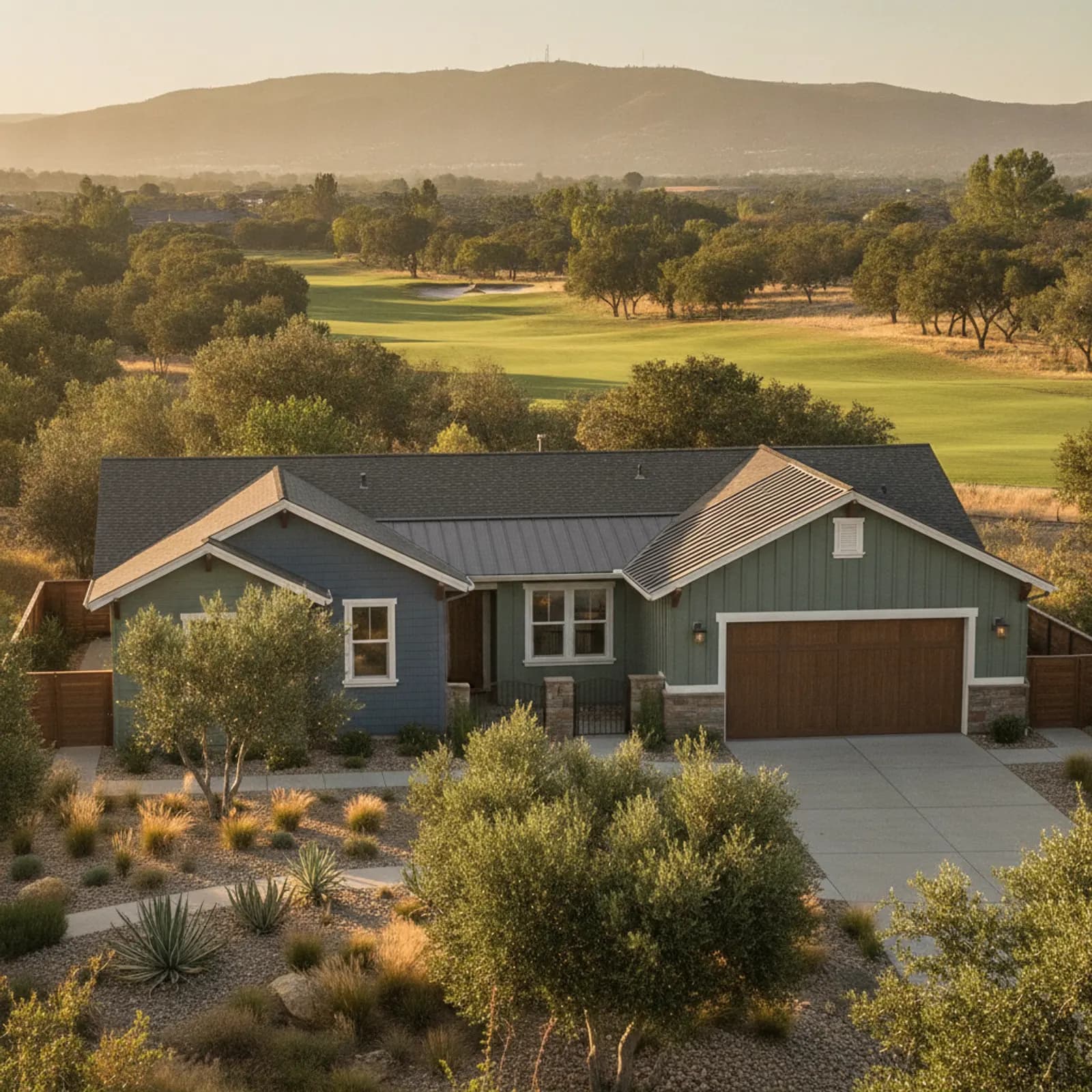
Fire-Resistant Siding in Rancho Murieta
Straight answer first: Rancho Murieta is not a high-mountain forest town, but it does carry a real, measurable grassland-fire margin that low-fire valley neighborhoods like Gold River don't. The community sits on the county's eastern oak-grassland edge along the Cosumnes River, where rangeland cures to fast-moving fine fuel by midsummer. So fire-resistant siding here is a moderate, sensible priority — not a panic, and not a non-issue.
A moderate grassland risk, stated honestly
Rancho Murieta's wildfire exposure is grass-driven, not crown-fire forest. The threat isn't a wall of timber flame; it's a wind-pushed grass fire moving fast across open oak savanna and the embers it throws ahead. That risk is real on the community's outer streets and the equestrian and open-space edges, and lighter on interior streets buffered by other homes. We scope to that gradient honestly — meaningful hardening where a home faces the grassland, proportionate measures where it doesn't — rather than treating every address as the same.
Grass fuel and embers are the real ignition path
On the grassland edge the most likely way a home ignites isn't direct contact with the cladding — it's an ember landing in fine fuel or debris against the wall and finding its way to a combustible surface. That makes non-combustible siding genuinely valuable here, because it removes the wall itself as easy fuel. Class A fiber cement gives a grass-margin home a wall that resists ignition from radiant heat and ember contact, which is exactly the load a fast grass fire delivers. Pair that with a clean, non-combustible base where landscaping meets the siding and the wall stops being the weak link in the home's defense.
Lower-course hardening and defensible space
Because the grass threat is ember- and ground-driven, the highest-value hardening on a Rancho Murieta home concentrates on the lower course of the wall and the zone right around it. That means a non-combustible base material where grass, bark mulch, and landscaping meet the siding, ember-resistant venting at soffits and eaves so embers can't be drawn into the structure, and keeping combustible debris out of horizontal trim ledges where it can smolder. Defensible-space habits — mowed and irrigated buffer, no woodpiles or combustible storage against the wall, clear gutters — do as much work as the cladding itself on a grass-fueled site. These are proportionate measures matched to a moderate grassland risk, heavier than what a low-fire interior valley home needs but lighter than a true forested WUI parcel, and we fold them in where the home's position warrants it rather than selling a one-size hardened envelope.
Scoping to the home's actual position
The honest move in Rancho Murieta is to match the hardening to where the home actually sits inside the community. A house on an interior street, buffered by neighbors on all sides, faces a lighter ember risk and warrants the basics done well. A house backing the open oak-grassland, the river corridor, or an equestrian edge sits closest to the fuel and warrants more attention to the lower course, venting, and the defensible zone. We won't overstate the risk for an interior home, and we won't underplay it for an edge home — and because Class A fiber cement is what we'd recommend for the valley heat anyway, the non-combustible margin comes along with the right material. The point is proportionate, parcel-specific advice: a genuine grassland margin treated as the moderate, manageable risk it is.
Why this matters in Rancho Murieta
- Specified for Sacramento Valley conditions
- James Hardie as the recommended system
- Correctly detailed weather-resistive barrier and flashing
- Installed by a crew with 20 years combined experience
Recommended systems for Rancho Murieta
- James Hardie
- fiber cement
- LP SmartSide
Fire-Resistant Siding for Rancho Murieta homes
The full fire-resistant siding approach — materials, weather-resistive detailing, and the manufacturer standards we install to — is covered on the main service page, then specified for Rancho Murieta's conditions on this one.
Our Rancho Murieta process
- Step 1
Consultation
We listen to your goals and assess your home on site — exposure, substrate, and architecture.
- Step 2
Design & Proposal
A clear written proposal with the right system specified for your climate and a transparent scope.
- Step 3
Expert Installation
Trained crews install to manufacturer best practices with careful weather-management detailing.
- Step 4
Walkthrough & Support
A final walkthrough, full cleanup, and a clear written record of the scope completed — work we stand behind.
FAQ
Fire-Resistant Siding in Rancho Murieta — FAQ
A moderate, grass-driven one — yes. The community's eastern oak-grassland edge cures to fast fine fuel by midsummer, so it's a real margin, especially on outer and open-space-facing streets, even though it's not a forested mountain town.
Grass. The realistic threat is a fast-moving grass fire across open rangeland and the embers it throws ahead, not crown fire in timber. That's why ember and lower-course hardening matter most here.
A non-combustible wall and base course, ember-resistant venting, clean trim ledges, and a defensible zone with no fuel against the wall. The lower course and the ground around it are where most ignitions start.
Not really — the Class A fiber cement we'd recommend for Rancho Murieta's valley heat is already non-combustible, so the grass-margin protection comes along with the right material rather than as a premium.
No — it's a gradient. Homes backing the open grassland and equestrian edge face more exposure than interior streets buffered by neighbors. We scope the hardening to where your home actually sits.
Keep Exploring
More for Rancho Murieta homeowners
More in Rancho Murieta
Other exterior services in Rancho Murieta
Nearby Service Areas
Fire-Resistant Siding near Rancho Murieta
Back to
Sacramento County & Rancho Murieta
Helpful Exterior Guides