Exterior renovation in Portola Valley
Portola Valley incorporated in 1964 to protect its rural character, with large minimum lot sizes and no multifamily housing; neighborhoods like Westridge were subdivided from ranch land in the late 1940s. Census figures show a median home from the mid-1960s. Many of those homes, set among oaks and redwoods, still have original wood siding and trim.
Why Portola Valley exteriors wear the way they do
Wooded lots keep walls shaded and damp in winter, while open slopes take strong summer sun. Wood siding grows moss and rots at the bottom courses on shaded sides and dries and checks on sunny ones, and the surrounding hills bring wildfire exposure.
Considering an exterior project in Portola Valley?
Portola Valley housing and architecture
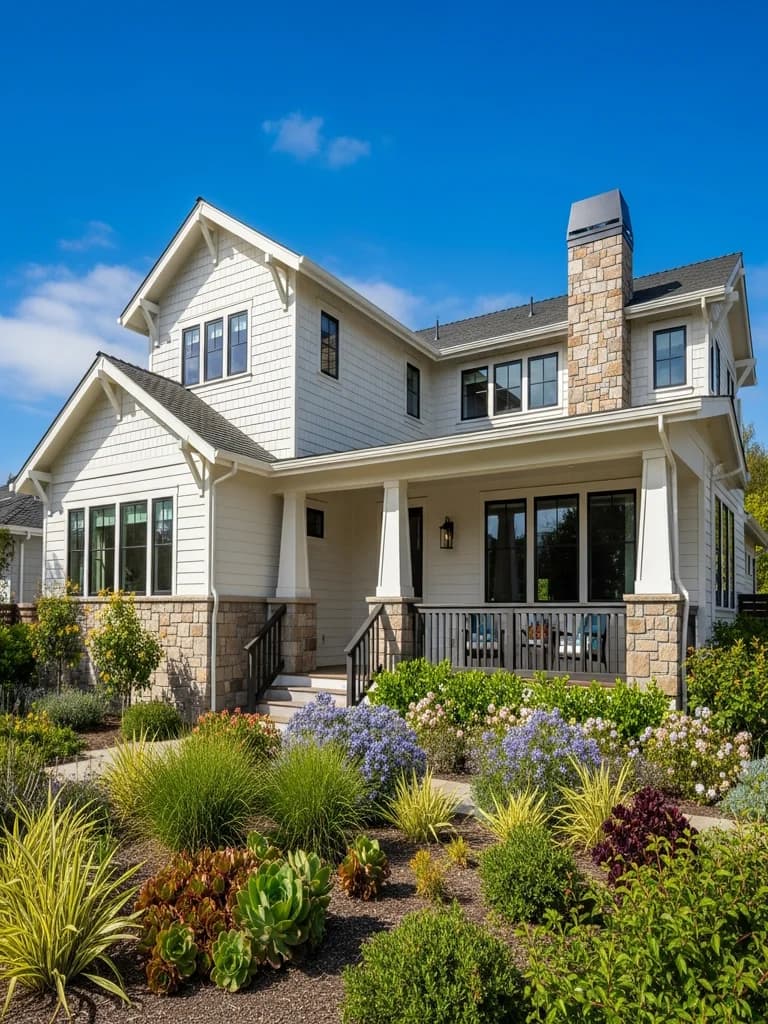
Expect mid-century custom homes in Westridge, wooded hillside houses, Portola Valley Ranch homes, and rural estates. The town's design guidelines favor buildings that blend into the landscape, with muted, non-reflective colors. Fiber cement lap, board-and-batten, and panel profiles in dark, natural factory finishes fit that intent.
Built for shade and sun
Factory-finished fiber cement in a dark natural color handles both shaded and sunny walls without the moss and checking common on old wood. A drained wall and clearance at grade fix the moisture problems at the base of walls.
Wildfire exposure in Portola Valley
State fire maps show the town center Moderate and much of Westridge, Portola Valley Ranch, and the Windy Hill edge High, with Very High land in the Los Trancos Woods and Vista Verde area. Fire protection is provided by the Woodside Fire Protection District. On wooded lots, non-combustible siding, ember-resistant vents, and hardened eaves are the core of a fire-aware exterior. Check your parcel on the OSFM Fire Hazard Severity Zone viewer.
Recommended materials for Portola Valley
Factory-finished James Hardie fiber cement in the HZ10 line, in a color within the town's reflectivity limits. Non-combustible siding suits the High zones; pair it with ember-resistant vents and non-combustible trim at the base of the wall. Owners on high Skyline parcels should confirm the HardieZone for their ZIP.
What an exterior project costs in Portola Valley
Wooded hillside access, ASCC submittals, fire-hardening items, and hidden damage at tear-off drive cost. Ask for each as a separate line with a hidden-damage allowance. See why siding estimates vary.
Portola Valley's color reflectivity limit
The town's Architectural and Site Control Commission (ASCC) application checklist says new colors and materials must meet the town's light reflectivity requirements — a maximum light reflectance value (LRV) of 40 percent for siding and 50 percent for roofs and architectural trim. The town's design guidelines also encourage owners to follow those values when repainting. Whether a re-side needs ASCC review depends on the project, so we confirm with town planning staff — and check every color's published LRV — before ordering. Note that the guidelines and checklist differ slightly on roofs, which is another reason to confirm with staff.
Utilities
Water is supplied by Cal Water's Bear Gulch district; electricity is delivered by PG&E with WestLight Energy as the community choice supplier.
Our process in Portola Valley
- Step 1
Consultation
We listen to your goals and assess your home on site — exposure, substrate, and architecture.
- Step 2
Design & Proposal
A clear written proposal with the right system specified for your climate and a transparent scope.
- Step 3
Expert Installation
Trained crews install to manufacturer best practices with careful weather-management detailing.
- Step 4
Walkthrough & Support
A final walkthrough, full cleanup, and a clear written record of the scope completed — work we stand behind.
Portola Valley asks for exteriors that disappear into the hills and resist fire. We pick colors under the town's reflectivity limits, specify non-combustible fiber cement, and confirm review before work starts.
FAQ
Portola Valley — Common Questions
Yes — siding, exterior renovation, and window projects throughout Portola Valley and the Peninsula hills.
The town's ASCC checklist sets a maximum light reflectance value of 40 percent for siding and 50 percent for roofs and trim. Check each color's published LRV before choosing.
It depends on the project; confirm with town planning staff. The town encourages its reflectivity values even when repainting.
Much of it is High on the state maps, with Very High land around Los Trancos Woods and Vista Verde. Check your parcel.
Darker, muted natural tones with a published LRV at or under 40 percent for siding. We confirm the LRV of each factory color before submitting.
Explore
Exterior Services
Helpful Exterior Guides