
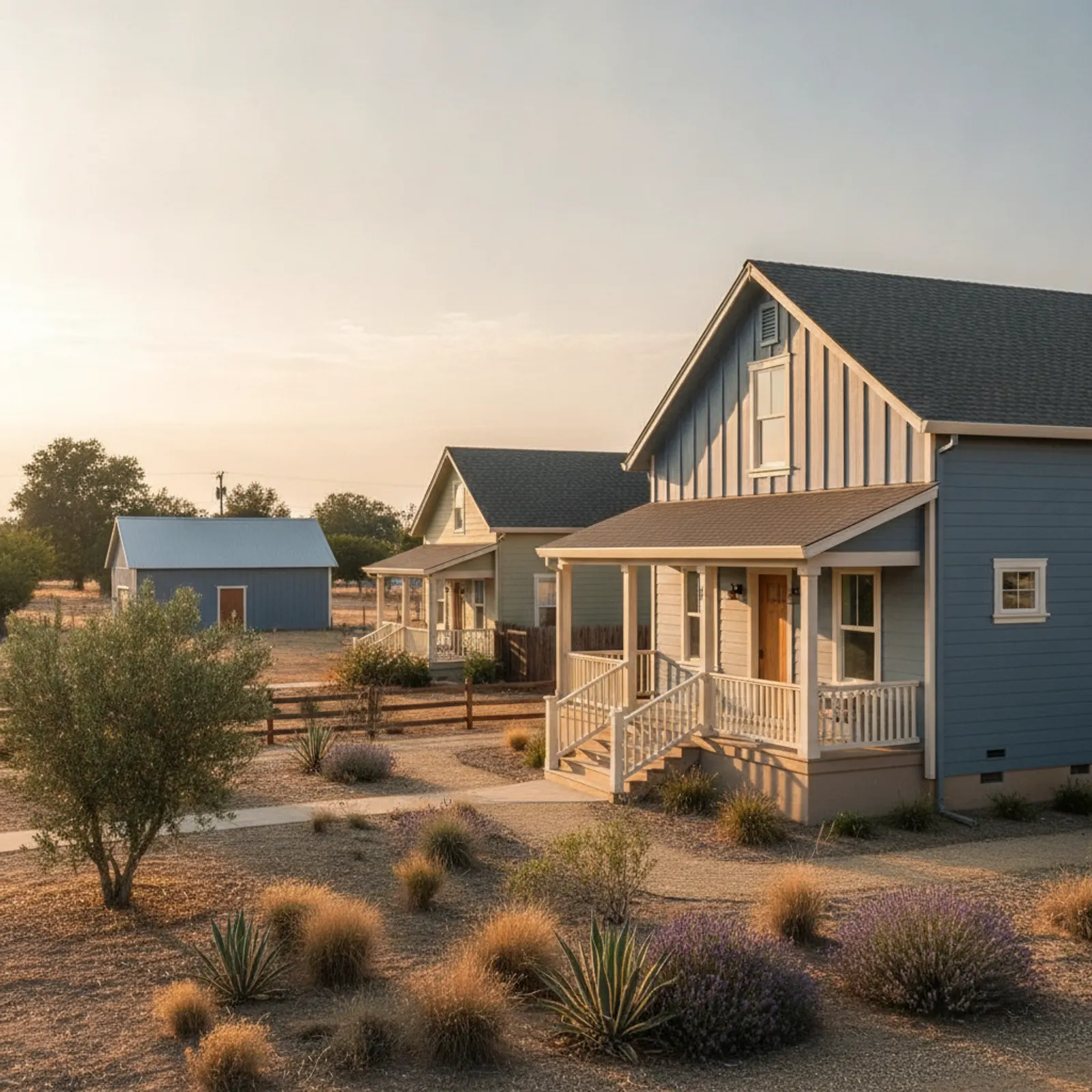
James Hardie Siding in Wheatland
In Wheatland the James Hardie argument covers both of the town's conditions at once: the material is non-combustible, which matters on the rural edge, and it holds a factory finish under a full valley UV load, which matters everywhere.
Neither property is doing the other's job, and it is worth separating them when deciding what to specify.
What non-combustible means on a grass edge specifically
Fiber cement does not contribute fuel to a fire, and against a fast-moving grass front that is a real advantage — grass fire produces intense but relatively short-lived exposure, and a wall that does not ignite during the pass is a wall that is still there afterwards. What the material does not address is the ember load that a wind-driven grass fire throws, which enters through vents, open eaves and debris at the base of the wall. On a rural-edge property the cladding is a sensible baseline and the vents and eaves are where the remaining exposure lives.
HZ10, and why the wet-dry swing matters in farming country
HZ10 is Hardie's line for California's hot, dry interior and Wheatland sits inside it. The annual cycle here is severe in a specific way: a long, hot, entirely dry summer followed by a genuinely wet winter, with irrigation and field activity adding moisture and dust in between. Materials that move significantly with heat and moisture work their joints open across that cycle. Dimensional stability is what keeps butt joints closed, and closed joints are what stop winter water entering a wall that summer has been opening up.
Finish choice around agriculture
Farming country puts dust on buildings — from fields, from unpaved drives, from harvest activity — and it settles into finish texture in a way that shows on lighter colors and on heavily textured profiles. A washable factory finish is genuinely more practical here than a field-painted surface, and smoother profiles are easier to keep looking clean than deeply textured ones. This is a small consideration next to durability, but it is the kind of thing owners notice every week for twenty years, and it is worth raising before a texture is chosen rather than after.
Outbuildings, and whether to include them
Many Wheatland properties have barns, shops and equipment storage alongside the house, and there is a reasonable question about whether they belong in the same project. The durability argument is usually weaker for a working outbuilding than for a residence, and the fire argument is often stronger — a combustible structure near the house is an exposure to the house. Where budget is limited we would generally rather see the fire path addressed than the finish on a barn upgraded, and that is a different recommendation from the one that maximises the size of the job.
Why this matters in Wheatland
- Specified for Sacramento Valley conditions
- James Hardie fiber cement as the recommended system
- Correctly detailed weather-resistive barrier and flashing
- Installed by a crew with 20 years combined experience
Recommended systems for Wheatland
- James Hardie fiber cement
- fire-aware detailing on the rural grass edge
- factory finishes
- durable trim packages
James Hardie Siding for Wheatland homes
The full james hardie siding approach — materials, weather-resistive detailing, and the manufacturer standards we install to — is covered on the main service page, then specified for Wheatland's conditions on this one.
Our Wheatland process
- Step 1
Consultation
We listen to your goals and assess your home on site — exposure, substrate, and architecture.
- Step 2
Design & Proposal
A clear written proposal with the right system specified for your climate and a transparent scope.
- Step 3
Expert Installation
Trained crews install to manufacturer best practices with careful weather-management detailing.
- Step 4
Walkthrough & Support
A final walkthrough, full cleanup, and a clear written record of the scope completed — work we stand behind.
FAQ
James Hardie Siding in Wheatland — FAQ
Genuinely, yes. Grass fire produces intense but relatively short-lived exposure, and a wall that does not ignite during the pass is a wall that survives it. What it does not address is the ember load a wind-driven grass fire throws, which enters through vents, open eaves and debris at the base of the wall — that is where the remaining exposure lives.
HZ10, the line for California's hot, dry interior. The annual cycle here is severe in a particular way — a long, entirely dry summer then a genuinely wet winter, with irrigation and field activity adding moisture and dust between. Stability across that swing is what keeps butt joints closed, and closed joints keep winter water out.
More than people expect. Dust from fields, unpaved drives and harvest settles into finish texture and shows most on lighter colors and heavily textured profiles. A washable factory finish is more practical here than field paint, and smoother profiles stay looking clean more easily — worth raising before a texture is chosen rather than after.
It depends what you are buying. The durability case is usually weaker for a working outbuilding than for the house; the fire case is often stronger, because a combustible structure near the residence is an exposure to it. On a limited budget we would rather see the fire path addressed than a barn's finish upgraded — which is not the recommendation that maximises the job.
Keep Exploring
More for Wheatland homeowners
More in Wheatland
Other exterior services in Wheatland
Nearby Service Areas
James Hardie Siding near Wheatland
Helpful Exterior Guides