8 min read · Siding Replacement
Aluminum siding went up on a lot of California homes from the 1950s through the 1970s, and to its credit, it doesn't rot or burn. But it ages in its own ways: the thin panels dent permanently, the baked-on paint finish oxidizes into a chalky film and fades, panels loosen, and the material does little for a home's energy performance. For many owners the deciding factors are a dated look and a wall envelope that's working harder than it needs to. This guide covers how to identify aluminum siding, the real reasons people replace it, and how the modern alternatives — fiber cement and engineered wood — compare, including what's actually known about siding's return at resale.
Identifying aluminum siding and how it ages
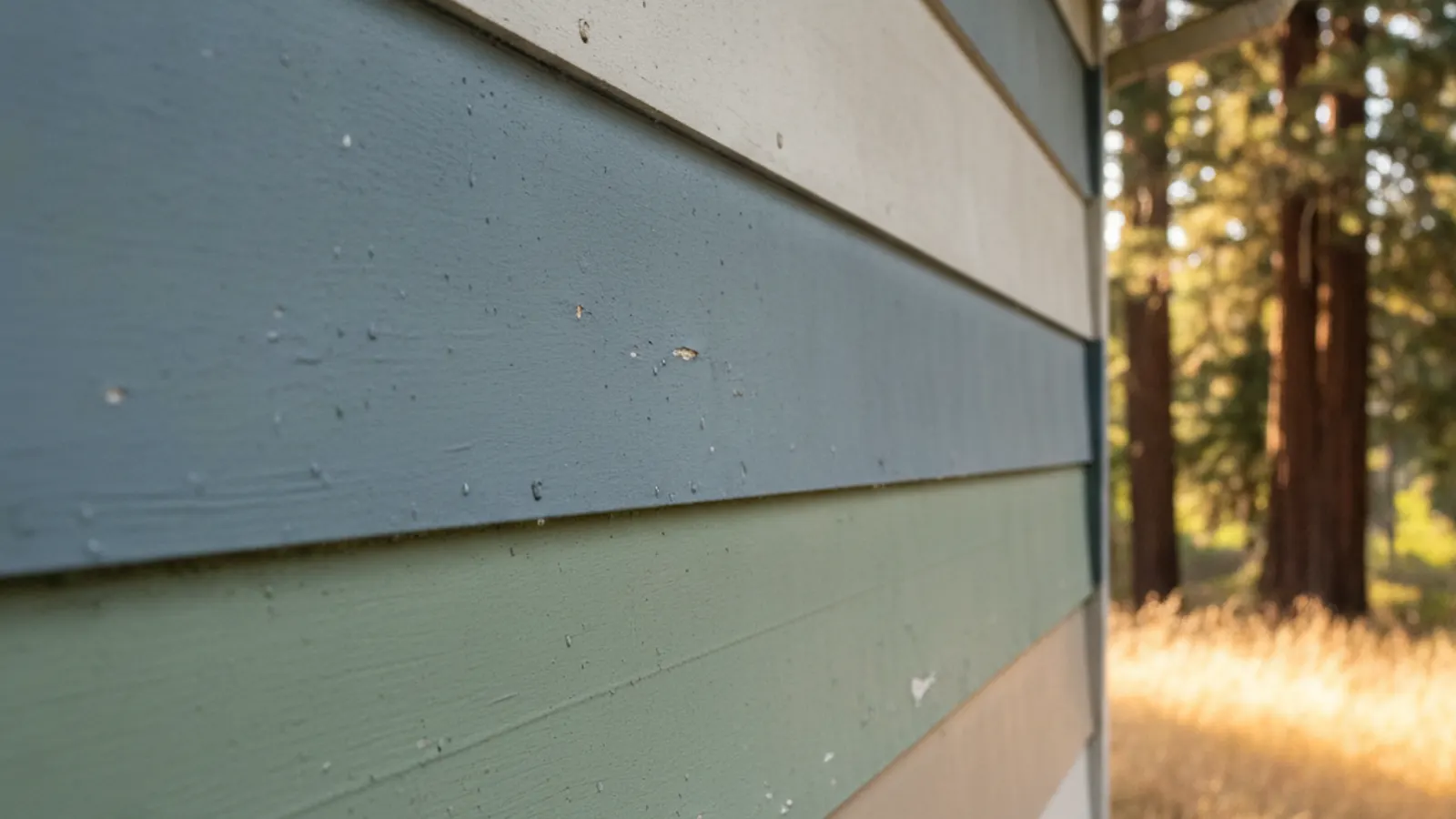
Aluminum siding is thin metal panel cladding, common on homes built roughly between the 1950s and 1970s. It taps with a metallic sound and shows its age in characteristic ways: dents that don't spring back (from hail, ladders, or stray baseballs), a chalky residue on the surface as the painted finish oxidizes, fading and uneven color, and panels that rattle or loosen over time. Aluminum doesn't rot, but it does suffer from denting, fading and chalking, loose panels over time, and poor insulation value. It's structurally stable but tends to look and perform like what it is: a dated postwar product.
Why homeowners replace it
Aluminum rarely fails structurally, so the motivation is usually a combination of appearance and performance. The chalking and fading make repainting a recurring chore, and dents can't be undone without panel replacement. Many owners also want a current architectural look — crisp lap, board-and-batten, or shingle profiles that aluminum can't convincingly deliver. And there's the envelope: per the U.S. DOE, a home's insulation and air-sealing are what govern heating and cooling performance (Energy Saver), and a re-side is a natural opportunity to improve the weather-resistive barrier and address air leaks while the walls are open. ENERGY STAR notes that sealing and insulating the envelope can save up to about 10% on annual energy bills — a whole-home figure, not siding alone, but a re-side is when that work is easiest to do.
What replaces aluminum siding in California
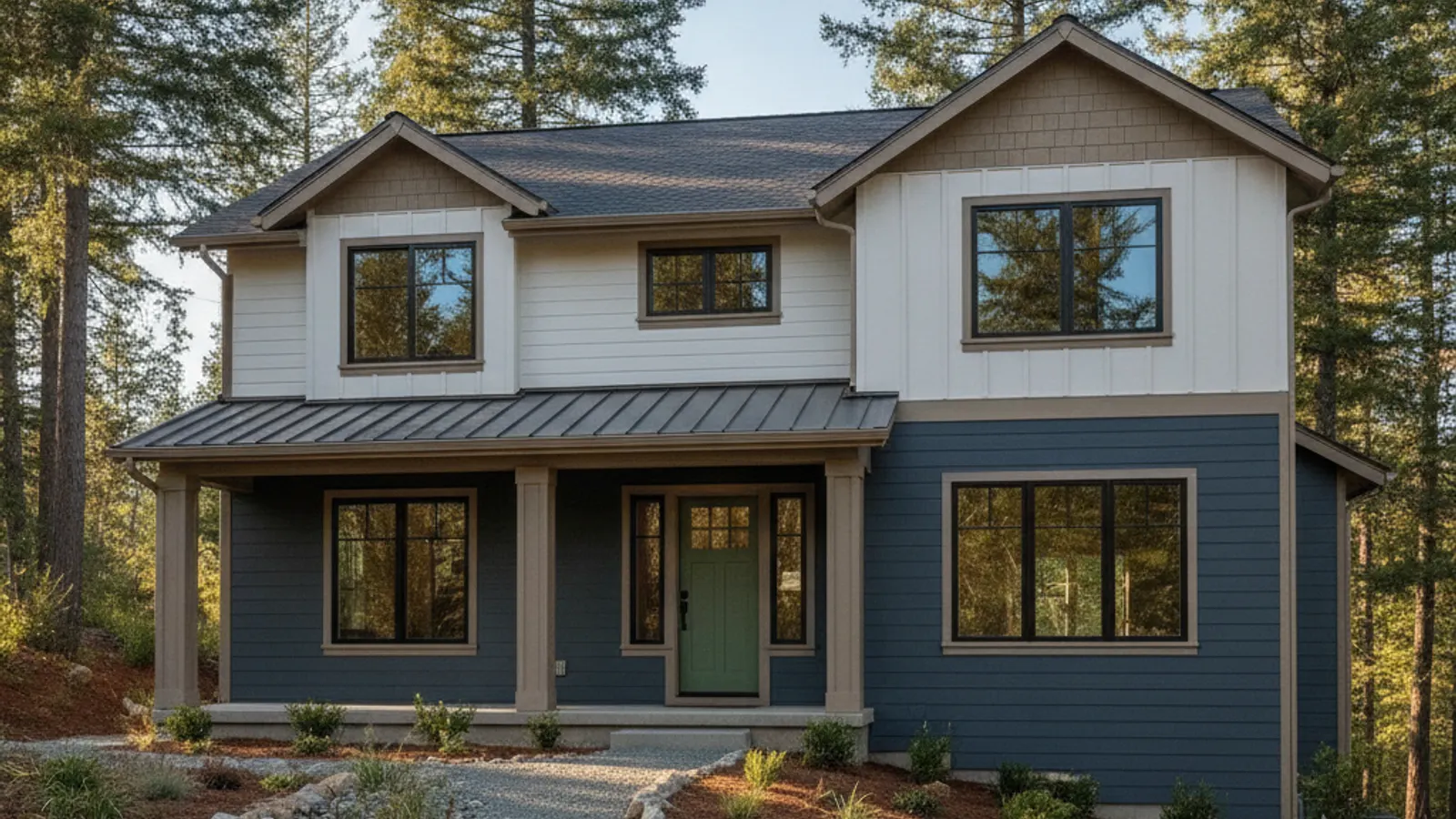
The two strong modern choices are **fiber cement** (such as James Hardie) and **engineered wood (LP SmartSide)**. Fiber cement is non-combustible (Class A) — important across wildfire-prone Northern California — dimensionally stable in valley heat, and available with long-life factory finishes that sidestep aluminum's chalking and repaint cycle. Engineered wood gives authentic grain and is a fine option in low-fire areas. Both deliver the crisp, current profiles aluminum can't, and both let you upgrade the wall assembly behind the cladding in the process. Our siding types guide walks the full comparison.
What siding actually returns at resale
Replacement siding is consistently one of the better-returning exterior projects, though it's worth being precise about the numbers. Zonda's 2025 Cost vs. Value Report put fiber-cement siding replacement among the top-recouping projects nationally, at about 113.7% of cost recouped in resale value (national figure; regional results vary, and 'value at sale' fluctuates year to year, so treat it as estimated resale value, not a guaranteed return). The broader point holds: moving from dated, chalking aluminum to a current fiber-cement or engineered-wood exterior reliably improves curb appeal and marketability, on top of the maintenance and (with proper envelope work) comfort gains.
Aluminum siding vs. modern replacements
| Factor | Aluminum | Fiber cement | Engineered wood |
|---|---|---|---|
| Aging mode | Dents, chalks, fades, loosens | Long-life; factory finish available | Authentic grain; periodic repaint |
| Fire | Non-combustible but thin | Non-combustible (Class A) | Combustible — low-fire areas |
| Look | Dated postwar profile | Crisp lap / panel / shingle | Deep wood grain |
| Finish upkeep | Repaint as chalking returns | Long factory finish | Periodic repaint |
Key takeaways
- Aluminum siding (1950s–70s) doesn't rot or burn, but it dents, chalks/fades, loosens, and adds little energy value.
- Most replacements are driven by a dated look and the recurring chalk-and-repaint cycle, not structural failure.
- Fiber cement and engineered wood deliver current profiles and (with envelope work) better comfort.
- Fiber-cement siding replacement recouped ~113.7% of cost nationally in Zonda's 2025 Cost vs. Value Report — estimated resale value, not guaranteed.
- A re-side is the natural time to improve the weather-resistive barrier and air-sealing behind the cladding.
FAQ
Quick Answers
It's usually better to remove the aluminum than to side over it. Taking it off lets us inspect and upgrade the weather-resistive barrier, address any air leaks, and ensure proper flashing — the things that actually improve performance. Siding over aluminum hides the wall assembly and can complicate flashing and fastening, so we assess the wall before recommending it.
Siding itself adds only modest insulation value, so don't expect the new boards alone to transform your bills. The real gains come from what a re-side lets you do while the walls are accessible — improving the weather-resistive barrier and air-sealing. Per ENERGY STAR, sealing and insulating the envelope can save up to about 10% on annual energy costs, and a re-side is when that work is easiest.
If it's sound and you don't mind the look and the periodic repainting, aluminum can keep serving. The case for replacing it is usually appearance, the chalking/repaint cycle, and the chance to upgrade the wall envelope and move to a non-combustible, current material — not an urgent failure. It's a value-and-preference decision more than a necessity.
That is oxidation of the painted finish, and it is the normal end-state for aluminum siding after enough years of ultraviolet exposure. The finish breaks down into a fine powder that transfers to anything touching it. It is not a structural problem — the metal underneath is generally intact — but it means the original coating is spent, so the realistic options are refinishing or replacement rather than cleaning.
It can, and where the panels are straight, undamaged and simply chalked, painting is a legitimate and much cheaper option. It requires proper preparation — the chalk has to come off completely or the new coating will not bond — and the result is a maintained painted finish with a repaint cycle rather than a factory finish. Where the panels are dented, where the profile is dated, or where the wall needs opening up for other reasons, that changes the arithmetic.
Aluminum has genuine scrap value, which is unusual among cladding materials — most removed siding is a disposal cost. On a whole-house tear-off the recovered value can offset part of the disposal line rather than being a windfall. It is a fair thing to ask about when comparing quotes, because whether the contractor is accounting for it, and who keeps it, is not standardised.
Sources
Authoritative references
- U.S. DOE Energy Saver — home energy efficiency (insulation & weatherization)
- ENERGY STAR — Seal and Insulate (envelope air-sealing & insulation)
- Zonda — 2025 Cost vs. Value Report (fiber-cement siding ROI)
- James Hardie — official fiber cement products & resources
- LP Building Solutions — LP® SmartSide® engineered-wood lap siding (current product)
External links to government, code, and manufacturer sources. Sierra Siding is not affiliated with these organizations; references are provided for verification.