9 min read · Siding Replacement
T1-11 (often written T-111) is the grooved plywood panel siding on a huge share of Northern California homes built from roughly the 1960s through the 1990s. It went up fast and cheap as full 4x8 sheets, and when it's kept sealed and painted it can last a long time. The trouble is that it is a wood product whose survival depends entirely on its finish: once paint fails at the grooves, edges, or fastener heads, water gets into the plies and the panel begins to delaminate, swell, and rot from the inside. By the time most homeowners notice, the failure is structural, not cosmetic. This guide explains what T1-11 actually is, how to read whether yours is still serviceable, and what a durable California replacement looks like.
What T1-11 actually is
T1-11 is not a brand — it's a grooved siding pattern within APA – The Engineered Wood Association's '303' Rated Siding category. The classic product is real plywood with shiplapped edges and parallel grooves cut into the face, typically spaced 4 or 8 inches on center, in 19/32-inch or 5/8-inch thicknesses, sold as large sheets (commonly 4x8, also 4x9 and 4x10). Confusingly, OSB and composite 'Rated Siding' lookalikes are also loosely called T1-11, but the original is multi-ply plywood. Because it's structural-rated, it often does double duty as both sheathing and finish on older homes — which is part of why failures matter. (Product classification per APA; the genuine 'Texture 1-11' grooving is a 303-series specification.)
How to tell your T1-11 is failing
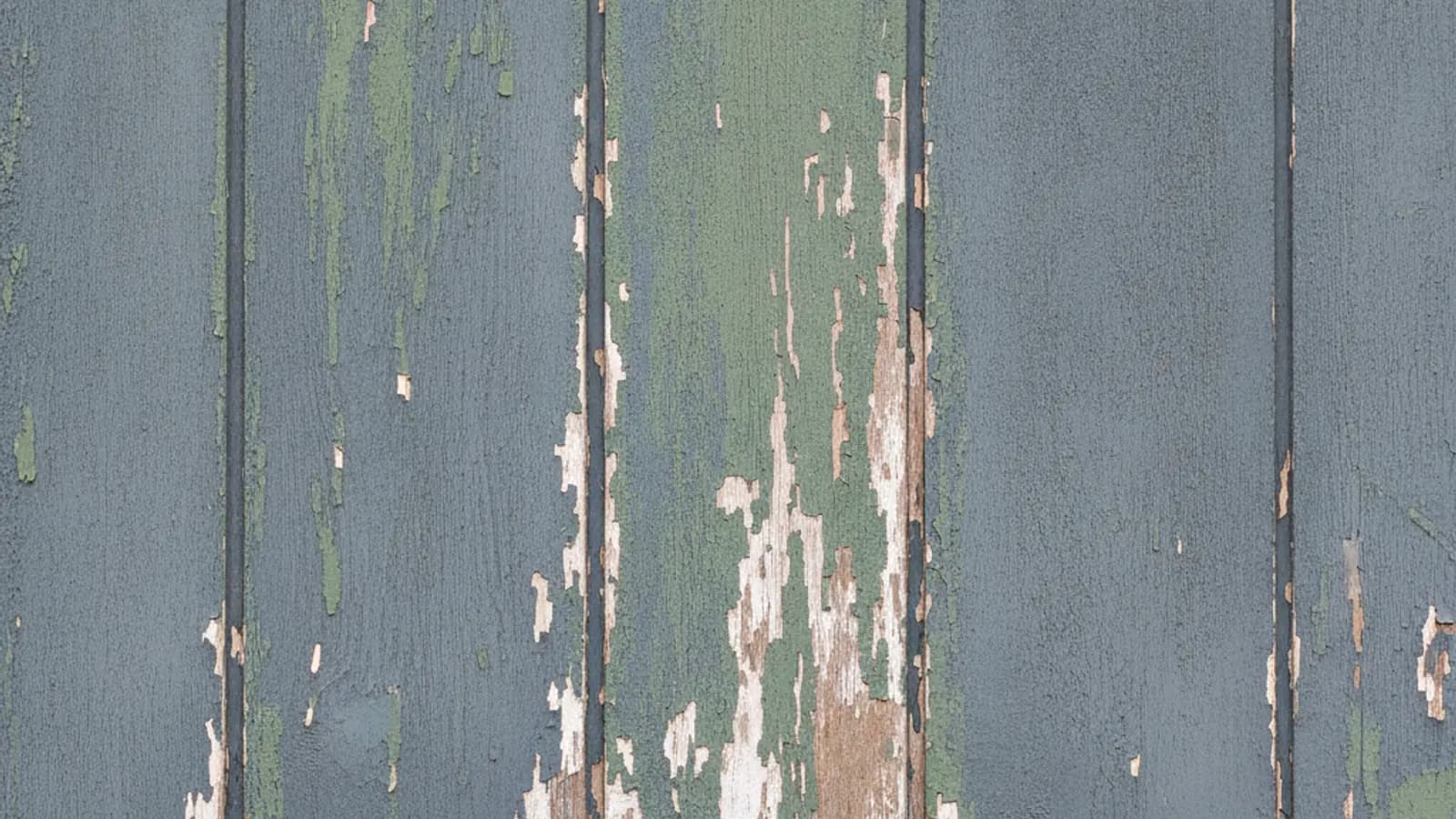
Look at the bottoms of the panels, the grooves, and around nail heads — the places water finds first. Warning signs: dark staining or softness near the base of sheets; plies separating or 'feathering' at edges and grooves (delamination); swelling or a wavy, no-longer-flat face; paint that won't hold no matter how often it's redone; visible rot, fungal growth, or daylight at panel seams; and pecked holes where woodpeckers have gone after insects in soft wood. A screwdriver tip that sinks into the board instead of meeting firm wood confirms the plies have lost integrity. Isolated, early damage can sometimes be repaired; widespread softness, delamination, or rot means the panels are done.
Repair vs. replace
A single damaged panel that's caught early — say, one sheet with localized rot at a leak — can be cut out and replaced, and the wall re-sealed and repainted. But T1-11 tends to fail as a system, not a spot, because the same UV and moisture exposure hit every panel equally; when one sheet is delaminating, the others are usually close behind. If you're repainting every few years just to stay ahead of the wood, or more than a panel or two shows softness, you're spending good money maintaining a substrate that's near the end. At that point a full re-side to a low-maintenance, moisture-stable material is the better long-term value. Our siding repair team will give you a straight read on which side of that line you're on.
What replaces T1-11 in California
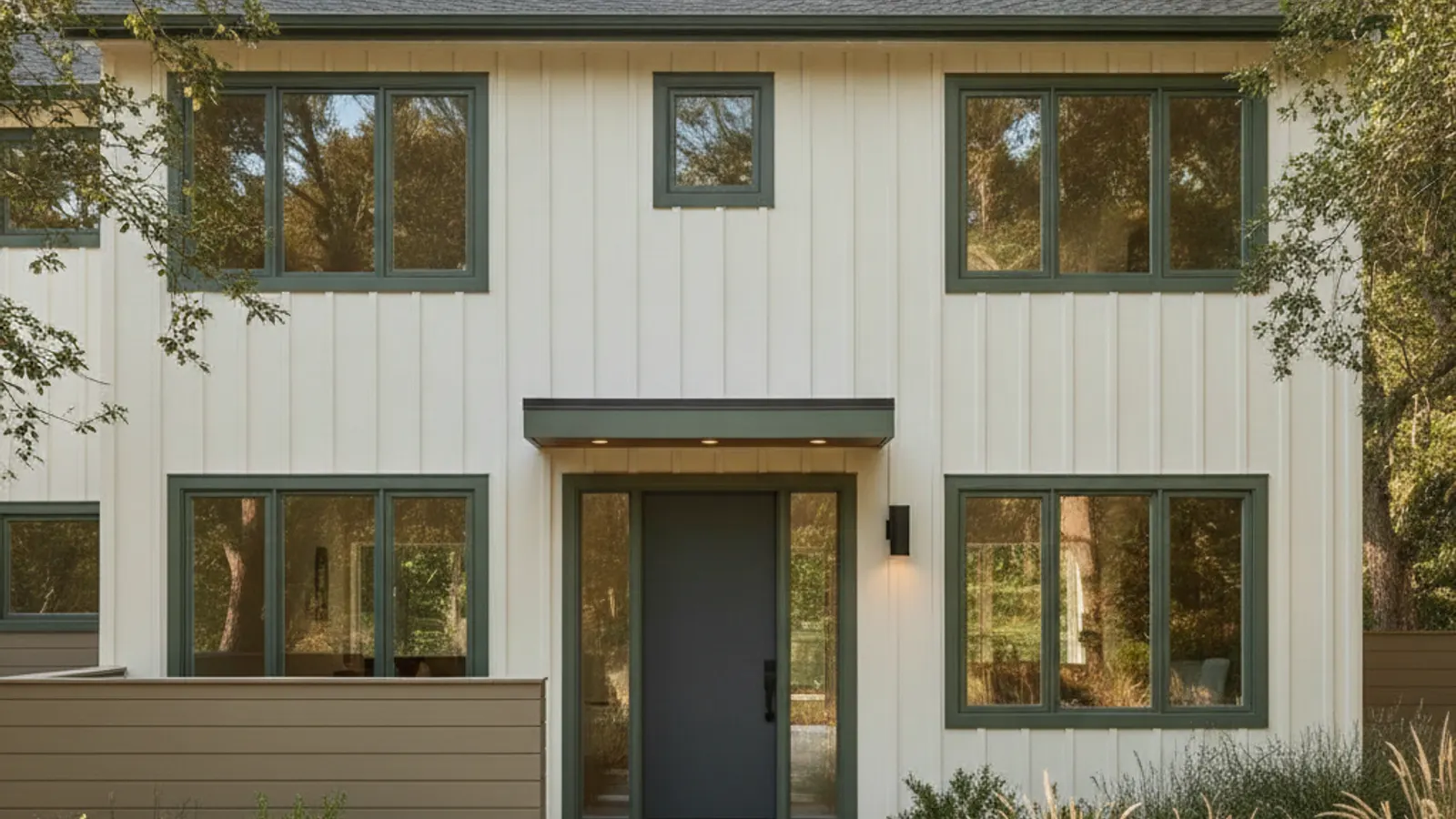
Most homeowners moving off T1-11 want to stop chasing paint and rot for good. The two strong replacements: **fiber cement** — non-combustible, dimensionally stable in valley heat, and available as vertical Hardie Panel with battens to keep that board-and-batten look, or as lap siding for a different character; and **engineered wood (LP SmartSide)** in low-fire areas, which gives authentic grain with far better moisture engineering than old plywood. On any wildfire-exposed parcel we steer to non-combustible fiber cement to meet the 2025 California WUI Code. Whichever board you choose, the re-side is the moment to get a proper weather-resistive barrier and flashing behind the cladding — the layer T1-11 often never had.
T1-11 alternatives, ranked for California
If you're searching "T1-11 alternatives," here's the honest shortlist for our climate. **First choice on most parcels: fiber cement** — vertical HardiePanel with battens keeps the grooved board-and-batten character T1-11 gave you, but non-combustible and dimensionally stable in valley heat; lap or shingle profiles are open too if you're ready for a different look. **Second, in genuinely low-fire areas: engineered wood panel or lap** — real wood texture with modern moisture engineering, at a friendlier price than fiber cement. **Third, for outbuildings and budget-first projects: new plywood or OSB panel siding** (including branded lines like DuraTemp) — cheapest to install, but you're signing up for the same repaint-and-rot cycle that wore out the original, and it stays combustible, which rules it out on WUI parcels. **Metal panel** is a legitimate fourth option on modern or agricultural buildings — non-combustible and low-maintenance, with a very different aesthetic. What we don't recommend as a T1-11 replacement: vinyl panel products in fire country or hardboard of any brand — both repeat the failure modes that got you here.
T1-11 plywood siding vs. common California replacements
| Factor | T1-11 plywood | Fiber cement | Engineered wood (LP SmartSide) |
|---|---|---|---|
| Moisture behavior | Delaminates & swells once finish fails | Stable; cement-based, won't wick into a wood core | Treated strand; far better sealed than old plywood |
| Fire | Combustible | Non-combustible (Class A) | Combustible — low-fire areas only |
| Finish upkeep | Frequent repaint to survive | Long-life factory finish available | Good paint adhesion; periodic repaint |
| Look | Vertical grooved panel | Panel/board-and-batten or lap | Authentic wood grain |
Key takeaways
- T1-11 is APA 303 grooved plywood siding — a wood product wholly dependent on its finish to survive.
- Failure shows as delamination, swelling, base-of-panel rot, and paint that won't hold.
- One early-damaged panel can be replaced; system-wide softness or rot means a full re-side.
- Fiber cement (incl. vertical Hardie Panel) and modern engineered wood are the durable replacements.
- On wildfire-exposed parcels, replace with non-combustible fiber cement to meet the WUI code.
FAQ
Quick Answers
Sometimes, but it's usually the wrong call. Going over failing T1-11 traps the moisture problem behind the new cladding and skips the chance to install a proper weather-resistive barrier and flashing. If the T1-11 is also acting as structural sheathing, it may stay as a substrate, but compromised, rotting panels should be removed. We assess the wall before recommending an overlay versus a tear-off.
It varies entirely with finish maintenance and exposure. Kept diligently sealed and painted, T1-11 can last decades; neglected even for a few years at the edges and grooves, it can begin delaminating and rotting much sooner. Because it's a wood product, its lifespan is a maintenance question, not a fixed number.
Not originally. The classic T1-11 is multi-ply plywood. OSB and composite 'Rated Siding' lookalikes with similar grooves are often loosely called T1-11, but they're different products. Identifying which you have matters, because OSB-core panels and plywood age somewhat differently.
Because the bottom edge is exposed end-grain sitting closest to the ground, and it is the one part of the panel that is almost never sealed properly. Water wicks up into the cut edge by capillary action, splash-back from paving and irrigation keeps it wet, and the panel swells and then delaminates from the bottom up. It is why grade clearance and keeping irrigation off the wall matter more on T1-11 than on almost any other cladding.
It can be, and this is the question most homeowners do not know to ask. T1-11 was frequently installed as a combined siding and structural sheathing panel with no separate sheathing behind it, in which case it is carrying shear load and cannot simply be stripped off and replaced with a non-structural cladding. Where that is the case the wall needs sheathing installed as part of the job. It is a straightforward thing to determine once a panel is off, and it materially affects the scope, so it belongs in the conversation before work starts.
Yes — vertical panel products with battens reproduce that language closely, and fiber cement panel with applied battens is the common route. The detail that decides whether it reads right is batten spacing and width, because T1-11's grooves sit at a specific rhythm that the eye is used to. Wider spacing reads more contemporary and narrower reads closer to the original, so it is worth deciding deliberately rather than accepting a default layout.
Sources
Authoritative references
- APA – The Engineered Wood Association: Siding (303 Rated Siding patterns incl. T1-11)
- James Hardie — Hardie® Panel vertical siding (board-and-batten capable)
- James Hardie — the re-side process & homeowner guide
- 2025 California Wildland-Urban Interface Code (Title 24, Part 7) — exterior walls & wall coverings, §504.5
External links to government, code, and manufacturer sources. Sierra Siding is not affiliated with these organizations; references are provided for verification.