9 min read · Siding Replacement
If your home was built or re-sided between about 1980 and the mid-1990s and the boards are swelling, buckling, or crumbling worst along their bottom edges, you likely have hardboard siding — pressed wood fiber bonded with resin, of which Masonite was the dominant brand. It looked like painted wood and cost less, but it had a fundamental flaw: it wicks water into its pressed-fiber core and, unlike solid wood, stays swollen and degrades back toward sawdust. The problem was severe and widespread enough to drive a nationwide class-action settlement in 1998. The product is long discontinued, the claims program is closed, and today's owners simply have a wall that needs replacing. This guide covers how to identify it, the documented history, and the durable fix.
What hardboard (Masonite) siding is
Hardboard siding is an engineered product made from wood fibers and sawdust — often mill leftovers — bound with wax and resin under heat and pressure, then pressed into smooth or wood-grain-embossed boards. 'Masonite' was the dominant brand name, but 'hardboard,' 'pressboard,' and 'composite wood' siding all refer to the same general class. It was popular from roughly 1980 into the mid-1990s as an affordable wood-look lap siding. Per building-science references like InspectAPedia, boards often carry a back-side stamp (for example 'MASONITE BRAND … ANSI/AHA 135.6') that helps confirm identification.
Why it fails — and how to spot it
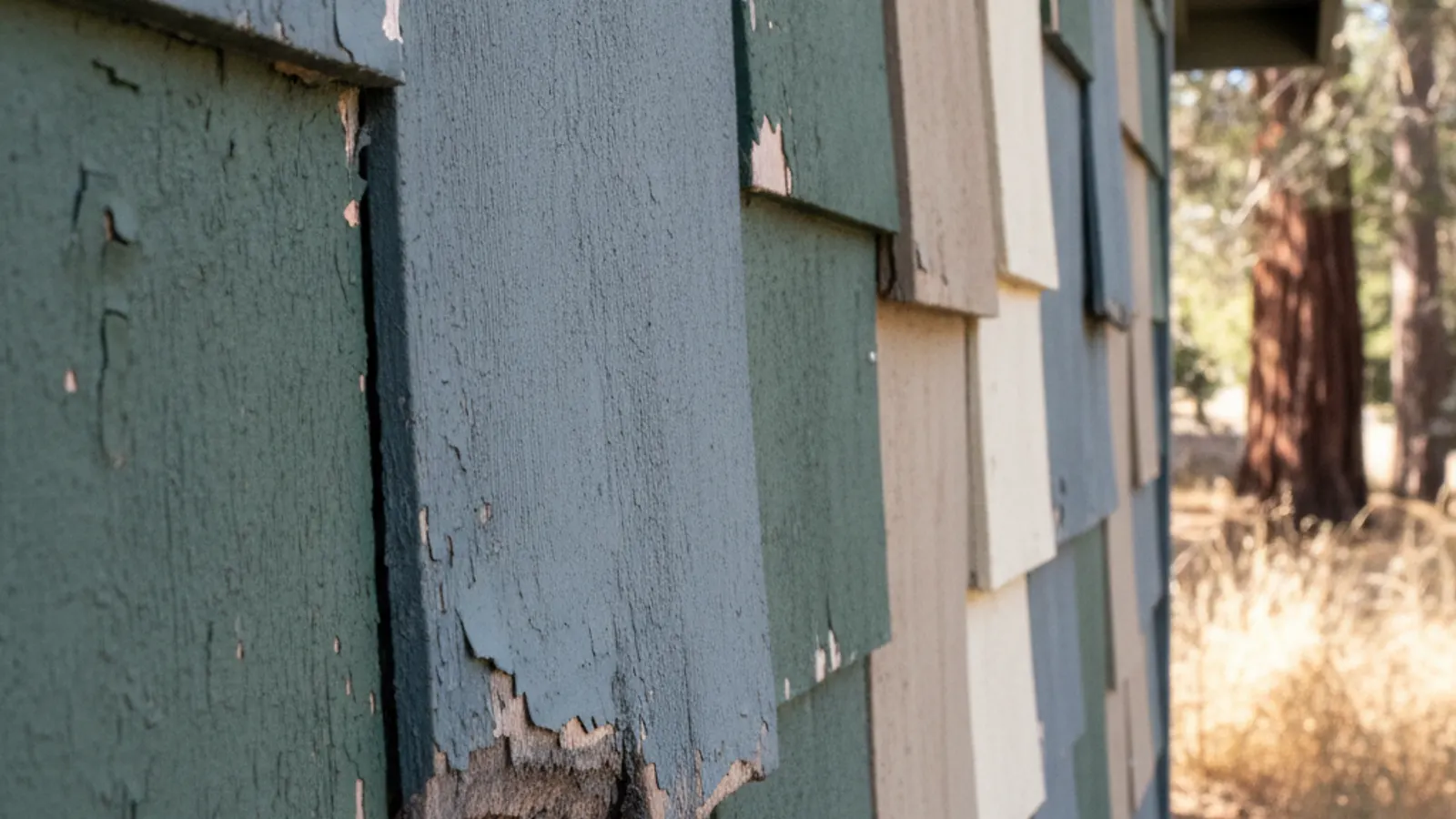
The core flaw is moisture. Water wicks into the pressed-wood fiber, especially through unsealed cut edges, nail penetrations, and the exposed bottom lip of each board — and the fibers swell and stay swollen. Once the resin bond breaks down, the board softens, delaminates, and crumbles. The tell-tale identification signs: swelling, buckling, and paint failure that are noticeably worst along the bottom edge of boards (the rain splash-up zone); soft or spongy spots; mushrooming or crumbling at the bottom lip; and that back-stamp if you can see a cut end. Because the damage is moisture-driven and progressive, it rarely stays isolated.
The documented history: the 1998 Masonite settlement
Hardboard siding's failures were extensive enough to produce a major nationwide class action. As summarized by class counsel Lieff Cabraser, the Masonite hardboard litigation (commonly cited as Naef v. Masonite Corp., Mobile County, Alabama) reached a settlement that received final approval in 1998 and covered hardboard siding installed roughly between 1980 and 1998. We mention this only as documented context — the claims program is long closed, so it isn't a path to recovery today; it simply explains why so many homes from that era now need re-siding. (Masonite Corporation later exited the siding business entirely.)
What replaces hardboard siding in California
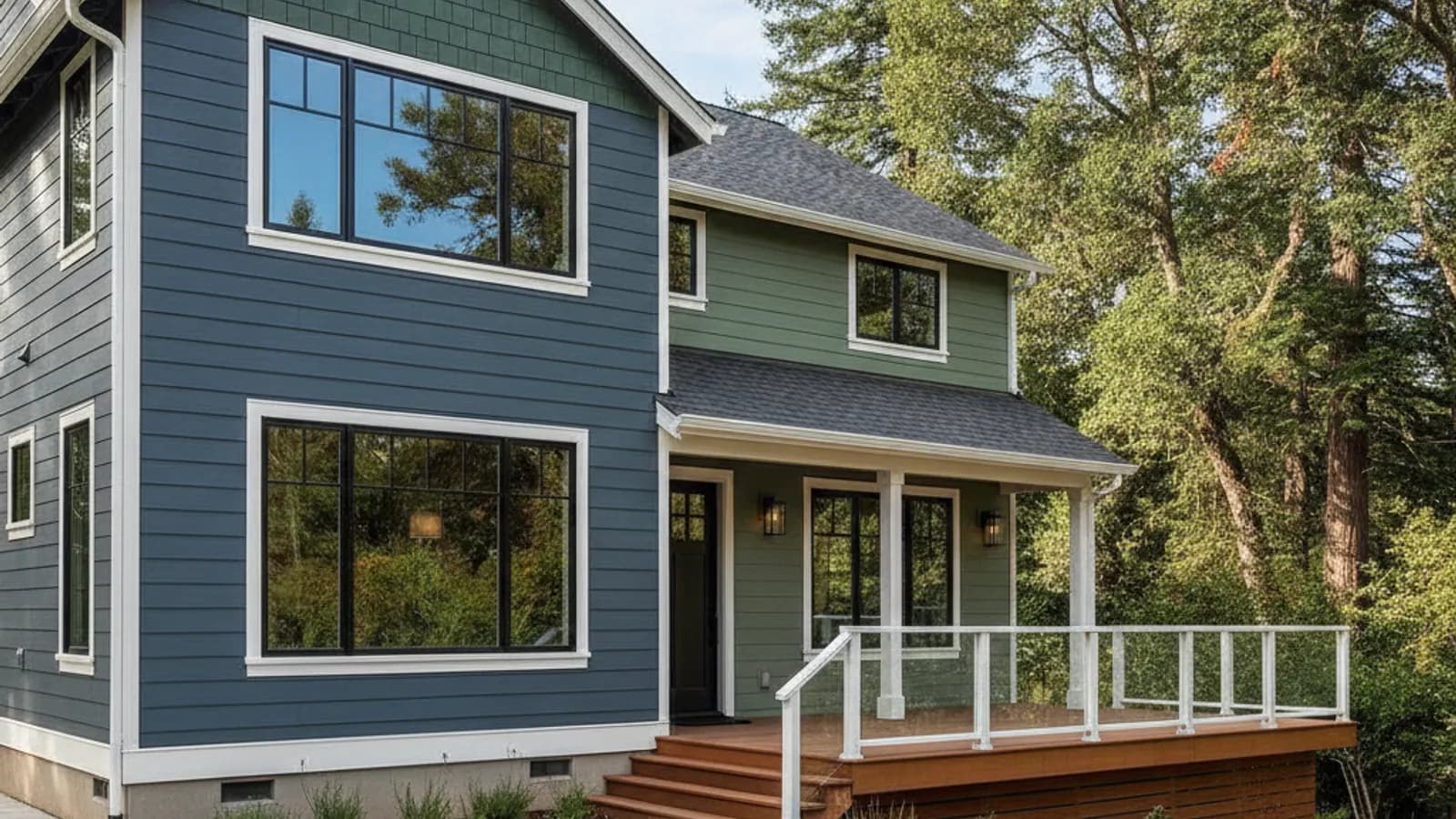
The durable answer is to move off a swellable wood-fiber product altogether. **Fiber cement** (such as James Hardie) is cement-based, so it doesn't wick moisture into a wood core — the exact failure mode that doomed hardboard — and it adds a Class A fire rating that matters across Northern California. For homeowners set on authentic wood character in low-fire areas, modern **engineered wood (LP SmartSide)** is a far better-engineered product than 1980s hardboard. As with any re-side, the lasting value comes from pairing the new board with a proper drainage plane and disciplined flashing — see how we approach a full re-side.
Hardboard (Masonite) siding vs. fiber cement
| Factor | Hardboard / Masonite | Fiber cement |
|---|---|---|
| Material | Pressed wood fiber + resin | Cement, sand & cellulose |
| Moisture | Wicks & swells; stays swollen | Doesn't wick into a wood core |
| Worst failure point | Bottom edge of each board | N/A when properly flashed |
| Fire | Combustible | Non-combustible (Class A) |
| Status | Discontinued legacy product | Current, widely specified |
Key takeaways
- Hardboard (Masonite) siding is pressed wood fiber + resin from ~1980–95 that wicks moisture and swells permanently.
- Identify it by swelling/paint failure worst at the bottom edge, soft spots, and a back-side ANSI/AHA 135.6 stamp.
- A 1998 nationwide class-action settlement documented the defect; that claims program is now closed.
- Fiber cement is the durable replacement — it can't wick moisture into a wood core the way hardboard does.
- Don't conflate the discontinued siding with any current company; Masonite exited the siding business.
FAQ
Quick Answers
It isn't a health hazard like asbestos — the concern is building damage, not toxicity. Failing hardboard lets water into the wall, which can lead to rot in the sheathing and framing behind it and to mold if moisture persists. So while it isn't urgent for safety, letting it keep failing risks more expensive structural and water-damage repairs over time.
No. The Masonite hardboard settlement received final approval in 1998 and its claims program has long since closed. We reference it only as documented history that explains why so many 1980s–90s homes need re-siding. Today's owners bear the replacement cost.
Painting only helps if the board is still sound. Once hardboard has wicked moisture and swelled, the material has lost integrity and paint won't restore it or hold for long — you're painting over a failing substrate. Sound boards can be maintained; swollen, soft, or crumbling boards need replacement.
Hardboard is noticeably lighter and sounds hollow when tapped, where fiber cement sounds dense and solid. Look at a cut end or a damaged edge: hardboard shows compressed wood fibre and will be swollen or fuzzy where it has taken water, while fiber cement shows a uniform grey mineral body. Age is also a strong hint — if the siding is original to a house built between roughly the 1960s and the 1990s and it is swelling at the edges, hardboard is the likely answer.
Localised repair works where the damage is localised and the rest of the wall is genuinely sound — replacing a few boards under a leaking window, for instance. What does not last is patching, filling and repainting a wall where boards have generally begun to swell and delaminate, because the substrate has lost integrity across the whole elevation and the coating has nothing sound to hold. At that stage repair is buying a season at a time, and the honest comparison is against replacement rather than against doing nothing.
It commonly comes up. Swollen and delaminating siding is visible in an inspection report and reads as deferred maintenance, which tends to invite a price adjustment larger than the actual repair. It is a question for your agent rather than a contractor as to how it should be handled in a specific transaction, but the practical pattern is that visible cladding failure is one of the more expensive things to leave for a buyer to discover.
Sources
Authoritative references
- InspectAPedia — Hardboard (Masonite) siding identification & failure guide
- Lieff Cabraser (class counsel) — Masonite hardboard siding class action (Naef v. Masonite, settled 1998)
- James Hardie — official fiber cement products & resources
- James Hardie — the re-side process & homeowner guide
External links to government, code, and manufacturer sources. Sierra Siding is not affiliated with these organizations; references are provided for verification.