8 min read · Hardie
Allura is a fiber-cement brand many California homeowners encounter when shopping around — a full exterior system (lap, panel, shake, soffit, trim) positioned on value, with roots in the fiber-cement line CertainTeed once sold. James Hardie is the market leader, organized around climate-engineered product lines and its ColorPlus factory finish. Both are real fiber cement, both bring the category's non-combustibility and durability, and the honest comparison is about fit, availability, and support — not a claim that one is categorically superior. Here's how they stack up for a California home, with the same transparency we apply to every brand: we primarily install Hardie, and we'll tell you why without overstating it.
What Allura is — and its CertainTeed roots
Allura describes itself as a fiber-cement siding manufacturer offering a complete exterior system: Allura Lap, Panel, Trim, Multishake (a cedar-shake look), Soffit, and a Spectrum color program. Its positioning leans toward value and a full-system offering. On lineage: the fiber-cement line now sold as Allura has its roots in CertainTeed's former fiber-cement business, which was acquired and rebranded (by Plycem USA) — a history documented by third-party siding references rather than stated on Allura's current marketing. We mention it because homeowners who remember 'CertainTeed fiber cement' are often looking at what's now Allura. As with any brand, treat a manufacturer's own superlatives ('#1 manufacturer,' and the like) as marketing, not independent fact.
What's the same as Hardie
At the core, Allura and Hardie are the same kind of material: fiber cement — cement, sand, and cellulose — which delivers the category's shared strengths of moisture, rot, and pest resistance and, crucially in California, non-combustibility. The UC ANR Fire Network lists fiber cement (lap or panel) as a compliant noncombustible siding for Wildland-Urban Interface areas, a category trait both brands share. So on the fundamentals that protect a home in our fire-prone regions, choosing Allura or Hardie gets you the same material class. The meaningful differences are in finish systems, climate-specific engineering, product support, and availability.
Where they differ — finish, climate engineering, availability
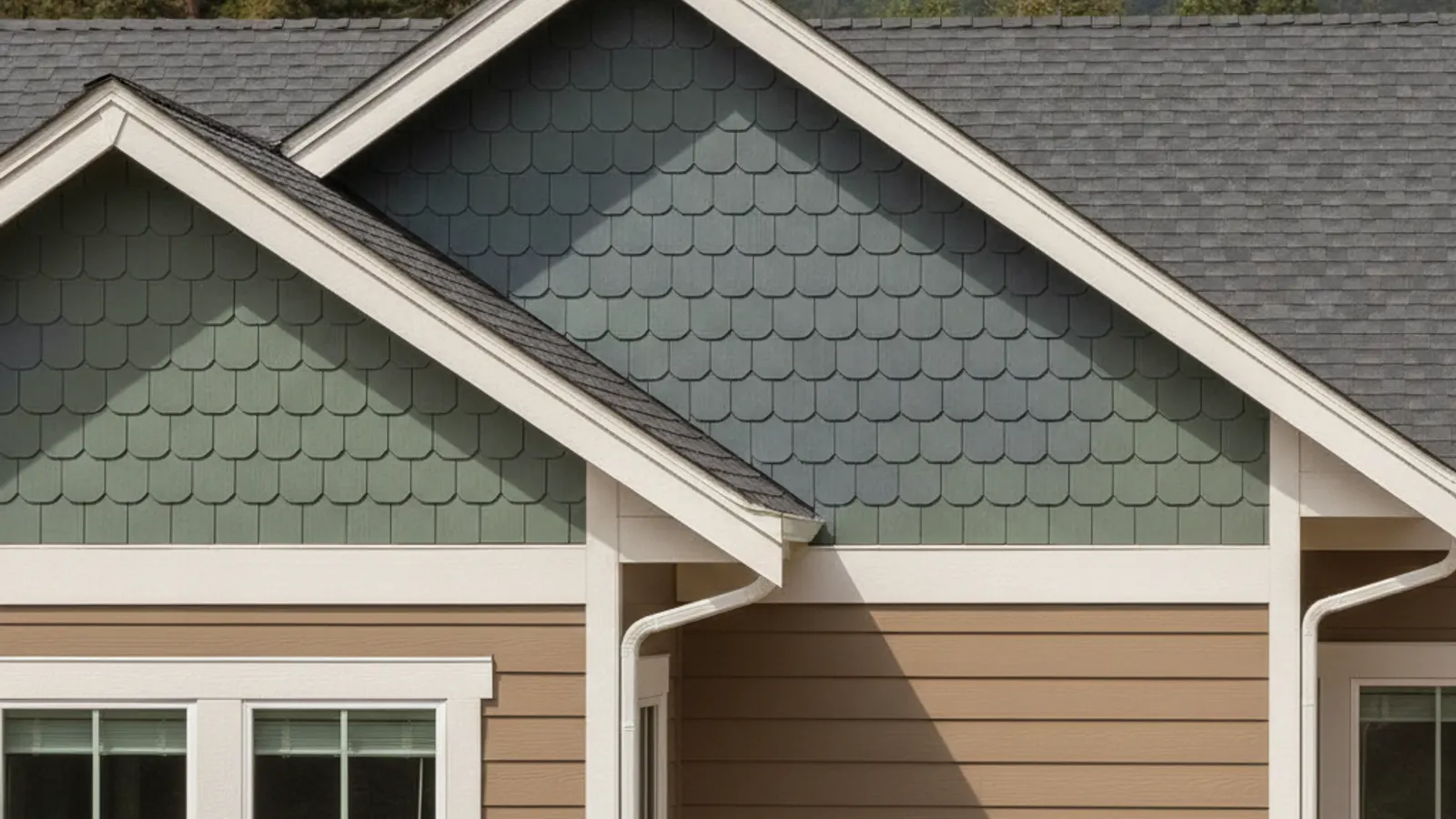
Three honest differences. **Finish:** James Hardie markets ColorPlus, a named factory-applied, baked-on color finish engineered for color retention in high UV; Allura runs its own Spectrum color program, but we won't assert an equivalence or a gap we haven't verified. **Climate engineering:** Hardie publicly markets 'Engineered for Climate' HZ5/HZ10 lines; we found no equivalent named climate-zone program published by Allura, but we frame that as 'Hardie markets a climate-zone system,' not 'Allura lacks one.' **Warranty:** we'll only cite what's verifiable — Hardie publishes a 15-year prorated ColorPlus finish warranty and a 30-year non-prorated substrate warranty; we won't quote an Allura warranty figure we couldn't confirm. **Availability:** in California residential work, Hardie's distribution and contractor familiarity are broader; Allura's availability can be more regional (it flags some products as regionally available).
Choosing honestly — and why the install still rules
Allura's appeal is a complete fiber-cement system, often at a value price point — a legitimate reason to consider it, especially on budget-sensitive projects. Hardie's appeal in California is its climate-engineered lines, its deep color availability, and the contractor and supplier familiarity that keeps projects on schedule. Neither is a wrong answer. And as with every brand comparison, the dominant performance factor is the installation: building-science authorities (DOE, Building Science Corp.) are clear that the water-resistive barrier, flashing, clearances, and fastening — not the brand — govern whether a wall stays dry. We install Hardie for fit and availability, hold no certified-installer claim from any manufacturer, and would rather earn trust on the quality of the fiber cement install than on the label. Weigh it all in our fiber cement brands hub.
James Hardie vs. Allura (qualitative)
| Factor | James Hardie | Allura |
|---|---|---|
| Positioning | Market leader; climate-engineered lines | Full system; value-positioned |
| Finish program | ColorPlus factory baked-on color | Spectrum color program |
| Climate engineering | Markets HZ5/HZ10 'Engineered for Climate' | No equivalent named program found |
| Lineage | Continuous dominant FC brand | Roots in CertainTeed's FC line |
| CA availability | Broad; high contractor familiarity | Can be more regional |
Key takeaways
- Allura is a full, value-positioned fiber-cement system (lap/panel/shake/soffit/trim) with roots in CertainTeed's former fiber-cement line.
- Both are fiber cement and noncombustible-class — the same material fundamentals that protect a California home.
- Differences are finish programs, Hardie's marketed climate-zone lines, support, and California availability.
- Only Hardie's warranty (15-yr ColorPlus / 30-yr substrate) is cited because it's verifiable — no unverified competitor figures.
- We install Hardie for fit and availability, with no certified-installer claim; the install quality still matters most.
FAQ
Quick Answers
Both are legitimate fiber-cement brands sharing the same core material and non-combustibility, so neither is categorically 'better.' Allura is a full, value-positioned system with roots in CertainTeed's former fiber-cement line; Hardie is the market leader with climate-engineered lines and the ColorPlus finish. The right choice depends on budget, finish and product preferences, and — in California — availability and the quality of your installer.
The fiber-cement line now sold as Allura has its roots in CertainTeed's former fiber-cement business, which was acquired and rebranded. So if you remember 'CertainTeed fiber cement,' Allura is its descendant. We frame this as documented lineage rather than citing an exact transaction date as gospel, since the primary news sources on the acquisition weren't independently confirmable.
Primarily availability and fit, not a claim that Allura is inferior. In California residential work, Hardie has broader distribution, deep color availability, climate-engineered lines suited to our regions, and strong contractor and supplier familiarity that keeps projects on schedule. Allura can be a sensible value option where it's well-stocked. We hold no certified-installer credential from any brand and prioritize installation quality over the label.
Close in nominal terms and not identical in the details that matter for matching — thickness, exposure, texture pattern and edge treatment differ. That means the two are not interchangeable mid-wall, and a repair years later needs the same product it started with. It is one of the quieter reasons that choosing a product with stable distribution matters as much as comparing spec sheets.
It matters to the extent that a warranty is a promise from a specific entity, and an entity that changes hands, restructures or exits a market is a different proposition from one that has been stable in it for decades. That is a general point about long-duration warranties rather than an accusation about any particular company. If a long warranty is a significant part of why a product is being chosen, it is reasonable to consider who is standing behind it and for how long they have been doing so.
Technically possible and rarely a good idea. Texture and exposure differences show up under raking light even when the colors are matched, transitions between the two need a deliberate break to look intentional, and future repairs mean tracking which product is on which elevation. Where budget is driving the idea, changing the profile within one brand is a better way to control cost than mixing manufacturers.
Sources
Authoritative references
- Allura — fiber cement product range (lap, panel, trim, shake, soffit)
- All About Siding — Allura fiber cement (roots in CertainTeed's fiber-cement line, via Plycem USA)
- James Hardie — ColorPlus Technology (factory baked-on finish)
- James Hardie — HardieZone / Engineered for Climate (HZ5 & HZ10)
External links to government, code, and manufacturer sources. Sierra Siding is not affiliated with these organizations; references are provided for verification.