8 min read · Siding Replacement
Metal and fiber cement are often shortlisted together, and for good reason: both are non-combustible, both are durable and low-maintenance, and both sidestep the rot, fading, and fire concerns that plague cheaper claddings. That shared strength means the choice between them isn't about which is 'better' in the abstract — it's about look, a few real performance differences, and what fits your California home. This guide compares them honestly across the factors that actually matter, with the transparency that we install fiber cement: we'll explain why without pretending metal is a lesser product, because it isn't.
What's the same
Start with the common ground, because it's substantial. Both metal and fiber cement are **non-combustible** — a category advantage that matters across wildfire-prone California, where the UC ANR Fire Network names both 'fiber cement siding products (lap or panel)' and 'metal siding' among the compliant noncombustible options. Both are **durable and low-maintenance** — metal won't crack, rot, or warp (MCA), and fiber cement is engineered to resist rot, pests, and weather (James Hardie). Both carry long warranties and avoid the repaint cycle of wood and the heat-distortion of vinyl. So whichever you choose, you're getting a serious, long-lived, fire-smart cladding — the differences are in character and a handful of performance details, not in fundamental quality.
Where they differ — look and feel
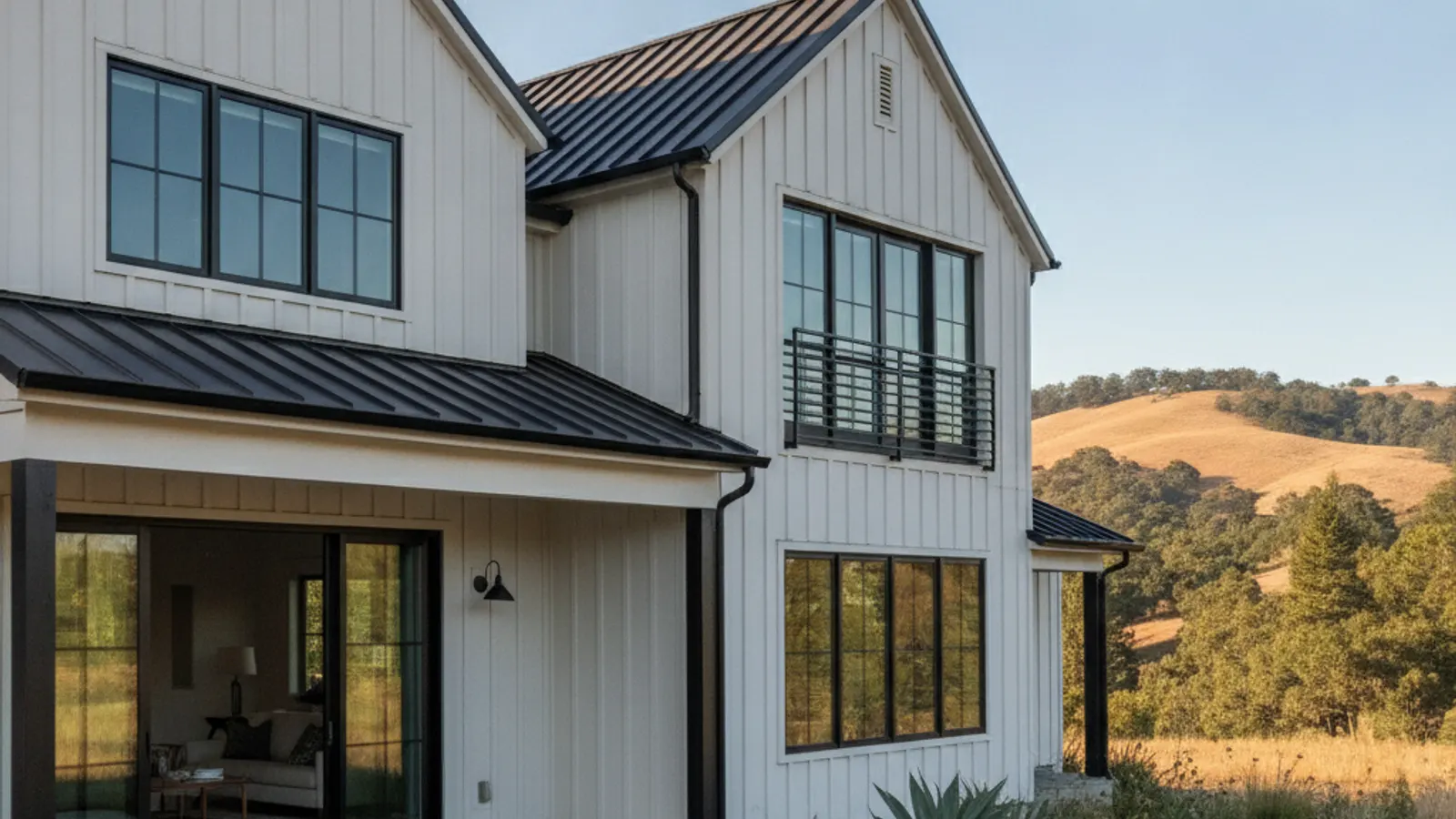
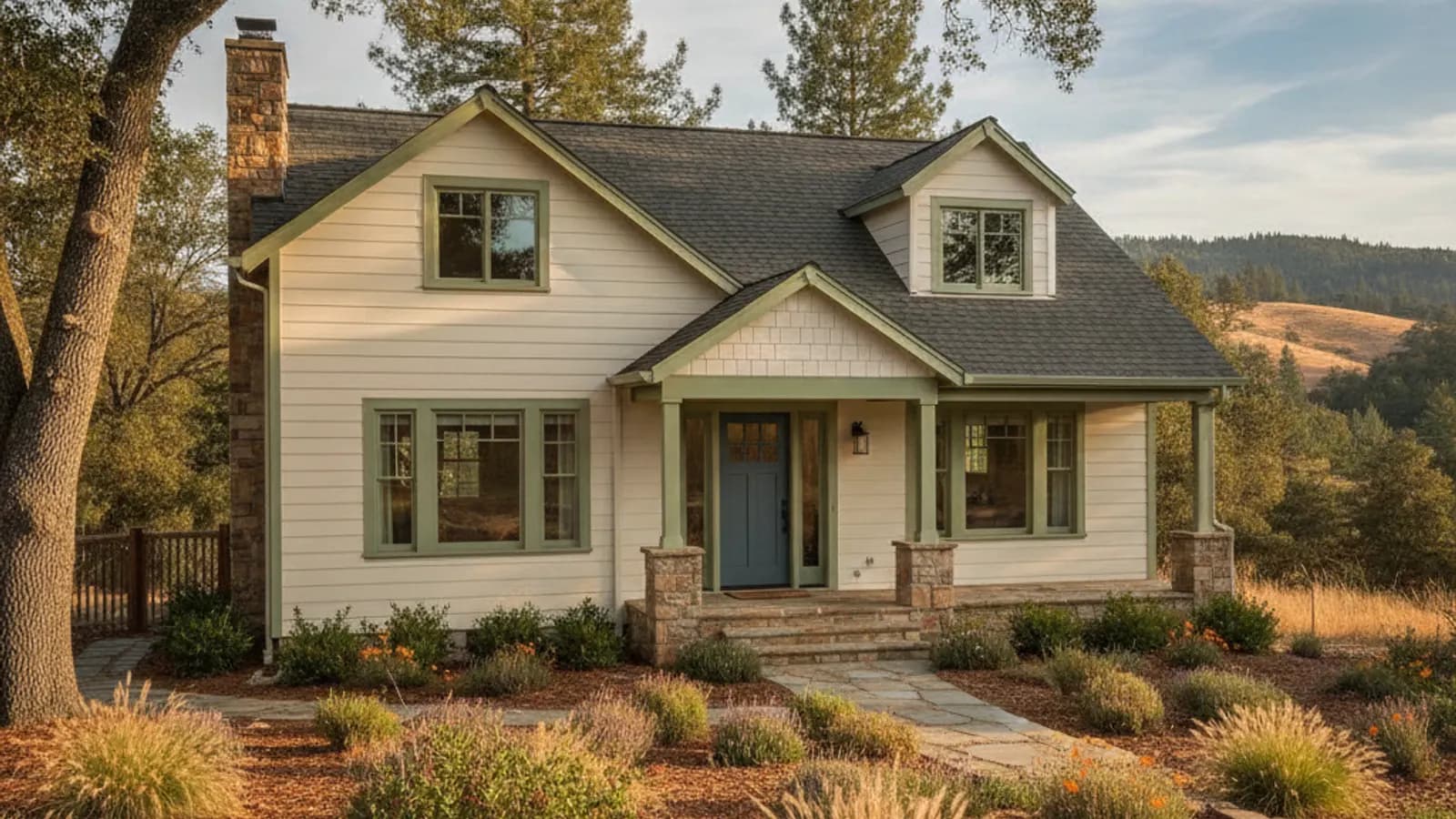
The biggest practical difference is aesthetic. **Metal** leans contemporary — standing-seam, board-and-batten, and crisp panel profiles that define modern and farmhouse-modern homes; the MCA markets it as 'high-end modern styles.' **Fiber cement** is built to mimic traditional wood — lap, shingle, and panel profiles with woodgrain, smooth, and stucco textures (James Hardie), making it the natural fit for the Craftsman, ranch, farmhouse, and transitional homes that dominate Northern California. Neither look is superior; they suit different architecture. If your home is contemporary, metal may read better; if it's traditional or wood-detailed, fiber cement usually does. This is the single factor most homeowners decide on.
Where they differ — performance details
A few honest, sourced distinctions beyond looks. **Impact:** metal can dent if struck hard enough (Western States), while fiber cement chips or cracks rather than dents — different failure modes, neither catastrophic. **Recyclability:** this is metal's clear edge — it's 'infinitely 100% recyclable' with typically 70%+ recycled content (MCA), whereas fiber cement isn't comparably recyclable. **Weight and install:** the two are different trades with different detailing; fiber cement is heavier and its install centers on fastening and clearances, metal on its panel/clip systems. **Corrosion vs. moisture:** aluminum won't rust and steel relies on its finish; fiber cement doesn't rust but, like any cladding, depends on a proper weather-resistive barrier behind it. We won't overstate any of these — they're real but modest differences between two strong materials.
Choosing honestly — and why we install fiber cement
For most Northern California homes, we recommend and install fiber cement (such as James Hardie) for honest, practical reasons: it fits the traditional and transitional architecture that's most common here, it has broad local availability and deep contractor familiarity, and its wood-look finish suits the homes we work on. That's a fit-and-availability case, not a claim that metal is worse. If you want a crisp, modern metal exterior — and especially if recyclability is a priority — metal is a legitimate, fire-smart choice, and we'll tell you so rather than steer you off it. And as with any cladding, the installation — the weather-resistive barrier, flashing, and clearances — matters more than the material name. Compare the broader field in our siding types guide.
Metal vs. fiber cement siding (qualitative)
| Factor | Metal (steel/aluminum) | Fiber cement |
|---|---|---|
| Fire | Non-combustible | Non-combustible (Class A) |
| Look | Contemporary (standing-seam, panel) | Traditional wood-look (lap, shingle) |
| Impact | Can dent | Chips/cracks rather than dents |
| Recyclability | Infinitely recyclable (70%+ recycled) | Not comparably recyclable |
| Best fit | Modern / farmhouse-modern homes | Traditional / transitional homes |
Key takeaways
- Both metal and fiber cement are non-combustible, durable, low-maintenance — UC ANR names both as compliant noncombustible WUI sidings.
- The biggest difference is look: metal reads contemporary, fiber cement mimics traditional wood — match it to your architecture.
- Metal can dent; fiber cement chips/cracks instead — different failure modes, neither catastrophic.
- Recyclability is metal's clear edge (infinitely recyclable, 70%+ recycled content).
- We install fiber cement for fit and California availability — not because metal is worse; the install matters more than the material.
FAQ
Quick Answers
Both are long-lived, durable claddings with decades-long warranties, so neither has a decisive longevity edge for a typical home — both far outlast wood or vinyl. Metal won't crack, rot, or warp; fiber cement resists rot, pests, and weather. Real-world lifespan for either depends more on installation quality and the finish than on the material category. It's not a longevity contest so much as a look-and-fit decision.
No — they're comparable. Both metal and fiber cement are non-combustible, and the UC ANR Fire Network lists both as compliant options for California's wildfire (WUI) zones. Neither is 'fireproof,' and in both cases the whole wall assembly, joints, vents, and the area around the home matter for fire safety. For wildfire compliance, it's a tie; choose between them on look, recyclability, denting, and cost instead.
Mainly fit and availability. Fiber cement's traditional wood-look suits the Craftsman, ranch, and farmhouse architecture common across Northern California, and it has broad local distribution and deep contractor familiarity. Metal leans contemporary and is a smaller residential segment here, so fewer installers specialize in it. It's a market-and-aesthetic reality, not a verdict that metal is inferior — for a modern home, metal is a strong choice.
Metal is generally the more expensive route in California residential work, and the reason is availability of trade skill more than material price. Fiber cement is installed by a large number of crews here and the labour market is competitive; residential metal cladding is a smaller specialty with fewer crews doing it well, which shows up in the bid. The gap varies by region and by how complex the elevations are.
They fail differently rather than one simply being tougher. Metal dents and the dent is permanent and visible, particularly in raking light, but the panel remains weathertight. Fiber cement resists denting but is brittle under sharp impact and can crack or chip, which is a repair rather than a cosmetic mark. Which matters more depends on what the wall is exposed to.
Yes, and mixing them deliberately is a recognised contemporary approach — metal on a defined mass or upper storey with fiber cement elsewhere, for instance. The work is in the transition and in the metals used at that junction: dissimilar metals in contact can drive galvanic corrosion, so flashing and fastener selection at the interface is a real specification question rather than an aesthetic one.
Sources
Authoritative references
- Metal Construction Association — metal wall panels for homes (noncombustible, durable, recyclable)
- UC ANR Fire Network — Siding (metal among compliant noncombustible WUI options; joints & sheathing matter)
- James Hardie — what is fiber cement siding (cement, sand, cellulose; wood-look textures)
- Western States Metal Roofing — metal siding pros & cons (denting, cost, corrosion)
- James Hardie — performance & durability (noncombustible/Class A per ASTM E84; resists rot, pests, weather)
External links to government, code, and manufacturer sources. Sierra Siding is not affiliated with these organizations; references are provided for verification.