9 min read · Siding Replacement
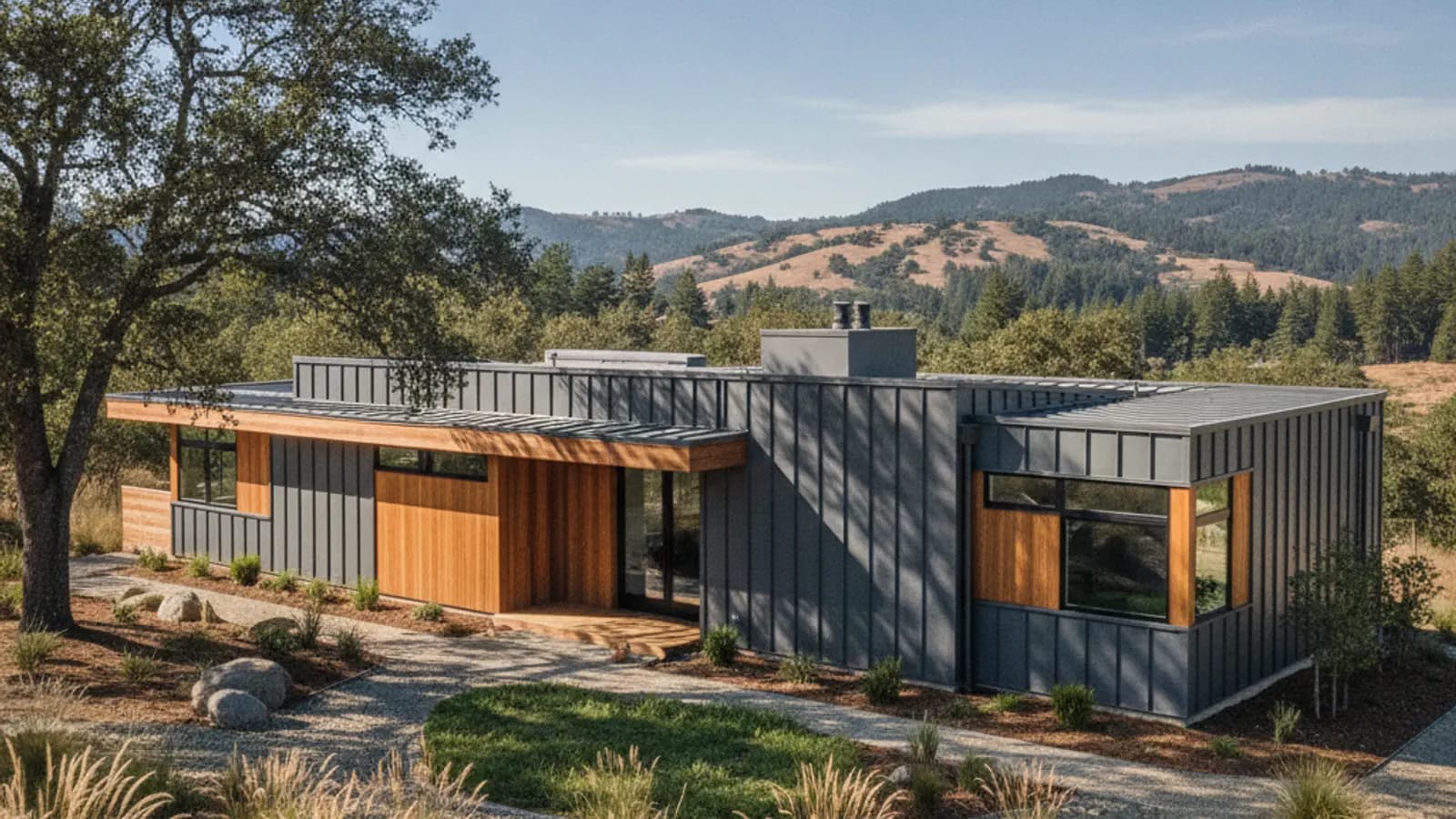
Metal siding has moved well beyond the corrugated barn look — today's steel and aluminum systems come in standing-seam, board-and-batten, Dutch-lap, and panel profiles with durable factory finishes, and they bring a genuinely strong set of advantages: they're non-combustible, long-lasting, nearly maintenance-free, and among the most recyclable cladding materials available. For California's wildfire-prone regions that non-combustibility is a real plus. But metal isn't the right answer for every home — it leans contemporary in look, it can dent, and it costs more than budget claddings. This guide gives an honest assessment of metal siding for a California home, including where it shines, where it doesn't, and how it compares to the fiber cement we install most.
What modern metal siding is
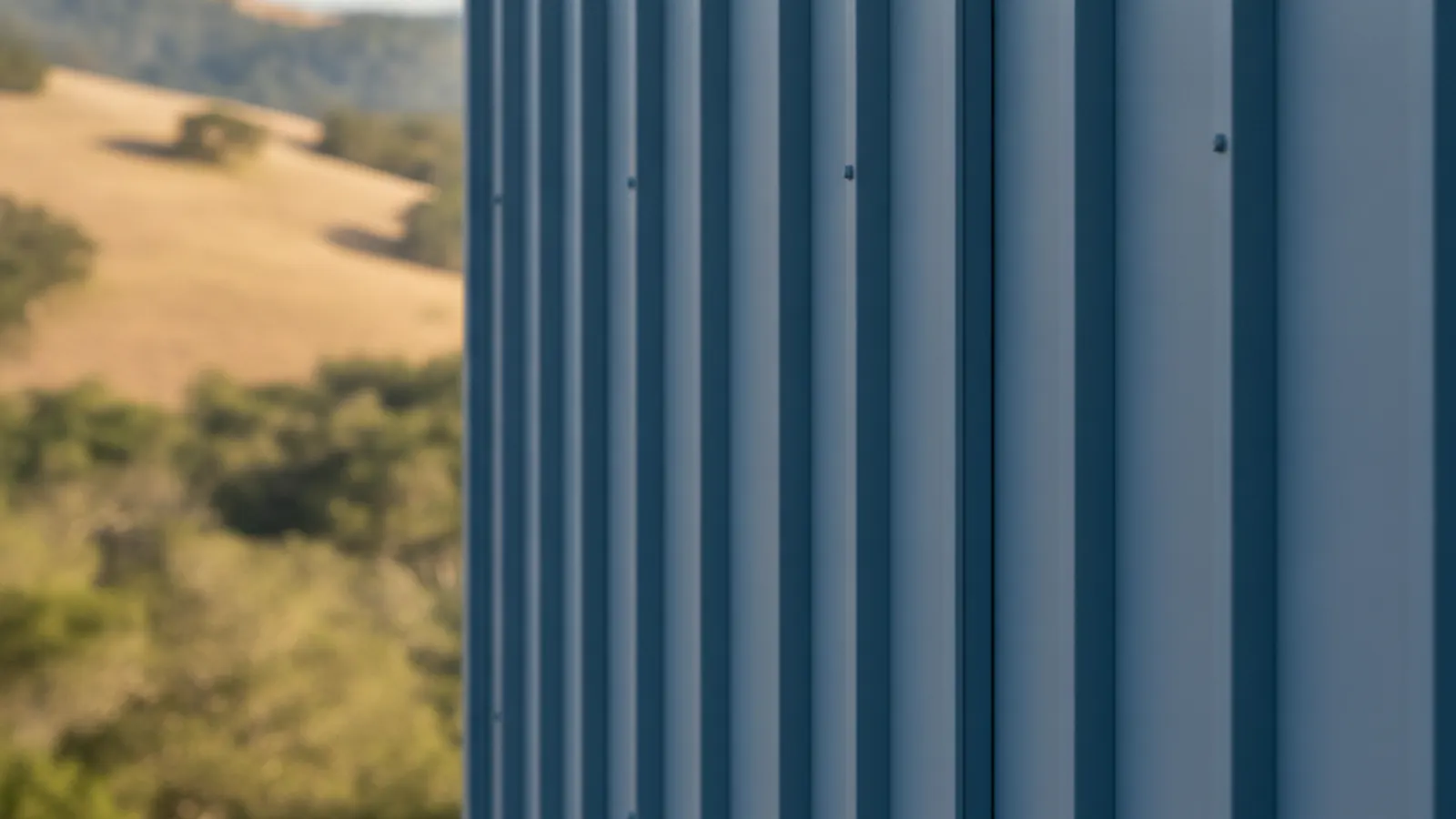
Metal siding today is primarily steel or aluminum formed into a range of profiles — standing-seam, corrugated, lap, Dutch-lap, and board-and-batten — and finished at the factory. Premium products pair a corrosion-resistant base (for example, galvanized steel with a zinc barrier) with a baked-on PVDF / Kynar 500 paint system for long-term color and weather durability, as manufacturers like Quality Edge and McElroy document. The Metal Construction Association describes metal panels as able to 'provide completely noncombustible surfaces,' nearly maintenance-free ('no painting or regular sealing required'), and exceptionally durable — 'metal won't crack, warp, or rot.' It's a legitimately premium cladding, and its aesthetic leans modern, which the MCA itself frames as 'high-end modern styles.'
Metal's genuine strengths
Three advantages stand out, and they're well-sourced. **Non-combustibility** — metal panels are noncombustible, which matters across California's wildfire regions (more in is metal siding good for California wildfire?). **Durability and low maintenance** — it won't crack, rot, or warp, carries decades-long warranties, and needs no repainting or sealing (MCA). **Recyclability** — this is metal's strongest edge: the MCA notes metal is 'the only known construction material that can be recycled and repurposed indefinitely,' is 'infinitely 100% recyclable with no loss in strength,' and that most metal panels contain at least 70% recycled content. For an environmentally-minded homeowner, that's a real, differentiated benefit no other cladding fully matches.
The honest trade-offs
Metal isn't perfect, and we won't pretend it is. **Denting** — any metal can dent if struck hard enough (hail, ladders, impacts), as Western States Metal Roofing notes, and this varies by metal: steel is stronger and more dent-resistant, while aluminum is lighter and dents more easily. **Cost** — metal siding is 'more expensive than many other types of siding' (Western States). **Corrosion context** — aluminum and stainless are corrosion-resistant, while steel relies on its galvanization and finish; near the immediate coast, salt exposure is a consideration for steel if the finish is breached. **Look** — metal's contemporary aesthetic suits modern and farmhouse-modern homes beautifully but doesn't fit every traditional California house. None of these is disqualifying; they're the honest counterweights to metal's strengths.
Metal vs. the fiber cement we install
Both metal and fiber cement are non-combustible, durable, low-maintenance claddings — so the choice between them is genuinely about fit, look, and preference rather than one being 'better.' Metal leans modern, is the most recyclable option, and can dent; fiber cement (such as James Hardie) offers traditional wood-look lap, panel, and shingle profiles, resists rot and pests, and chips rather than dents. We install fiber cement because it fits the traditional and transitional architecture of most Northern California homes and because of its availability and our familiarity with it — not because metal is a lesser product. If your home calls for a crisp, contemporary metal look, that's a legitimate choice, and we'll say so. The full head-to-head is in metal vs. fiber cement siding.
Steel vs. aluminum vs. fiber cement (qualitative)
| Factor | Steel | Aluminum | Fiber cement |
|---|---|---|---|
| Fire | Non-combustible | Non-combustible | Non-combustible (Class A) |
| Dent / impact | More dent-resistant | Dents more easily | Chips/cracks, won't dent |
| Corrosion | Relies on galvanization + finish | Won't rust | Won't rust |
| Maintenance | Low; no repaint | Low; finish can chalk | Low; periodic repaint |
| Look | Contemporary | Contemporary | Traditional wood-look |
| Cost tier | Premium | Premium | Mid-to-premium |
Key takeaways
- Modern metal siding (steel/aluminum) comes in standing-seam, board-and-batten, lap, and panel profiles with baked-on PVDF/Kynar finishes.
- Strengths (well-sourced): non-combustible, durable (won't crack/rot/warp), low-maintenance, and the most recyclable cladding (often 70%+ recycled content).
- Trade-offs: it can dent (aluminum more than steel), costs more than budget claddings, and leans contemporary in look.
- Steel and aluminum differ — steel is stronger/less dent-prone but relies on its finish vs. rust; aluminum is lighter and won't rust but dents more.
- Metal and fiber cement are both non-combustible — the choice is fit/look/preference, not one beating the other.
FAQ
Quick Answers
It can be an excellent choice, especially in wildfire-prone areas, because metal is non-combustible, durable, low-maintenance, and the most recyclable cladding available. The honest caveats are that it leans contemporary in look (it suits modern and farmhouse-modern homes more than traditional ones), it can dent, and it costs more than budget materials. For the right home and budget, metal is a legitimately premium, fire-smart option.
They serve different priorities. Steel is stronger and more dent-resistant, but relies on its galvanization and finish to resist rust if the surface is breached. Aluminum is lighter and won't rust, which suits coastal exposure, but it dents more easily and its finish can chalk over time. Neither is universally 'better' — steel for impact resistance, aluminum for corrosion resistance, with the factory finish quality mattering a lot either way.
Neither is objectively better — both are non-combustible, durable, low-maintenance claddings, so it comes down to fit and preference. Metal is the most recyclable option and leans modern but can dent; fiber cement offers traditional wood-look profiles and chips rather than dents. We install fiber cement because it suits most California architecture and our market, but metal is a fully legitimate choice for a contemporary home.
The surface does get hot, but it matters less than people expect for the building, because metal has very little thermal mass and the wall's actual performance is governed by the insulation and the assembly behind it rather than by the cladding's surface temperature. The more relevant heat consideration is expansion: metal moves measurably with temperature, so the fastening and joint detailing has to allow for that movement or the panels will oil-can and distort.
Aluminum dents readily and steel resists it considerably better, which is the main practical difference between the two for a homeowner. Where a wall is exposed to hail, thrown debris, ladder contact or sports, that difference is worth weighing. The other consideration is that a dent in metal is permanent and visible in raking light, where an impact on some other claddings can be filled and refinished.
Less than expected on a properly built wall. The impression comes from metal roofing and uninsulated agricultural buildings, where the panel is a thin skin over open framing. On a residential wall with sheathing, insulation and interior finish behind it, the sound transmission is not a common complaint. Where it does arise it usually points to panels fastened too loosely or a missing substrate rather than to the material itself.
Sources
Authoritative references
- Metal Construction Association — metal wall panels for homes (noncombustible, durable, recyclable)
- Metal Construction Association — environmental benefits of metal (infinitely recyclable)
- Quality Edge — steel siding profiles (galvanization + Kynar 500 finish, recyclable)
- McElroy Metal — metal wall panels (standing-seam, board-and-batten, Kynar 500 finishes)
- Western States Metal Roofing — metal siding pros & cons (denting, cost, corrosion)
- UC ANR Fire Network — Siding (metal among compliant noncombustible WUI options; joints & sheathing matter)
- James Hardie — performance & durability (noncombustible/Class A per ASTM E84; resists rot, pests, weather)
External links to government, code, and manufacturer sources. Sierra Siding is not affiliated with these organizations; references are provided for verification.