9 min read · Siding Replacement
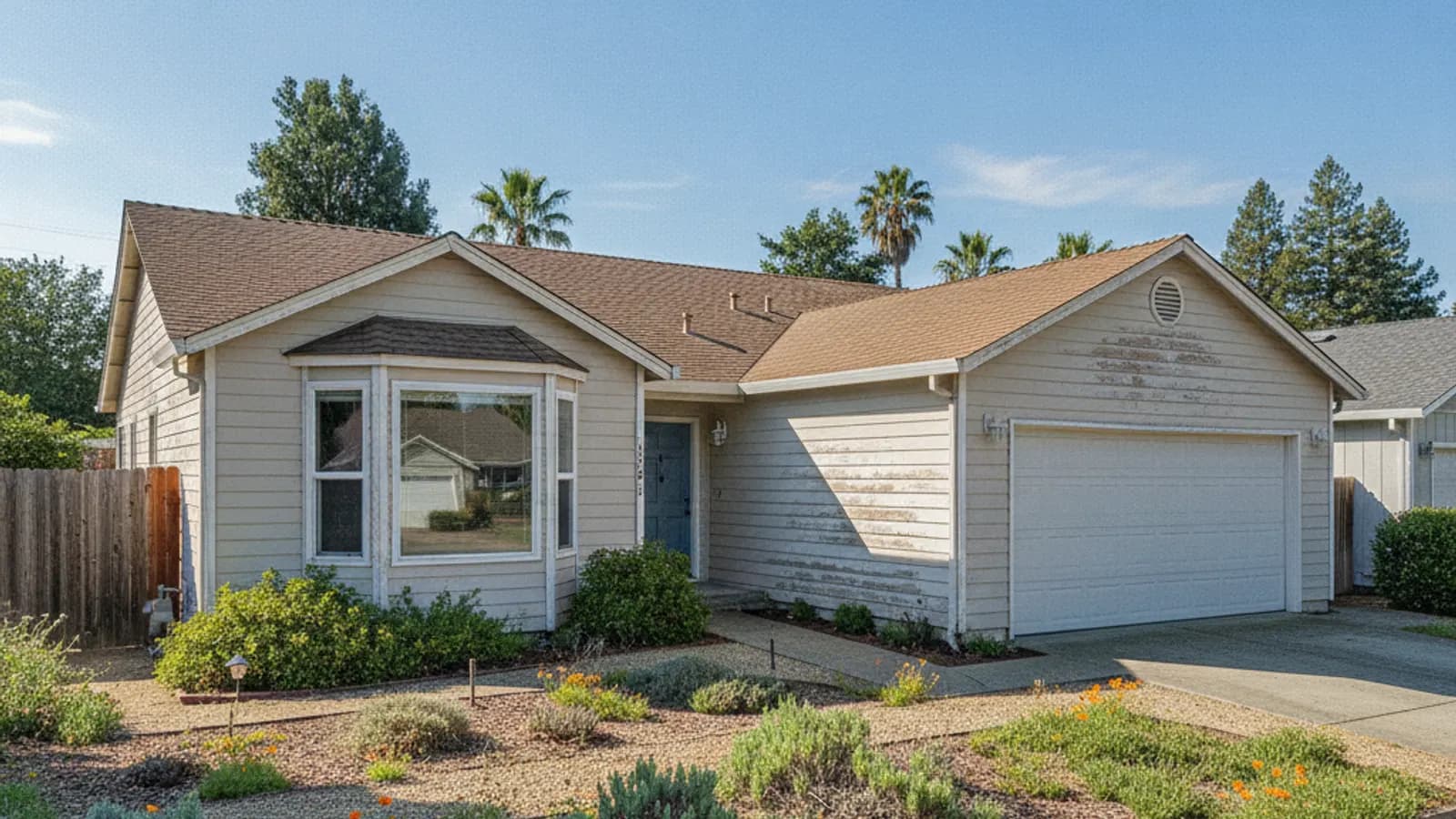
Vinyl siding is the most common new-home cladding in much of the country for good reasons — it's inexpensive, it never needs repainting, and it's genuinely low-maintenance. But California asks different questions of a wall than Ohio does, and that's where the honest conversation about vinyl gets interesting. Intense valley sun softens and fades it, reflected glare from energy-efficient windows can distort it, and in wildfire-exposed areas its combustibility takes it off the table entirely. None of that makes vinyl 'bad' — in a low-fire, moderate-climate setting it can serve fine — but it does mean the keep-or-replace decision in California turns on your specific climate and fire exposure. This hub lays out vinyl's real strengths and its California-specific limits, and points to the deeper guides on each.
What vinyl siding is — and its genuine strengths
Vinyl siding is a cladding made primarily of polyvinyl chloride (PVC), as the Polymeric Exterior Products Association (PEPA, formerly the Vinyl Siding Institute) describes it. Its appeal is real and worth stating plainly: it's among the lowest-cost claddings, it never needs painting or staining, and it resists moisture and rot. For budget-sensitive projects in mild climates, those are legitimate advantages, and vinyl has been the most common new-home siding in the U.S. since the mid-1990s. We're not here to bash it. The question isn't whether vinyl is a valid product in general — it is — but whether it's the right product for your California home's climate and fire exposure.
Where California changes the math
Two California realities reshape the vinyl decision. **Heat:** vinyl expands and contracts with temperature more than any other common cladding, and dark colors begin to soften around 160–165°F (a figure the Vinyl Siding Institute has cited); in addition, sunlight reflected and focused off energy-efficient low-E windows has been measured above 200°F at its point of focus — enough to distort vinyl — though, fairly, that reflected-sunlight effect is conditional and comparatively rarer in Western states. Intense UV also fades vinyl over time. **Wildfire:** vinyl is combustible, and in California's Wildland-Urban Interface zones that's decisive — more on both below in is vinyl siding good for California's heat and wildfire?. For homes outside fire zones and with moderate exposure, these factors matter far less.
Keep it or replace it — the honest decision
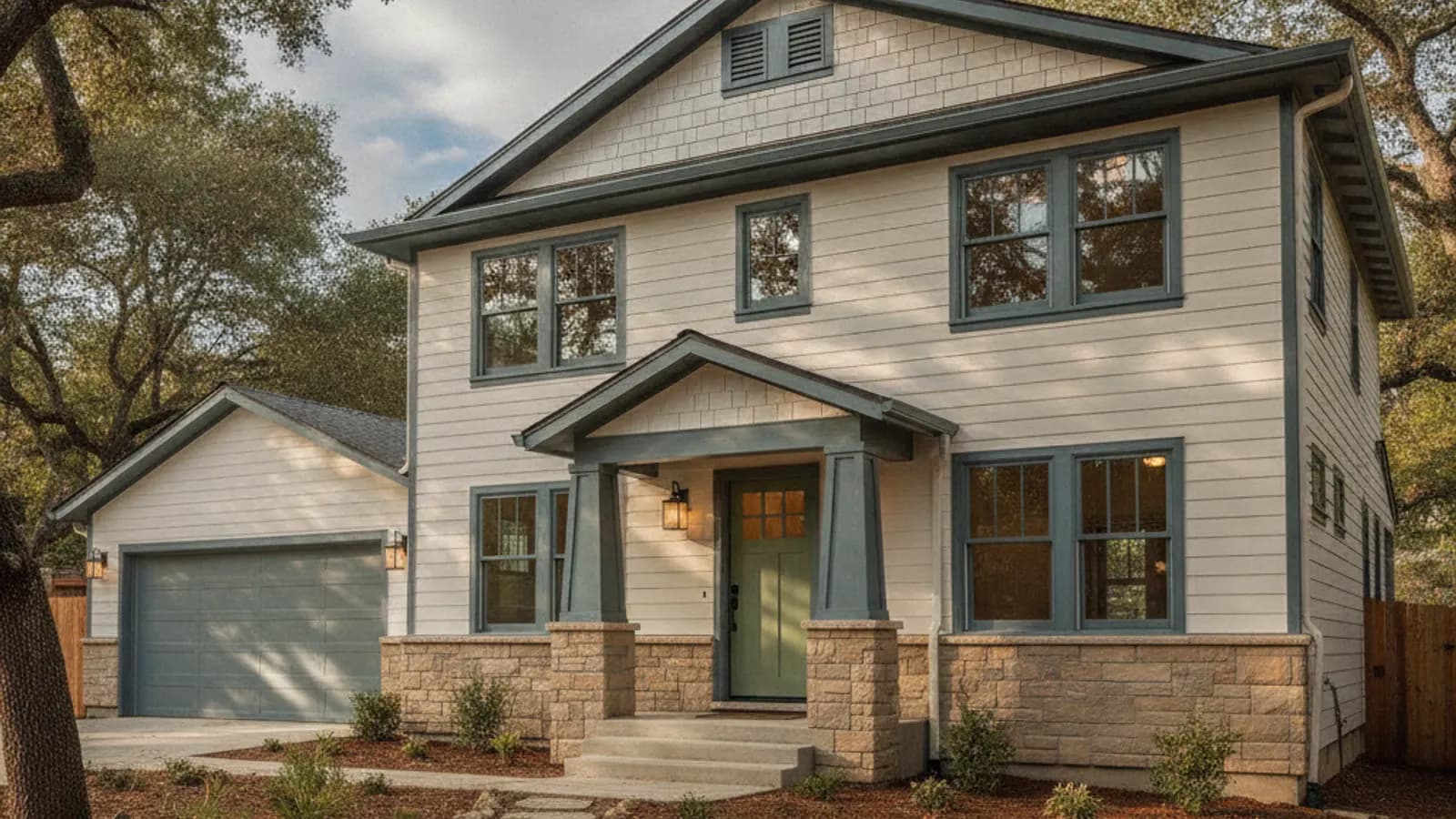
**Keeping vinyl** is defensible when your home is in a low fire-hazard area, your vinyl is intact and not badly faded or distorted, and budget is the priority. **Replacing it** earns its place when: you're in a wildfire-exposed (WUI-code) zone where noncombustible cladding is required; your vinyl is warped, melted, faded, or cracked; or you simply want the upgraded look and longevity of a premium material. When the decision is to replace, see replacing vinyl siding in California. The common destination is non-combustible fiber cement, which is dimensionally stable in heat and carries a Class A fire rating — but the right answer depends entirely on your fire zone and goals, not a blanket verdict against vinyl.
What replaces vinyl in California
For most California homeowners moving off vinyl — especially in our heat- and fire-prone regions — the destination is non-combustible fiber cement (such as James Hardie), which James Hardie notes is built to withstand extreme heat and UV and is noncombustible with a Class A fire rating (per ASTM E84). It trades vinyl's rock-bottom price for dimensional stability in valley heat, a factory finish that resists fading, and the fire performance that matters in the WUI. It costs more than vinyl, and we won't pretend otherwise — but in California's climate and fire context, that premium often buys real, relevant durability. Compare the two directly in our Hardie vs. vinyl deep comparison and the broader siding types guide.
Key takeaways
- Vinyl (PVC) is a legitimate low-cost, no-repaint, low-maintenance cladding — fine in mild, low-fire settings.
- California heat softens dark vinyl (~160–165°F per VSI), reflected low-E window glare can distort it (conditional), and UV fades it.
- In wildfire (WUI-code) zones, vinyl's combustibility is decisive — noncombustible cladding is required there.
- Keep sound vinyl in low-fire areas on a budget; replace it for fire zones, heat damage, or a longevity upgrade.
- The common replacement is non-combustible fiber cement — dimensionally stable in heat, Class A fire-rated, but pricier.
FAQ
Quick Answers
Not categorically — vinyl is a legitimate budget cladding that's low-maintenance and never needs repainting. But California's intense heat (which softens and fades it) and its wildfire zones (where its combustibility is disqualifying under the WUI code) make it a poorer fit than in mild, low-fire climates. In a low fire-hazard area with moderate sun exposure, sound vinyl can serve fine; in the WUI, it isn't an option.
It can distort under enough heat. Dark vinyl begins to soften around 160–165°F (per the Vinyl Siding Institute), and sunlight reflected and focused off energy-efficient low-E windows has been measured above 200°F at its focal point — enough to distort vinyl. That reflected-sunlight effect is conditional (it needs specific window, angle, and proximity conditions) and comparatively rarer in the West, but general heat softening of dark colors and UV fading are real California considerations.
It depends on your fire zone and goals. In a wildfire-exposed (the WUI code) area, yes — noncombustible cladding like fiber cement is required, and vinyl isn't compliant on its own. Outside fire zones, replacement is more of a value-and-durability choice: fiber cement is dimensionally stable in heat, resists fading, and lasts longer, but costs more than vinyl. If your vinyl is sound and you're in a low-fire area on a budget, keeping it is reasonable.
Usually because it was fastened too tightly. Vinyl is designed to hang loosely and move with temperature — panels expand and contract measurably across a California summer day — and nails driven home rather than left slightly proud prevent that movement, so the panel buckles between fasteners instead. It can also follow an uneven substrate. Either way it is an installation characteristic rather than a product defect, and it does not resolve on its own.
It can, with important limits. The coating has to be formulated for vinyl, and critically the color cannot be significantly darker than the original — a darker color absorbs more heat than the panel was designed to handle and can cause it to distort. Painting also generally ends any remaining manufacturer coverage. Where vinyl is sound and simply dated, it is a legitimate option; where it is brittle or already distorted, it is money spent on a wall that is finishing.
It varies by market segment more than most cladding questions do. In value-conscious markets it is unremarkable and buyers do not react to it. In higher-end neighbourhoods, and particularly in wildfire-exposed areas where buyers are increasingly aware of exterior materials, it can be a point of negotiation. How it lands in a specific transaction is a question for your agent — what a contractor can tell you is the material's actual performance, which is a separate matter from how it is perceived.
Sources
Authoritative references
- Polymeric Exterior Products Association (PEPA, formerly the Vinyl Siding Institute) — polymeric/vinyl siding (PVC)
- NAHB — Sunlight Reflected from Double-Paned Low-E Windows and Damage to Vinyl Siding (heat-distortion phenomenon)
- UC ANR Fire Network — Siding (vinyl combustibility & sheathing dependence; noncombustible options)
- 2025 California WUI Code §504.5.2 — exterior wall coverings must be noncombustible or ignition-resistant (via UpCodes)
- James Hardie — performance & durability (noncombustible/Class A per ASTM E84; built for extreme heat & UV)
External links to government, code, and manufacturer sources. Sierra Siding is not affiliated with these organizations; references are provided for verification.