
8 min read · Siding Replacement
Replacing vinyl siding is usually a more straightforward project than re-siding stucco or removing asbestos, but it still deserves to be done right — and for many California homeowners, it's the moment to move from a budget cladding to one matched to our heat and fire reality. People replace vinyl for a handful of honest reasons: it's warped, faded, or cracked; they're in a wildfire zone where vinyl isn't compliant; or they simply want the look and longevity of a premium material. This guide covers why homeowners make the switch, how the project works, and what genuinely changes when you go from vinyl to fiber cement.
Why California homeowners replace vinyl
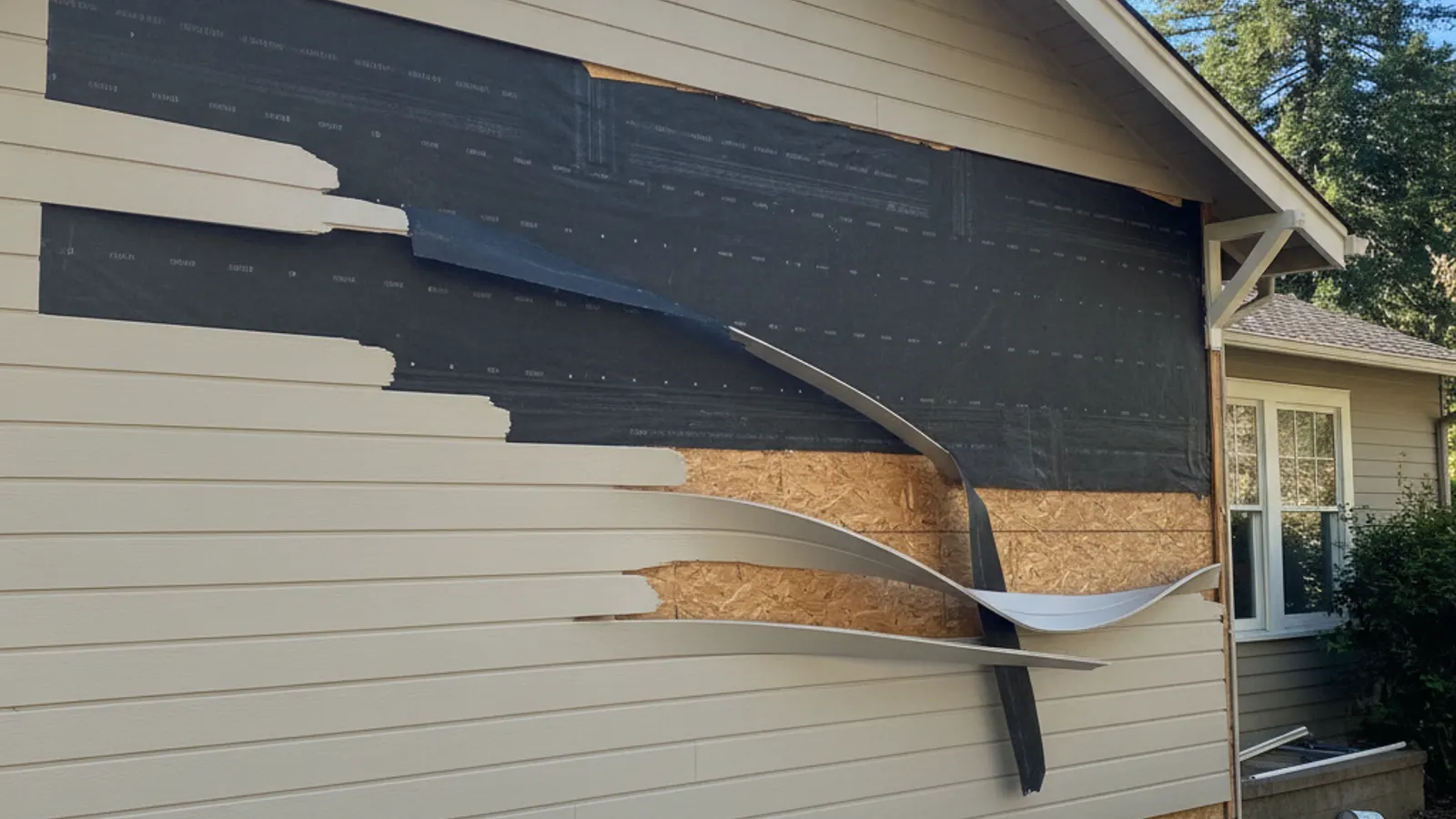
The reasons cluster into three. **Damage and aging:** vinyl warps and softens in intense heat (dark colors soften around 160–165°F per the Vinyl Siding Institute), fades under UV, and can crack — and unlike paint on wood, you can't refinish vinyl, so a degraded panel means replacement. **Fire-zone requirements:** in a Wildland-Urban Interface area, the WUI code requires noncombustible or ignition-resistant cladding, and vinyl on its own doesn't qualify — a decisive reason for foothill, wine-country, and mountain homeowners. **Upgrade:** many simply want the substance, dimensional stability, and curb appeal of fiber cement or another premium material over vinyl's lightweight look. None of these is 'vinyl failed you'; they're reasons the next material is a better fit for the home.
How the project works
A vinyl-to-fiber-cement re-side is a tear-off, and that's a feature, not a hassle. The sequence: (1) remove the vinyl and its furring/trim; (2) inspect the sheathing and the existing weather-resistive barrier — vinyl is often installed over older or minimal house wrap, so this is the chance to find and fix any moisture issues; (3) install a continuous, correctly lapped weather-resistive barrier integrated with new flashing at every window, door, and penetration; and (4) install the fiber cement with the trim, clearances, and fastening details that determine longevity. Because vinyl is lightweight and surface-mounted, removal is relatively clean, which often makes vinyl one of the more cost-efficient sidings to replace. We pull the permit and coordinate inspections as part of the job.
What changes when you go from vinyl to fiber cement
The visible change is substance and finish: you move from thin, surface-mounted PVC panels to dimensionally stable fiber-cement boards with crisp lap, panel, or shingle profiles and a factory color that resists California UV better than vinyl holds its pigment. The performance changes matter more. Fiber cement is non-combustible — James Hardie publishes that its products are noncombustible with a Class A fire rating (per ASTM E84) — which is the decisive upgrade in wildfire country, where vinyl's combustibility disqualifies it. And because it doesn't soften or distort in heat the way vinyl can, it holds its shape through valley summers. You're trading the lowest price for heat stability, fire performance, and a longer-lasting finish. Weigh it directly in our Hardie vs. vinyl comparison.
Vinyl vs. fiber cement (qualitative)
| Factor | Vinyl (PVC) | Fiber cement |
|---|---|---|
| Up-front cost | Lowest | Higher |
| Heat behavior | Softens/distorts; expands & contracts most | Dimensionally stable in heat |
| Fire | Combustible | Non-combustible (Class A) |
| WUI / the WUI code | Not compliant on its own | Compliant noncombustible option |
| Finish | Through-color; fades over time | Factory finish; strong fade resistance |
Key takeaways
- Homeowners replace vinyl for heat/UV damage (it can't be refinished), fire-zone requirements, or a longevity upgrade.
- Vinyl-to-fiber-cement is a clean tear-off — lightweight removal makes it one of the more cost-efficient re-sides.
- The tear-off is the chance to rebuild the weather-resistive barrier and flashing behind the cladding.
- Fiber cement is non-combustible (Class A / ASTM E84) — the decisive upgrade in wildfire zones where vinyl isn't compliant.
- You trade vinyl's lowest price for heat stability, fire performance, and a longer-lasting finish.
FAQ
Quick Answers
Relatively, yes. Vinyl is lightweight and surface-mounted, so removing it is cleaner and quicker than tearing off stucco or abating asbestos, which often makes vinyl one of the more cost-efficient sidings to replace. The work that matters is what happens after removal — inspecting the sheathing and installing a proper weather-resistive barrier and flashing before the new siding goes on.
It's almost always better to remove the vinyl than to side over it. Vinyl is a thin, surface-mounted panel that doesn't make a sound nailing base, and going over it skips the chance to inspect the sheathing and install a proper, correctly flashed weather-resistive barrier. Tear-off is the clean, durable approach — and because vinyl is light, removal is relatively inexpensive.
It costs more than the vinyl did, since fiber cement is a premium material and the install is more involved — but vinyl's easy removal keeps the demolition portion low compared to stucco or asbestos. We don't quote a number sight-unseen; every wall is scoped on site for size, condition, the state of the weather barrier, and any wildfire requirements. See our cost resources for planning ranges.
Frequently the original cladding, because vinyl was often installed over existing wood or hardboard rather than instead of it. That matters for scope: there may be two layers to remove, the original material may have been deteriorating quietly underneath, and the wall may have a barrier that predates both. It is also common to find that the vinyl was installed with no separate weather-resistive barrier at all, on the assumption that the vinyl was the water control layer — which it is not.
Removal itself is not especially destructive — vinyl unclips and comes away readily, which is one of its genuine advantages. The damage that gets discovered is damage that was already there: fastener penetrations through whatever barrier existed, and moisture damage in areas that could not dry because the vinyl reduced airflow while the assembly behind it stayed damp. Removal reveals rather than causes it.
Matching is the difficulty. Vinyl colors fade with ultraviolet exposure and profiles are discontinued regularly, so a new panel next to twenty-year-old panels rarely matches even when the profile and color name are identical. Where spare original panels were left in the garage — which was common practice — those are worth using. Otherwise partial repair on an aged vinyl wall usually looks like a repair.
Sources
Authoritative references
- Polymeric Exterior Products Association (PEPA, formerly the Vinyl Siding Institute) — polymeric/vinyl siding (PVC)
- NAHB — Sunlight Reflected from Double-Paned Low-E Windows and Damage to Vinyl Siding (heat-distortion phenomenon)
- James Hardie — performance & durability (noncombustible/Class A per ASTM E84; built for extreme heat & UV)
- 2025 California WUI Code §504.5.2 — exterior wall coverings must be noncombustible or ignition-resistant (via UpCodes)
External links to government, code, and manufacturer sources. Sierra Siding is not affiliated with these organizations; references are provided for verification.