
9 min read · Siding Replacement
A crack in your stucco is the single most common reason California homeowners call a siding contractor — and most of the time, the honest answer is 'that's normal.' The Stucco Manufacturers Association is explicit that even correctly installed stucco cracks, and that minor cracking at window and door corners 'should be anticipated.' But some cracks do signal a real problem, and the difference is about pattern, width, location, and whether water is getting behind the wall — not the mere presence of a line. This guide walks through the crack types, what each typically means, and how to decide between a patch, a recoat, or a full re-side.
The crack types — and what each usually means
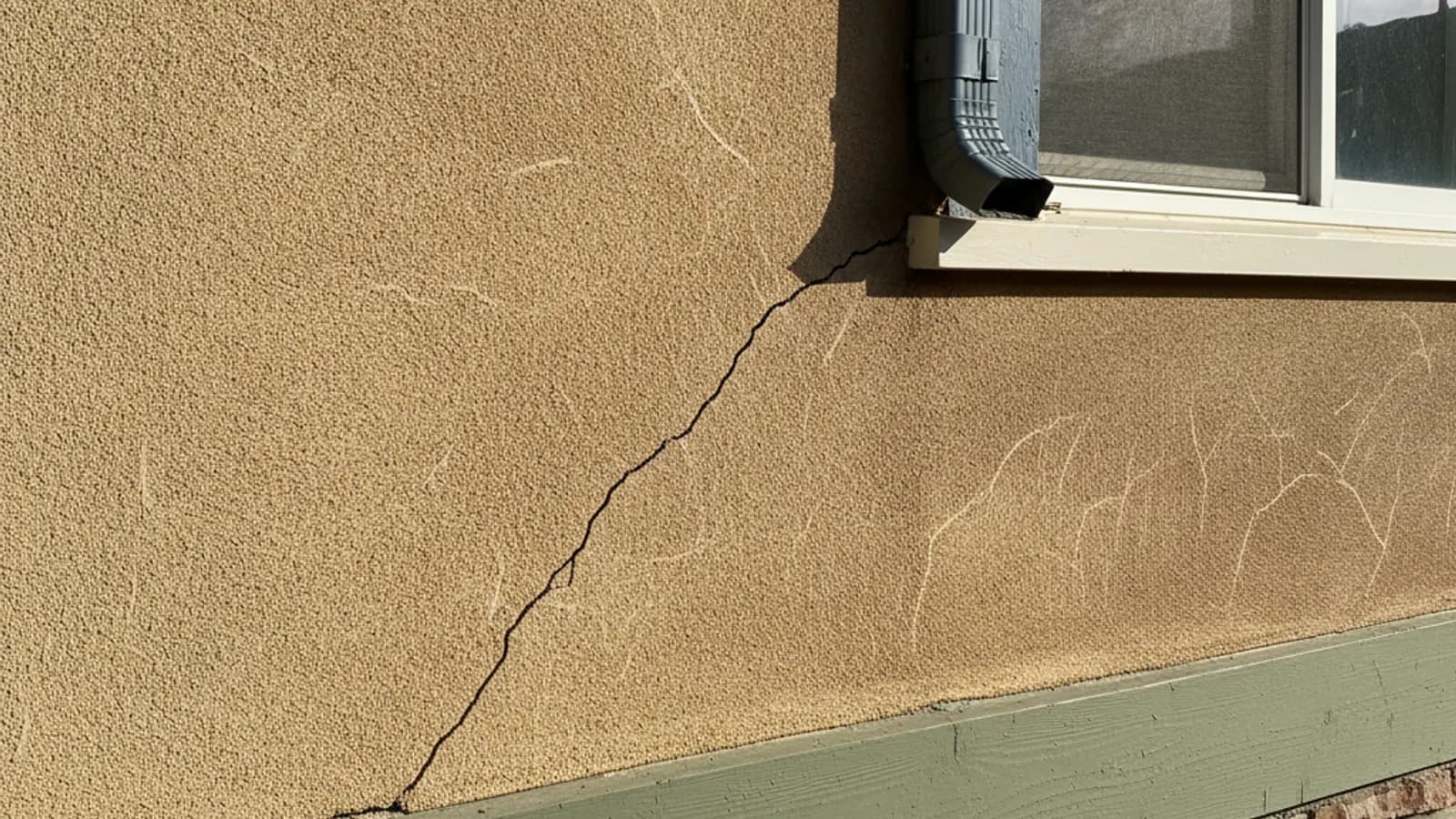
**Hairline / shrinkage cracks:** fine cracks that appear as the cement plaster cures and excess water evaporates, often on hot, windy days. Per the SMA these are expected and generally not a defect. **Map (pattern) cracking:** a web of interconnected cracks, frequently tied to curing or mix issues. **Diagonal cracks at window and door corners:** stress concentrates at openings; the SMA says minor cracking there 'should be anticipated.' **Structural cracks:** wider cracks from ground movement, fill-versus-cut settlement, seismic activity, or frame movement — these are the ones to take seriously, especially if they recur after being patched. Stucco, the SMA and PCA note, is not designed to resist building movement.
Normal vs. concerning: how to read a crack
Three signals separate cosmetic from concerning. **Width:** the SMA treats very fine hairline cracks as not worth patching, while wider cracks (roughly 1/16 inch and up, appearing early) warrant repair — but there's no single universal 'bad above X' rule; width is one factor, not the verdict. **Recurrence:** a crack that keeps reopening after a quality patch is the tell-tale sign of ongoing movement or a substrate problem, not a surface issue. **Moisture:** staining, soft spots, efflorescence, or interior signs near a crack mean water may be getting behind the stucco — the real risk, since Building Science Corp. notes stucco passes water and the wall depends on the drainage plane behind it to get that water back out. Location and pattern matter more than any single measurement.

Repair, recoat, or re-side — the decision
**Patch/repair** when cracks are isolated, stable, and the stucco and assembly behind are otherwise sound. **Recoat / fog coat** when there's widespread cosmetic crazing but the wall is structurally fine and you want a uniform refreshed surface. **Re-side** when cracks are widespread and recurring, when there's evidence of moisture behind the stucco or hidden damage, or when the assembly lacks proper drainage and you want to rebuild it — see replacing stucco with fiber cement. The judgment isn't about the crack alone; it's about what the crack is telling you about the wall. Our siding repair team can assess it on site and give you the honest call rather than defaulting to the biggest job.
What control joints and weep screeds have to do with it
Two details strongly influence whether stucco cracks and whether cracks cause damage. Control joints relieve shrinkage stress; the SMA notes that following ASTM C1063 control-joint spacing (panels capped around 144 square feet) reduces cracking — though it's 'no guarantee of crack-free' stucco. And the weep screed at the base of the wall, required by California Residential Code R703.7.2.1, lets incidental moisture drain out rather than wicking up into the plaster and framing. Homes missing a weep screed, or with poorly placed control joints, tend to crack more and handle water worse — and that history often informs whether repair or a rebuilt re-side is the smarter long-term move.
Key takeaways
- Most hairline and corner cracks are normal — the SMA says occasional hairline cracking isn't a defect.
- Pattern, width, recurrence, and signs of moisture — not the mere presence of a crack — determine whether it's serious.
- A crack that keeps reopening after a quality patch signals movement or a substrate problem, not a surface issue.
- Patch isolated stable cracks; recoat cosmetic crazing; re-side when cracks are systemic or water is getting behind the wall.
- Missing weep screeds (CRC R703.7.2.1) or poor control-joint spacing make cracking and water damage more likely.
FAQ
Quick Answers
Yes. The Stucco Manufacturers Association states that even correctly installed stucco cracks, and that minor cracking at window and door corners should be anticipated. Fine shrinkage cracks form as the cement cures and are usually a cosmetic, not structural, matter.
When they're widespread and recurring after repair, when there's evidence of moisture getting behind the wall (staining, soft spots, interior signs), or when the assembly behind lacks proper drainage and you want to rebuild it. A single stable hairline crack almost never justifies a re-side; a pattern of recurring cracks plus moisture signs often does. An on-site assessment is the honest way to tell.
Isolated, stable cracks can be patched and the wall recoated or fog-coated for a uniform finish. But patching won't hold on a crack that's driven by ongoing movement — it'll reopen — and paint over a crack that's admitting water just hides a moisture problem. The patch-vs-rebuild call depends on whether the crack is cosmetic or a symptom of something behind the wall.
Fine, evenly distributed hairline cracking is generally shrinkage and is normal. What warrants closer attention is cracking that runs diagonally from the corners of window and door openings, cracks that are wider at one end than the other, cracks that step along a line, and any crack that has displacement — where one side sits proud of the other. Those patterns can indicate movement rather than shrinkage, and movement is a question for a structural professional rather than a cladding contractor.
It bridges them, which is genuinely useful for fine shrinkage cracking and genuinely misleading for anything moving. An elastomeric coating is flexible enough to span a hairline crack and keep water out of it, so on a stable wall it is a reasonable maintenance measure. Over an active crack it will re-crack, and over a wall with a drainage problem it can make things worse by reducing the wall's ability to dry. It is a coating decision, not a repair of the underlying cause.
Some do and many do not, which is why blanket answers are unhelpful. Fine shrinkage cracks in a wall with a sound drainage plane behind it are largely cosmetic — water that gets through reaches the barrier and drains. The problem is that you cannot tell from outside whether the drainage plane behind is intact, and on older stucco it frequently is not. That is why persistent interior symptoms matter more as evidence than the appearance of the cracks themselves.
Sources
Authoritative references
- Stucco Manufacturers Association — Stucco Crack Policy
- Stucco Manufacturers Association — One-Piece Control Joints in Stucco (ASTM C1063 spacing)
- Stucco Manufacturers Association — Foundation Weep Screed Bulletin
- California Residential Code R703.7.2.1 — Weep screeds (via UpCodes)
- Building Science Corp. — BSD-105: Understanding Drainage Planes
External links to government, code, and manufacturer sources. Sierra Siding is not affiliated with these organizations; references are provided for verification.