
9 min read · Siding Replacement
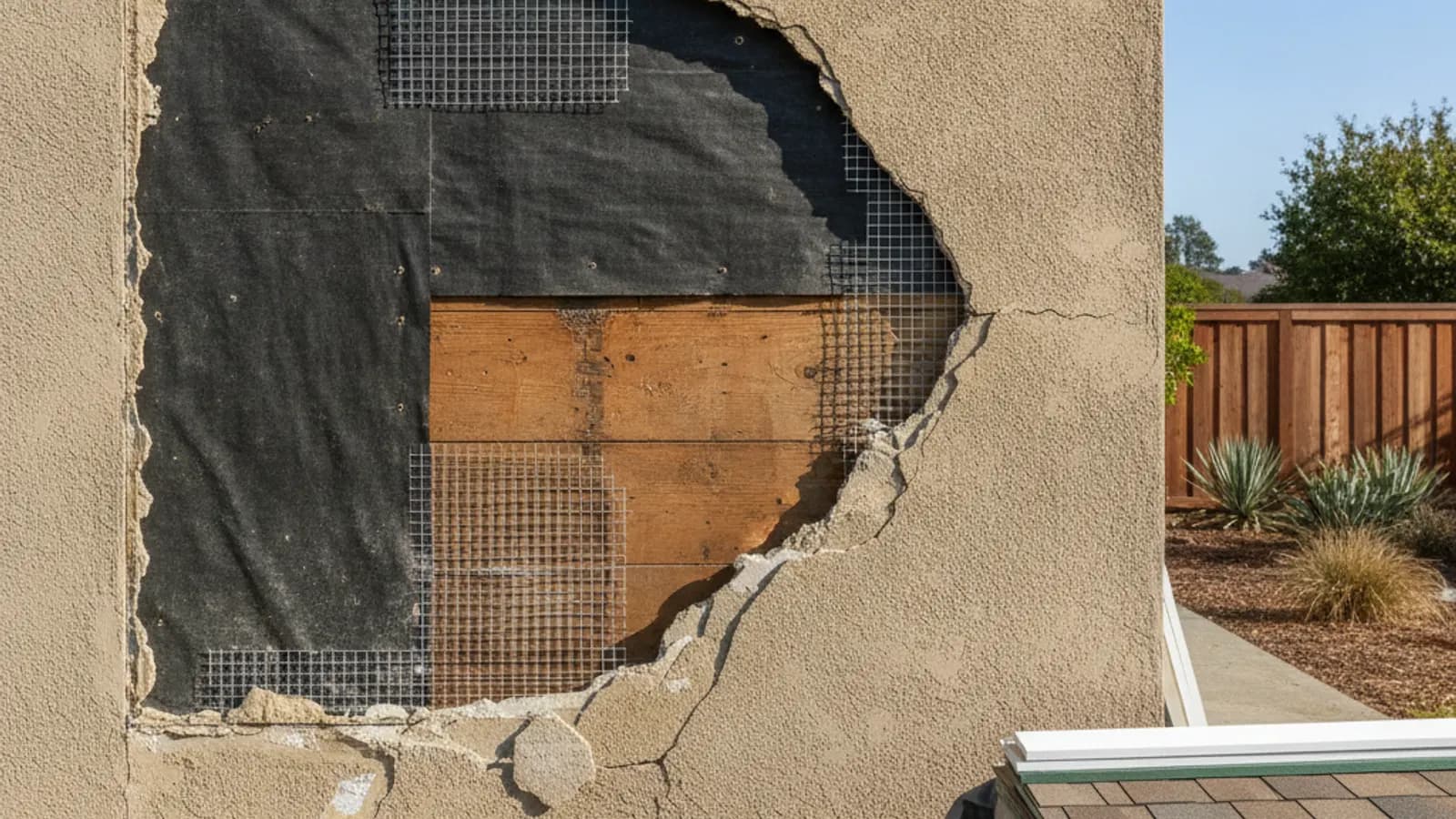
Replacing stucco with fiber cement is one of the most transformative exterior projects a California homeowner can take on — and one of the most misunderstood. It isn't just a new look; done properly, it rebuilds the entire water-management assembly behind the cladding, which is often where an aging stucco wall is quietly failing. James Hardie's own guidance is direct about this: with stucco, plan for a full tear-off, because stucco 'can hide moisture damage and structural issues beneath the surface,' and removal is the best chance to find and fix problems. This guide covers why homeowners make the switch, how the project actually works, and what genuinely changes when you go from stucco to fiber cement.
Why California homeowners replace stucco with fiber cement
The reasons cluster into four: persistent or recurring cracking that patching no longer keeps ahead of; suspected or confirmed moisture damage behind the stucco; a desire for a different architectural look — crisp lap, board-and-batten, or shingle profiles stucco can't produce; and lower long-term maintenance with a factory-applied finish. Fiber cement is non-combustible, resists moisture and pests, and as James Hardie notes, is engineered by climate region. It's worth being precise, though: fiber cement is also a 'reservoir cladding' that absorbs some water (per Building Science Corp.), so the win isn't that it's waterproof — it's durability, a Class A fire rating, lower upkeep, and the rebuilt assembly behind it.
How the project actually works
A proper stucco-to-fiber-cement re-side is a tear-off, not an overlay. The sequence: (1) remove the stucco and its metal lath down to the sheathing; (2) inspect and repair — James Hardie calls removal 'the best opportunity to discover and repair damage,' which on a stucco home commonly means hidden moisture or framing issues; (3) install a continuous water-resistive barrier (house wrap) integrated with new flashing at every window, door, and penetration — the actual waterproofing layer of the wall, per Building Science Corp.; (4) install the fiber cement (for example HardiePlank lap), with the trim, clearances, and flashing details that determine whether it lasts decades. The tear-off is also when window depths and trim get re-detailed cleanly, which an overlay struggles with.

What actually changes versus a stucco wall
The visible change is the profile and finish — you move from a monolithic troweled surface to defined lap, panel, or shingle lines with a factory color that resists valley UV better than field paint. The invisible change matters more: a fresh, correctly lapped WRB and flashing, and (where the assembly calls for it) a drainage gap, replace whatever was behind the old stucco. You're not buying a waterproof wall — no cladding is — you're buying a rebuilt, drainable, low-maintenance, Class A fire-rated assembly. For the head-to-head material trade-offs, see our fiber cement vs. stucco guide; for how this fits the broader re-side picture, the legacy-siding replacement hub.
Cost, permits, and getting an honest scope
A stucco-to-fiber-cement re-side costs more than re-siding over wood, because removing stucco and lath is labor-intensive and disposal adds up — but it buys the inspection and the rebuilt assembly that make the result durable. It's permitted work in most California jurisdictions, and we pull the permit and coordinate inspections as part of the job. We won't quote a number sight-unseen; every wall is scoped on site for stucco condition, hidden damage, window/door detailing, and wildfire requirements. For planning ranges, see our cost resources, and when you're ready we'll scope it honestly on a free estimate.
Stucco vs. fiber cement (qualitative)
| Factor | Traditional stucco | Fiber cement |
|---|---|---|
| Look | Monolithic troweled finish | Lap, panel, or shingle profiles |
| Finish upkeep | Recoat/repaint; patch cracks | Long-life factory finish available |
| Cracking | Expected; can admit water | Boards don't crack like plaster |
| Fire | Fire-resistant | Non-combustible (Class A) |
| Re-side benefit | — | Rebuilds the WRB/flashing assembly |
Key takeaways
- Replacing stucco with fiber cement is a tear-off, not an overlay — that's the point: it rebuilds the water-management assembly.
- James Hardie advises full tear-off for stucco because it can hide moisture and structural damage found only on removal.
- The real upgrade is a fresh WRB + flashing (and drainage gap where called for), plus a low-maintenance Class A finish.
- Fiber cement isn't waterproof — it's a reservoir cladding too; the win is durability, upkeep, fire rating, and the rebuilt wall.
- It's permitted work; scope is set on site for stucco condition, hidden damage, and wildfire requirements.
FAQ
Quick Answers
It's strongly preferred, and James Hardie recommends a full tear-off for stucco specifically. Removing the stucco and lath lets us inspect for hidden moisture or structural damage and install a fresh, correctly flashed water-resistive barrier. Siding over stucco is sometimes possible but skips that inspection and complicates flashing and window depths — we cover the trade-offs in our siding-over-stucco guide.
If your stucco is cracking systemically, hiding moisture damage, or you want a different look and lower maintenance, yes — a fiber-cement re-side rebuilds the whole assembly and gives you a durable, Class A fire-rated, factory-finished exterior. If your stucco is sound and you're happy with it, a repair or recoat may be the better-value move. We'll give you a straight recommendation.
A proper tear-off and re-side directly addresses the most common cause — a failed or missing water-management layer behind the old stucco — by rebuilding the WRB, flashing, and drainage. No cladding is waterproof, so the goal is a wall that drains and dries, not one that never gets wet. If there's existing rot or framing damage, that's repaired during the tear-off before the new siding goes on.
Typically lath, a layer or two of building paper serving as the drainage plane, and then sheathing or in older construction sometimes the framing itself with no sheathing at all. The condition of that paper is the thing that matters: on many older stucco houses it is torn, brittle or was never lapped correctly, which is often the real explanation for problems the owner blamed on the stucco. Removal is the only point at which any of it can be assessed.
Stucco itself is not usually carrying structural load, but the removal can reveal things that do matter — sheathing in poor condition, or in older homes an absence of sheathing where the lath was fastened directly to framing. Where there is no sheathing, installing it becomes part of the job. That is a scope and cost question rather than a safety alarm, and it is one of the reasons a re-clad quote on a stucco house should carry an explicit contingency.
This is the detail that decides the outcome. Windows in stucco walls are usually set with the stucco returning into the frame, so removing it exposes the rough opening and the original flashing — or the absence of it. Replacing stucco with siding means the openings get properly flashed and cased, which is genuinely an improvement over most original stucco window details. It also means the window trim becomes a visible design decision rather than a plain return, so it is worth deciding deliberately.
Sources
Authoritative references
- James Hardie — From Stucco to Hardie fiber cement: a re-side story (tear-off & inspection)
- James Hardie — What to expect during your siding replacement project (WRB, inspection)
- Building Science Corp. — Info-301: Drainage Plane / Water-Resistive Barrier
- Building Science Corp. — Info-305: Reservoir Claddings (stucco absorbs & stores water)
- James Hardie — HardiePlank fiber cement lap siding (noncombustible, moisture- & pest-resistant)
External links to government, code, and manufacturer sources. Sierra Siding is not affiliated with these organizations; references are provided for verification.