
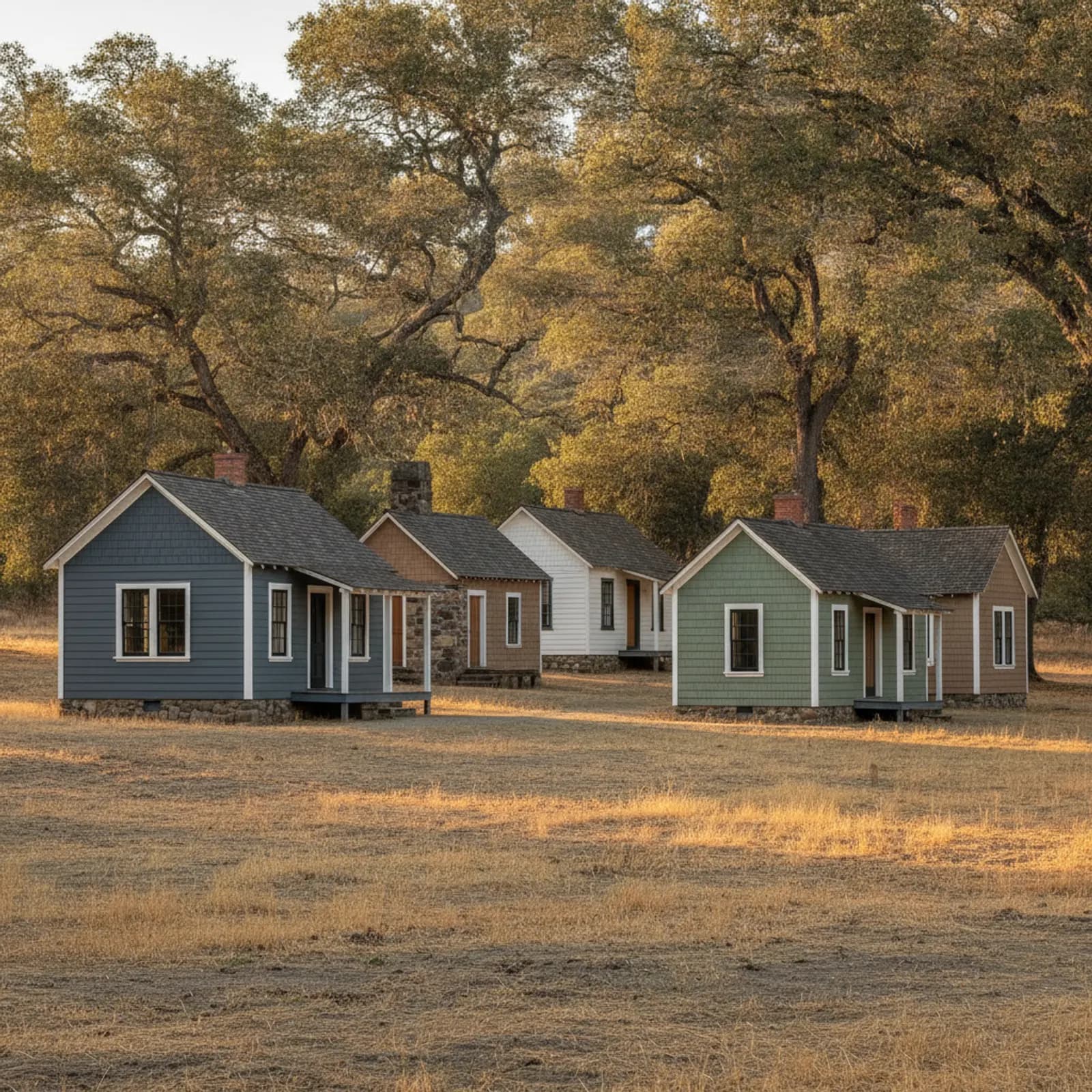
Fiber Cement Siding in Coloma
Coloma sits in the South Fork American River canyon where the Gold Rush began, and its exterior problem is shaped by terrain more than by fuel type. Fire in a canyon runs uphill fast through oak and cured grass, arriving with far more energy than it would on flat ground — so the elevations facing downslope carry a genuinely different exposure from the rest of the house.
Underneath that sits a second condition the canyon-rim towns do not share: river damp on the flat. A Coloma wall has to handle upslope fire on one side and moisture on the other, which is why fiber cement fits the town better than either wood or a purely fire-focused approach.
Canyon terrain decides which elevation matters
The physics of a canyon fire are worth understanding before choosing a spec. Flame moving up a slope preheats and dries the fuel above it, so it accelerates and arrives with more radiant energy than the same fire on level ground — and it puts that energy against the downhill face and the underside of a structure rather than distributing it evenly. On a Coloma property that means the downslope elevation, the eaves above it, and any deck or overhang on that side are the governing details. Fiber cement is non-combustible and Class A rated, which removes the wall from the equation. The detailing beneath and around it is where the rest of the work is.
River-flat moisture is a real second condition
Homes down on the river flat live in a different microclimate from the ones on the canyon wall. Proximity to the South Fork means higher humidity, slower drying on shaded elevations, and genuine splash and flood consideration on the lowest-lying parcels. That puts weight on the drainage plane and on bottom-course clearance — a wall that starts too close to grade on a river-flat lot will find trouble regardless of what it is made of. We treat the flat and the slope as two specifications on the same street rather than applying one template to the town.
Gold Rush-era buildings and what they need
Coloma holds genuinely historic structures alongside 1970s-through-1990s foothill ranch homes, and the two want different handling. On period buildings, narrow profiles and correctly proportioned trim carry the character, and the substrate question is separate from the appearance question — fiber cement can reproduce a historic profile while removing the combustible wall. On historic properties there may also be review or permitting considerations beyond the standard building permit, which is a question for El Dorado County and any applicable historic designation rather than something we should assert. Worth establishing before design, not after.
Where the money actually goes on a canyon lot
On a downslope Coloma parcel the highest-value work is frequently not the wall. Enclosing open eaves on the downhill side, upgrading vents to ember-resistant assemblies, dealing with a wood deck that overhangs the slope, and clearing fuel from the ground below the structure typically buy more risk reduction per dollar than re-cladding does. We will sequence a project that way and say so when it means a smaller job. Cladding is one layer of a whole-property defensible-space strategy; on canyon terrain the terrain itself is doing more of the talking than the material choice.
Why this matters in Coloma
- Specified for Sierra Foothills conditions
- fiber cement as the recommended system
- Correctly detailed weather-resistive barrier and flashing
- Installed by a crew with 20 years combined experience
Recommended systems for Coloma
- fiber cement
- James Hardie
- LP SmartSide
Fiber Cement Siding for Coloma homes
The full fiber cement siding approach — materials, weather-resistive detailing, and the manufacturer standards we install to — is covered on the main service page, then specified for Coloma's conditions on this one.
Our Coloma process
- Step 1
Consultation
We listen to your goals and assess your home on site — exposure, substrate, and architecture.
- Step 2
Design & Proposal
A clear written proposal with the right system specified for your climate and a transparent scope.
- Step 3
Expert Installation
Trained crews install to manufacturer best practices with careful weather-management detailing.
- Step 4
Walkthrough & Support
A final walkthrough, full cleanup, and a clear written record of the scope completed — work we stand behind.
FAQ
Fiber Cement Siding in Coloma — FAQ
Because fire moving uphill preheats the fuel above it and arrives faster and with more radiant energy, and it puts that energy against the downhill face and the underside of the structure. On a Coloma property the downslope elevation, the eaves above it, and any deck on that side are the governing details rather than the house as a whole.
Genuinely, yes. River-flat parcels carry higher humidity, slower drying on shaded elevations, and real splash and flood consideration on the lowest lots, which puts weight on the drainage plane and bottom-course clearance. We treat the flat and the slope as two specifications on the same street.
Usually yes — narrow profiles and correct trim proportion carry the period character while the substrate stops being combustible. Note that historic properties may carry review or permitting considerations beyond a standard building permit; that is a question for the county and any applicable designation, and it is worth establishing before design rather than after.
On a downslope lot, usually the eaves, vents, any deck overhanging the slope, and the fuel on the ground below the structure — those typically buy more risk reduction per dollar than re-cladding. We will lay it out that way even when it means a smaller project.
Keep Exploring
More for Coloma homeowners
More in Coloma
Other exterior services in Coloma
Nearby Service Areas
Fiber Cement Siding near Coloma
Helpful Exterior Guides