
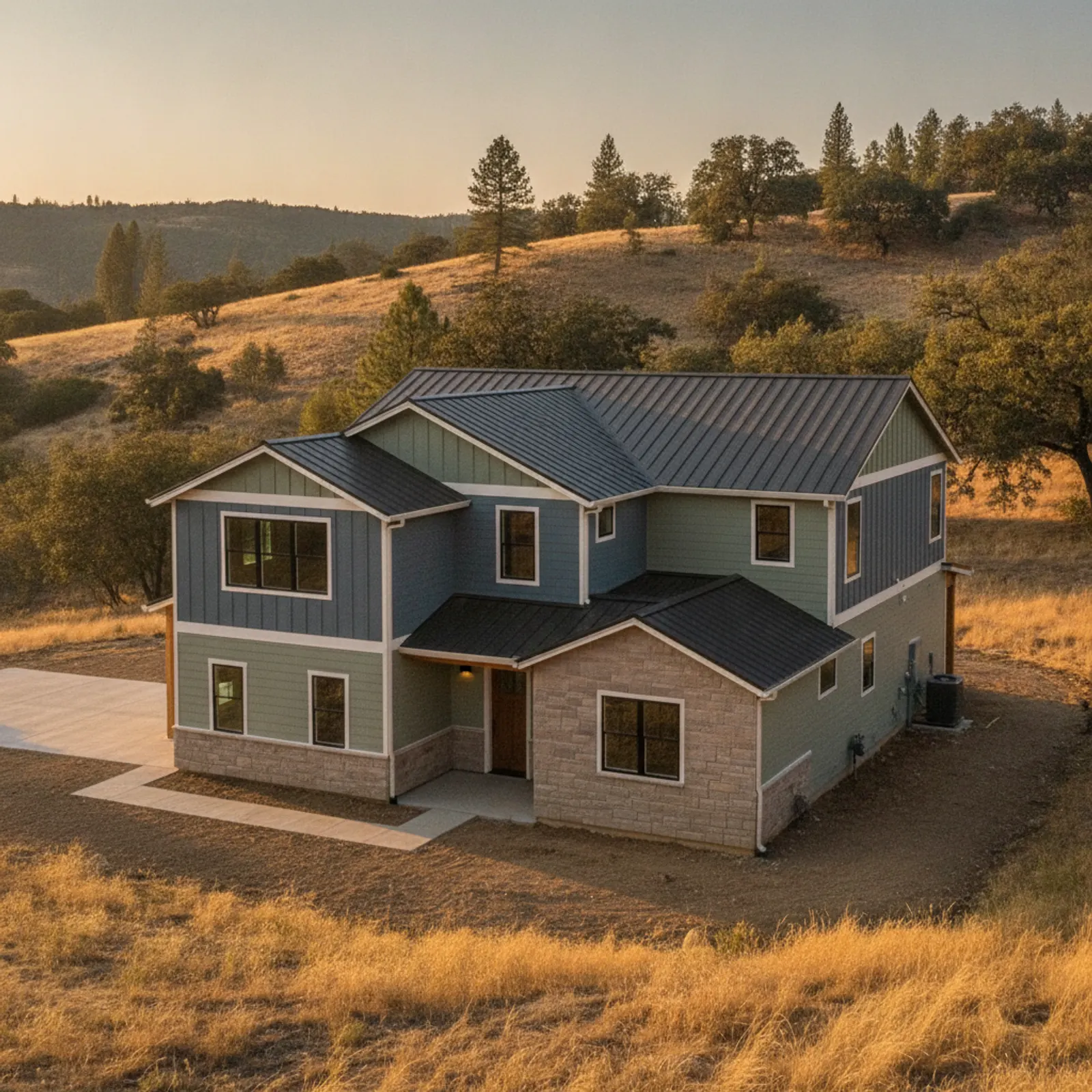
Window Replacement in Grizzly Flats
Windows on a Grizzly Flats project sit under two demanding conditions at once: wildland-interface fire performance, and a mountain winter at around 4,000 feet. On a rebuild both are specified from scratch as part of a code-defined assembly; on a surviving cabin they are usually the clearest remaining upgrade.
The county determines what a given permit requires, and that determination is worth getting early because glazing is one of the components it most often addresses.
Why glazing is in the code assembly
Windows are typically the first part of a wall to fail under sustained radiant heat, and a failed window admits embers and flame directly into a structure — which is why wildland-interface construction addresses glazing specifically rather than leaving it to the owner's preference, generally favouring multi-pane and tempered assemblies. On a Grizzly Flats rebuild this is not an optional hardening extra; it is part of what the assembly has to be. What exactly applies to a given parcel and scope is El Dorado County's call, and getting that answer early shapes selection rather than constraining it late.
Mountain winter puts U-factor in front
At this elevation the heating season is long and genuinely cold, which makes U-factor — the rate at which heat escapes through the whole assembly — the number that matters most for comfort and running cost. That is the reverse of the valley, where solar heat gain dominates. Frame material matters more here too, since a poorly insulated frame conducts heat out all winter regardless of the glass. Solar heat gain coefficient still applies on sun-exposed elevations, but for most Grizzly Flats homes it is the secondary consideration.
Snow, meltwater, and the opening
Mountain conditions change what the flashing around an opening has to survive. Snow accumulating against a wall, meltwater running behind cladding, and ice at roof-wall junctions put more demand on a sill pan and head flashing than rain alone ever does, and drifted snow can sit against a lower opening for weeks. Head flashing that sheds properly, a sill pan that drains rather than holds, and clearances that account for snow depth rather than valley grade are what keep the wall behind sound. This is a common place for lower-elevation habits to produce a problem that takes a few winters to show up.
Surviving cabins and sensible priorities
For homes that came through the fire, windows are frequently the highest-value remaining upgrade — older single-pane or failed dual-pane units are both a thermal liability through a mountain winter and the most fire-vulnerable component of an otherwise sound wall. That combination makes them a rational place to spend when a full envelope retrofit is not on the table. We would rather scope that honestly, phase it by elevation if that is what the budget allows, and be clear that improving glazing improves the odds without guaranteeing anything about the next fire.
Why this matters in Grizzly Flats
- Specified for Sierra Forest conditions
- Class A fiber cement as the recommended system
- Correctly detailed weather-resistive barrier and flashing
- Installed by a crew with 20 years combined experience
Recommended systems for Grizzly Flats
- Class A fiber cement
- ignition-resistant WUI wall assemblies
- cold-climate flashing packages
Window Replacement for Grizzly Flats homes
The full window replacement approach — materials, weather-resistive detailing, and the manufacturer standards we install to — is covered on the main service page, then specified for Grizzly Flats's conditions on this one.
Our Grizzly Flats process
- Step 1
Consultation
We listen to your goals and assess your home on site — exposure, substrate, and architecture.
- Step 2
Design & Proposal
A clear written proposal with the right system specified for your climate and a transparent scope.
- Step 3
Expert Installation
Trained crews install to manufacturer best practices with careful weather-management detailing.
- Step 4
Walkthrough & Support
A final walkthrough, full cleanup, and a clear written record of the scope completed — work we stand behind.
FAQ
Window Replacement in Grizzly Flats — FAQ
Because windows are typically the first part of a wall to fail under sustained radiant heat, and a failed window admits embers and flame directly. Wildland-interface construction addresses glazing specifically for that reason. What applies to your parcel and scope is El Dorado County's determination — worth getting early, since it shapes selection.
U-factor. The heating season here is long and genuinely cold, which makes the rate of heat loss through the whole assembly the governing number — the reverse of the valley. Frame material matters more too, since a poorly insulated frame conducts heat out all winter regardless of the glass.
It changes what the flashing has to survive. Snow against a wall, meltwater behind cladding, and ice at roof-wall junctions demand more of a sill pan and head flashing than rain does, and drifted snow can sit against a lower opening for weeks. Clearances need to account for snow depth rather than valley grade.
Often yes. Older single-pane or failed dual-pane units are both a thermal liability through a mountain winter and the most fire-vulnerable component of an otherwise sound wall, which makes them a rational spend when a full envelope retrofit is not on the table. Phasing by elevation is reasonable if that suits the budget.
Keep Exploring
More for Grizzly Flats homeowners
More in Grizzly Flats
Other exterior services in Grizzly Flats
Nearby Service Areas
Window Replacement near Grizzly Flats
Back to
El Dorado County & Grizzly Flats
Helpful Exterior Guides