
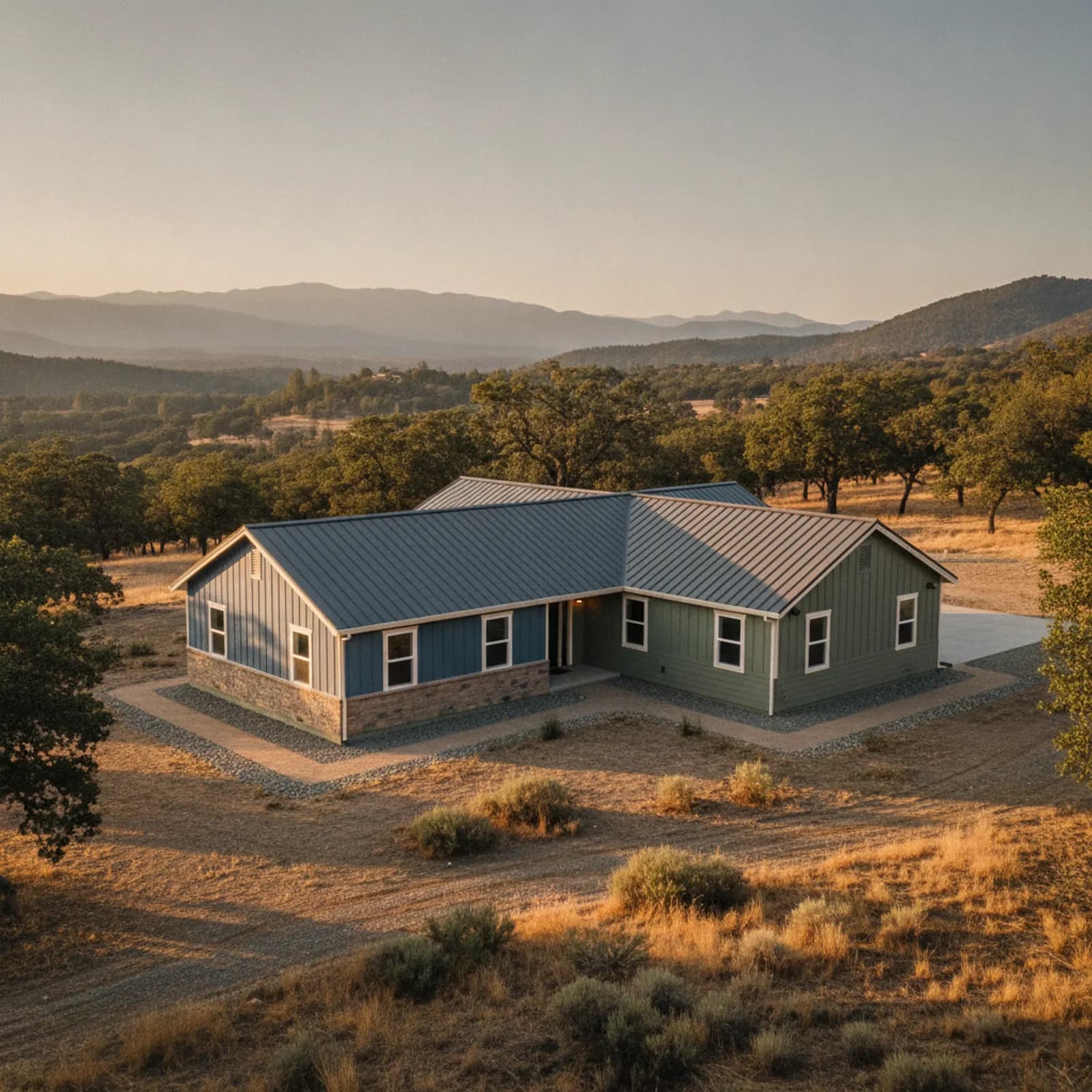
Fire-Resistant Siding in Pilot Hill
Pilot Hill's fire problem is broad-front grass fire moving across rolling open ground, and specifying for forested conditions here produces a package aimed at the wrong mechanism.
On a ranch property with multiple structures connected by continuous fuel, the honest assessment is frequently that the highest-value work is not on the house.
Ember cast is the mechanism, so openings are the target
Grass fire moves fast with wind behind it, produces heavy ember cast, and delivers intense but comparatively brief radiant exposure as the front passes. That means the way it gets into a building is through openings rather than by burning through a wall. Vents first — a coarse or damaged screen is invisible from the ground and is a direct path into an attic or crawl space. Ground transitions second, where cladding meets grass, mulch, or stored material. Eaves third. The wall face last of the four, which we would rather say plainly than let a cladding page imply otherwise.
The property is the unit, not the building
A barn, shelter, or equipment structure upwind of the residence with continuous grass between them is an ignition path to the house, and hardening the house while leaving that intact addresses one link in a chain. On Pilot Hill parcels the assessment is genuinely property-level: which structures threaten which, where the fuel connects them, and what the prevailing wind does. Where budget forces a sequence, we will frequently recommend the threatening structure or the ground between before the residence's cladding.
The zone immediately around the structure
CAL FIRE reports that properties in compliance with defensible space requirements are five times more likely to survive a wildfire. On grassland that is a specific and achievable job: grass kept genuinely short through the season, nothing combustible stored against walls, firewood moved well away, and mulch chosen with the exposure in mind. It is not work we sell and on many Pilot Hill properties it does more than any construction decision. We would rather scope a smaller project and say so than let a hardened wall sit inside a season's cured fuel.
Manufactured homes and skirting
Where the residence is manufactured or modular, the underfloor area and its skirting deserve specific attention on an ember-driven parcel, because an open or poorly screened underfloor is a direct path for embers into a space nobody inspects. That is a genuinely different vulnerability from a stick-built home on a slab, and it is one that a generic hardening package can miss entirely. It belongs in the assessment rather than being assumed away.
Why this matters in Pilot Hill
- Specified for Sierra Foothills conditions
- fiber cement as the recommended system
- Correctly detailed weather-resistive barrier and flashing
- Installed by a crew with 20 years combined experience
Recommended systems for Pilot Hill
- fiber cement
- James Hardie
- LP SmartSide
Fire-Resistant Siding for Pilot Hill homes
The full fire-resistant siding approach — materials, weather-resistive detailing, and the manufacturer standards we install to — is covered on the main service page, then specified for Pilot Hill's conditions on this one.
Our Pilot Hill process
- Step 1
Consultation
We listen to your goals and assess your home on site — exposure, substrate, and architecture.
- Step 2
Design & Proposal
A clear written proposal with the right system specified for your climate and a transparent scope.
- Step 3
Expert Installation
Trained crews install to manufacturer best practices with careful weather-management detailing.
- Step 4
Walkthrough & Support
A final walkthrough, full cleanup, and a clear written record of the scope completed — work we stand behind.
FAQ
Fire-Resistant Siding in Pilot Hill — FAQ
Vents, then ground transitions where cladding meets grass or mulch, then eaves, then the wall face. Grass fire is ember-driven, so it gets into a building through openings rather than by burning through a wall. We would rather say that plainly than let a cladding page imply otherwise.
Frequently, yes. A structure upwind of the residence with continuous grass between them is an ignition path, and hardening the house while leaving it intact addresses one link in a chain. The assessment on these parcels is genuinely property-level rather than building-level.
Usually the zone immediately around the structure — grass kept genuinely short through the season, nothing combustible against walls, firewood moved well away. CAL FIRE links defensible-space compliance to a fivefold difference in survival odds, and it is not work we sell.
The underfloor area and its skirting deserve specific attention, because an open or poorly screened underfloor is a direct ember path into a space nobody inspects. That is a genuinely different vulnerability from a stick-built home on a slab and a generic hardening package can miss it entirely.
Keep Exploring
More for Pilot Hill homeowners
More in Pilot Hill
Other exterior services in Pilot Hill
Nearby Service Areas
Fire-Resistant Siding near Pilot Hill
Back to
El Dorado County & Pilot Hill
Helpful Exterior Guides