
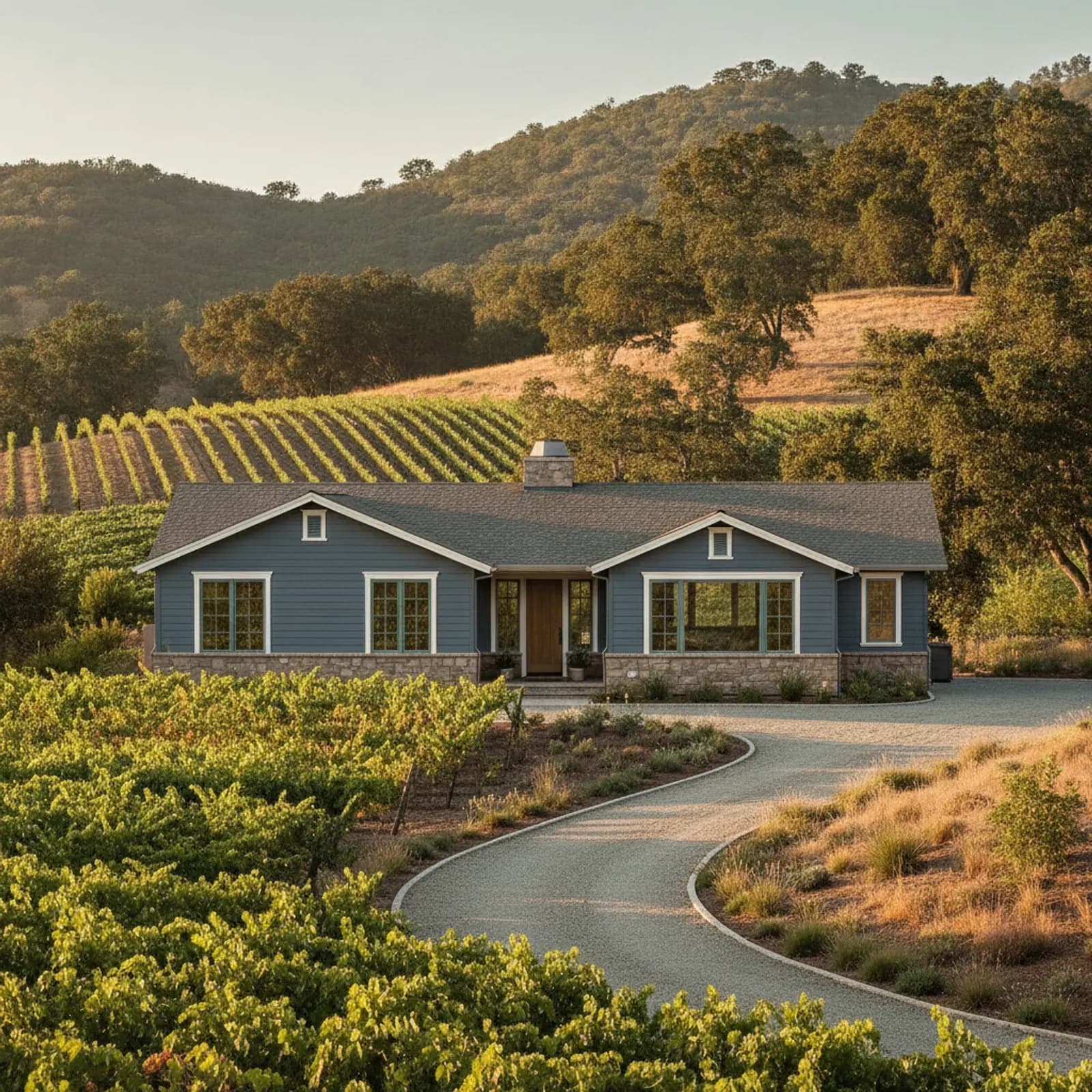
Exterior Contractor in Carmel Valley
Carmel Valley re-sides are whole-envelope projects whether the owner frames them that way or not, for two reasons that compound on these properties: the homes are high-end custom and ranch architecture where the elevations were designed as one composition, and many sit on fire-exposed hillsides where the exterior is the home's first line of defense. Both reasons reward a single contractor owning cladding, windows, weather barrier, trim, eaves, and vents as one assembly.
An exterior contractor's value in the valley is treating that whole assembly as one design-and-defense problem. On an estate, splitting the work across trades lets the original architectural coherence drift apart at the seams. On a hillside home, it leaves ember paths — a vent, an eave, a ground-to-wall transition — that no single trade ever owned. Integrating the envelope solves both at once.
What an integrated Carmel Valley exterior includes
On a valley estate or ranch an integrated scope strips the failed cladding, corrects the weather-resistive barrier, re-clads in heat- and fire-appropriate fiber cement, integrates window replacement into the new WRB with attention to original sightlines, and details trim, eaves, soffit, and fascia to the architecture. On hillside parcels it also replaces ember-vulnerable vents, hardens eave and ground-to-wall detailing, and ties the openings into the fire-resistant assembly — all as one project rather than a sequence of disconnected trades.
Where the split-trade exterior fails here
Carmel Valley's failure mode runs two ways. On estates it's architectural drift: separate siding, window, trim, and paint crews each make their own choices and the home's original composition no longer holds — reveals stop aligning, frame color clashes with finish, trim proportions read off. On hillside homes it's worse: a clean new fire-resistant wall installed by a siding crew, but original vents, open eaves, and an exposed ground-to-wall transition left in place. The house looks hardened and isn't. An integrator owns all of it.
Materials and detailing we specify for the valley
Estate and ranch work earns deeper specification. We typically specify fiber cement in mixed profiles — lap, panel, shingle, and batten trim — to match the original composition, with factory ColorPlus finishes selected for inland sun and a warm wine-country palette. On hillside parcels that fiber cement is also the Class A fire layer, paired with ember-resistant vents, hardened eaves, and detailed ground-to-wall transitions to WUI-code intent where the parcel sits in a mapped hazard zone. Windows are integrated into the WRB with bronze or black frames where the architecture calls for it.
Coordinating a whole-exterior on large gated parcels
The valley's estate and ranch lots are large, gated, and shaded by mature oaks, which makes single-contractor coordination more valuable, not less. One crew sequencing cladding, windows, trim, and fire detailing can stage around the trees, work whole wall planes at once, and keep a working ranch's daily operations running, instead of multiple trades each negotiating access on their own schedule. We plan the project as a continuous campaign across the property, with the envelope's design coherence and its fire defense both owned end to end rather than reassembled at the seams.
Why this matters in Carmel Valley
- Specified for Monterey Peninsula conditions
- James Hardie as the recommended system
- Correctly detailed weather-resistive barrier and flashing
- Installed by a crew with 20 years combined experience
Recommended systems for Carmel Valley
- James Hardie
- fiber cement
- LP SmartSide
Exterior Contractor for Carmel Valley homes
The full exterior contractor approach — materials, weather-resistive detailing, and the manufacturer standards we install to — is covered on the main service page, then specified for Carmel Valley's conditions on this one.
Our Carmel Valley process
- Step 1
Consultation
We listen to your goals and assess your home on site — exposure, substrate, and architecture.
- Step 2
Design & Proposal
A clear written proposal with the right system specified for your climate and a transparent scope.
- Step 3
Expert Installation
Trained crews install to manufacturer best practices with careful weather-management detailing.
- Step 4
Walkthrough & Support
A final walkthrough, full cleanup, and a clear written record of the scope completed — work we stand behind.
FAQ
Exterior Contractor in Carmel Valley — FAQ
Because the elevations were designed as one composition and many homes sit on fire-exposed slopes. A single contractor keeps the architecture coherent and closes the ember paths that split trades leave between cladding, vents, eaves, and openings.
On hillside homes, the vents, eaves, and ground-to-wall transition — embers enter there, not through intact cladding. On estates, the trim and reveal alignment that holds the architecture together. An integrator scopes both into the same project.
Yes — that's the point of integration here. We specify non-combustible fiber cement and hardened fire details while matching the home's profiles, trim, and palette, so the wall is both defended and architecturally coherent.
They make single-contractor coordination more valuable — one crew can stage around oaks, work whole wall planes, and keep ranch operations running, rather than several trades each negotiating access separately.
Most valley single-family homes run four to seven weeks of active work depending on size, story count, fire-hardening detail, and what tear-off reveals; sprawling estates or ranch compounds can run longer. We schedule realistically and flag which scope items drive the timeline.
Keep Exploring
More for Carmel Valley homeowners
More in Carmel Valley
Other exterior services in Carmel Valley
Nearby Service Areas
Exterior Contractor near Carmel Valley
Back to
Monterey County & Carmel Valley
Helpful Exterior Guides