Fiber Cement Siding in Carmel Valley
Fiber cement is the core recommendation for Carmel Valley estates because it answers the valley's two defining pressures at once: it holds color and stability under the strong inland sun far better than the original wood, and it is non-combustible on hillside parcels that carry real wildfire exposure. In a warm, dry pocket with no salt to fight, the material case here is heat, UV, and fire — not corrosion.
Why the material fits a sun-baked valley
Carmel Valley's escape from the coastal fog means its walls live in sun and heat the foggy Peninsula towns never see. Wood and hardboard cladding cup, check, and fade quickly under that load. Fiber cement's cementitious body doesn't move with heat the way wood does, holds its factory finish against UV, and shrugs off the dry thermal cycling that opens joints in lesser materials. On long ranch-house elevations that take all-day sun, that dimensional stability is what keeps the wall looking taut years later.
Non-combustible by nature on fire-exposed slopes
Because so many valley homes sit on oak and chaparral hillsides with genuine wildland-urban interface exposure, the fact that fiber cement is non-combustible is not a footnote here — it's central to why owners choose it. The board itself will not ignite from radiant heat or contact embers the way wood siding does. We build that advantage into the assembly by detailing the lower courses and ground-to-wall transition so the cladding's fire resistance actually carries through to the most ignition-prone part of the wall.
The system behind the board
Fiber cement performs only as well as what's behind and around it. We install over a correct weather-resistive barrier with proper drainage, gap laps for the valley's hot-dry thermal movement, seal field-cut edges, and flash every penetration so the dry-climate downpours that do arrive in winter drain and clear. The board carries the heat, UV, and fire story; disciplined flashing and gapping are what make it last on a wall that swings forty degrees between a summer afternoon and dawn.
Detailing fiber cement for ranch and estate elevations
The valley's custom and ranch homes rarely want a single flat profile. Fiber cement comes in lap, panel, shingle, and batten forms, which lets us re-create a board-and-batten gable, a shingled accent, or a wide-reveal lap to match an estate's original composition rather than flattening it to one look. On big single-story spans we plan layout so reveals stay consistent across long runs, and we mix profiles where the architecture calls for it. The result is a heat- and fire-appropriate wall that still reads as the considered Carmel Valley home it was.
Color, finish, and the wine-country setting
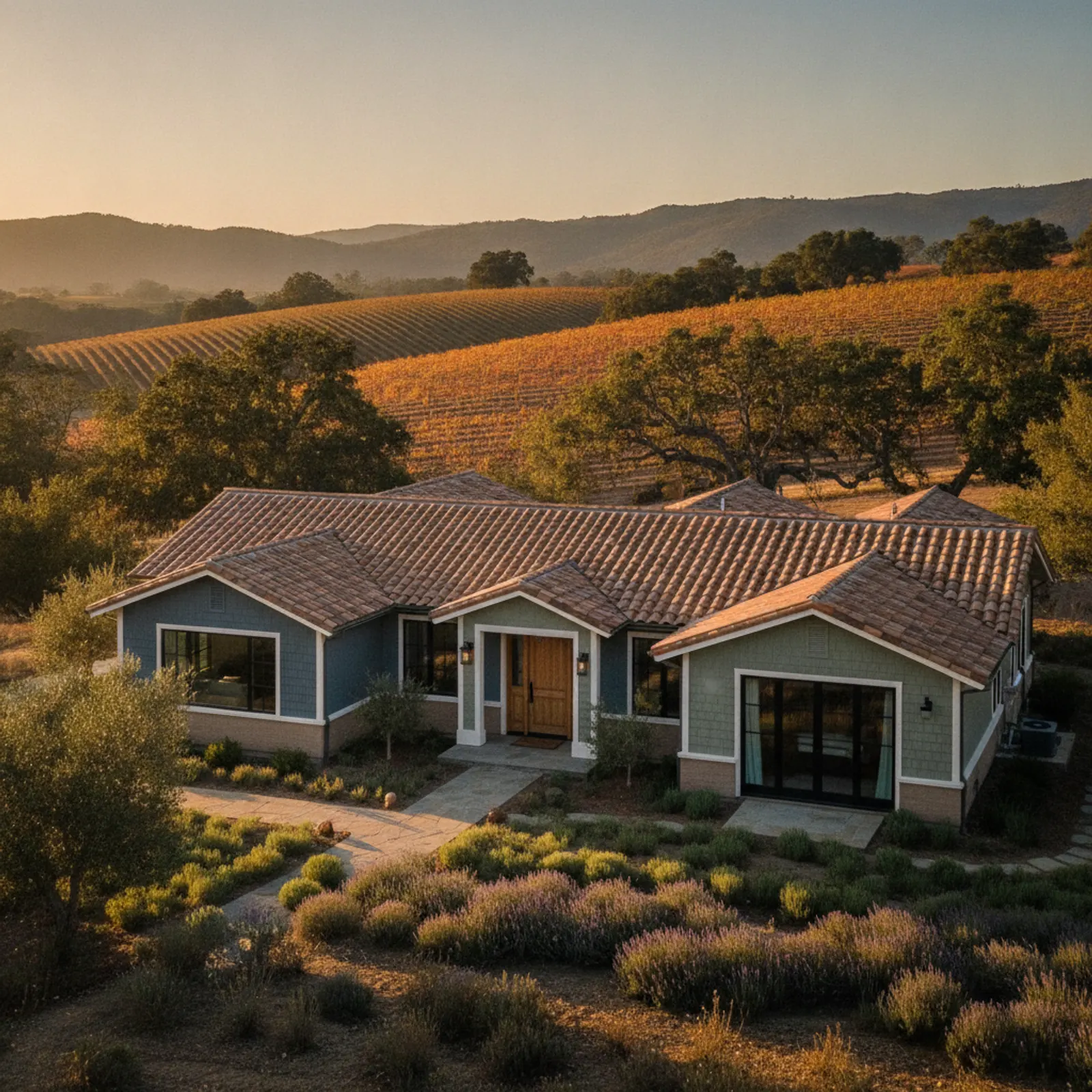
Inland sun reads color differently than diffuse coastal light, so finish selection matters more here than on the foggy Peninsula. Factory-applied finishes give Carmel Valley estates the saturated, even tone that all-day sun otherwise bleaches out of site-applied paint, and the valley's grounded, earthy palette — sages, warm whites, taupes against oak and vineyard — holds up best when chosen for how it looks under bright direct light. Because the finish is baked on rather than rolled, a long ranch elevation stays uniform across hundreds of feet of wall instead of showing the lap marks and fade variation that field painting leaves behind on a sun-loaded face.
Why this matters in Carmel Valley
- Specified for Monterey Peninsula conditions
- James Hardie as the recommended system
- Correctly detailed weather-resistive barrier and flashing
- Installed by a crew with 20 years combined experience
Recommended systems for Carmel Valley
- James Hardie
- fiber cement
- LP SmartSide
Fiber Cement Siding for Carmel Valley homes
The full fiber cement siding approach — materials, weather-resistive detailing, and the manufacturer standards we install to — is covered on the main service page, then specified for Carmel Valley's conditions on this one.
Our Carmel Valley process
- Step 1
Consultation
We listen to your goals and assess your home on site — exposure, substrate, and architecture.
- Step 2
Design & Proposal
A clear written proposal with the right system specified for your climate and a transparent scope.
- Step 3
Expert Installation
Trained crews install to manufacturer best practices with careful weather-management detailing.
- Step 4
Walkthrough & Support
A final walkthrough, full cleanup, and a clear written record of the scope completed — work we stand behind.
FAQ
Fiber Cement Siding in Carmel Valley — FAQ
It answers the valley's two real pressures: it holds color and dimensional stability under the strong inland sun, and it's non-combustible on the hillside parcels that carry genuine wildfire exposure. Salt isn't a factor here.
Far less than wood or hardboard — factory finishes are engineered for UV stability, and the cementitious body doesn't cup or check in heat. South and west walls hold their look much longer than painted wood would.
Yes, on two counts: it's non-combustible for the WUI exposure on the oak-and-chaparral slopes, and it ends the cup-check-repaint cycle that valley sun drives in wood siding.
Yes, when installed correctly — we gap laps for thermal movement and seal cut edges so the wide day-night swing doesn't open joints. The board itself barely moves with temperature.
Keep Exploring
More for Carmel Valley homeowners
More in Carmel Valley
Other exterior services in Carmel Valley
Nearby Service Areas
Fiber Cement Siding near Carmel Valley
Back to
Monterey County & Carmel Valley
Helpful Exterior Guides